Projection
Projection is usually not considered as a safe way to check original materials, and it should be used only in case of real necessity. The risk of damaging the material (or to destroy them, in case of nitrate elements) is very high.
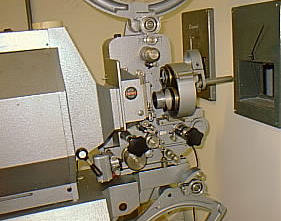
Nevertheless, if it is really necessary, it is actually possible to avoid any damage during projection. Provided that the projector is well maintained, perfectly clean, that all moving parts are carefully checked and that a test reel is run just before the actual screening of your original element. The projector must be equipped with safety devices, that can stop the projection as soon as something happens to the film; and it is obvious that while the projection is running, the projectionist must carefully pay attention to any malfunctioning.
|
A 35mm projector in a laboratory projection booth |
Reasons for choosing projection to check a material are connected with the need to check its characteristics for the very best possible quality. On a projector which is used and adjusted to the maximum standards of quality; as any projector meant for quality checking should be in a laboratory; you can see an image and hear sound of much higher quality than on a viewing table, for example. And obviously, you will be viewing your film in the same conditions under which it will be seen before or after the restoration.