Kinemacolor Camera
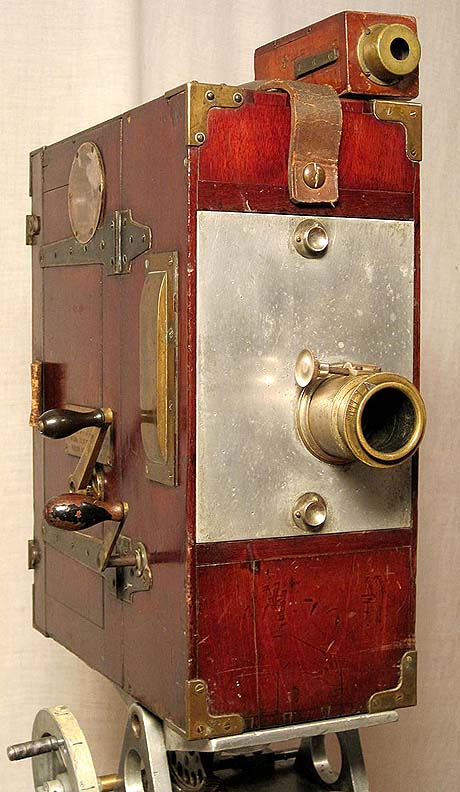
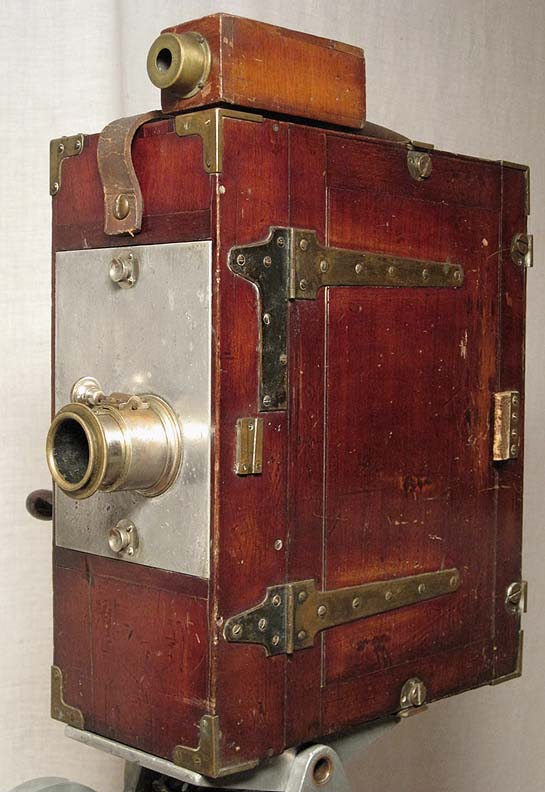
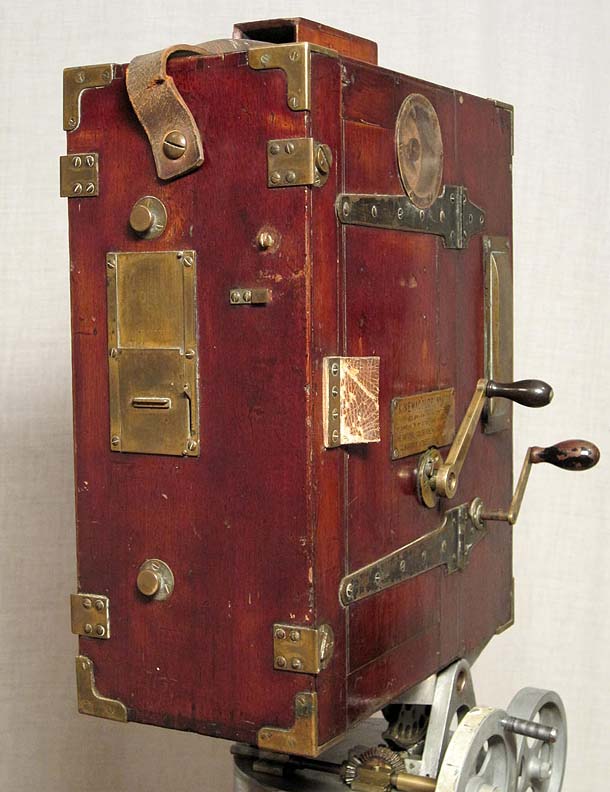
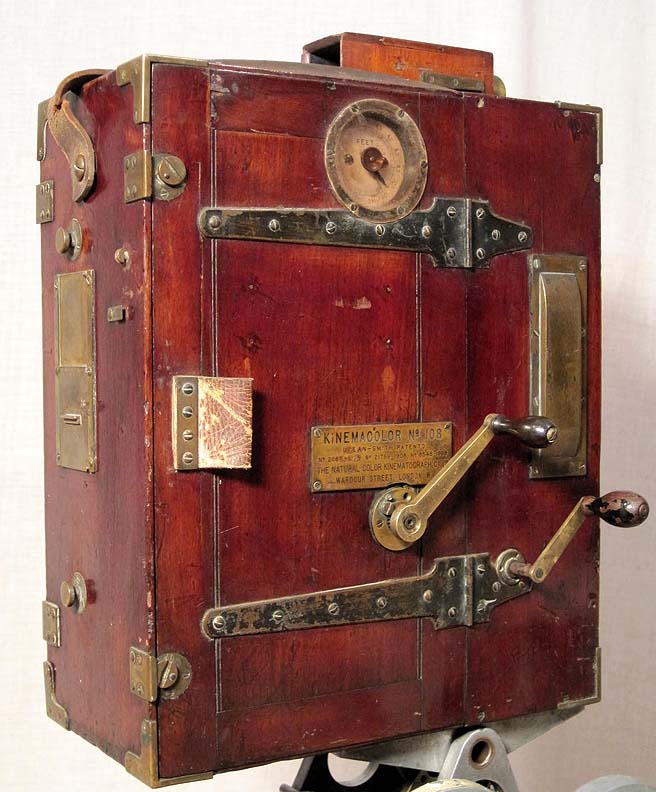
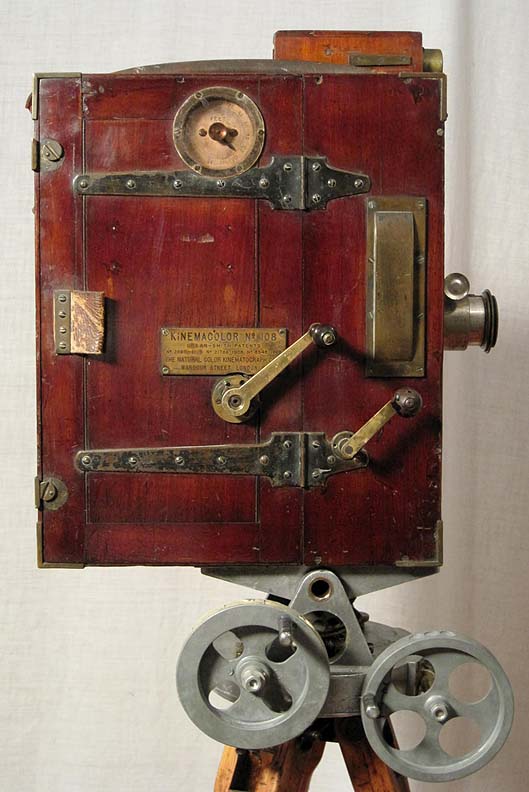
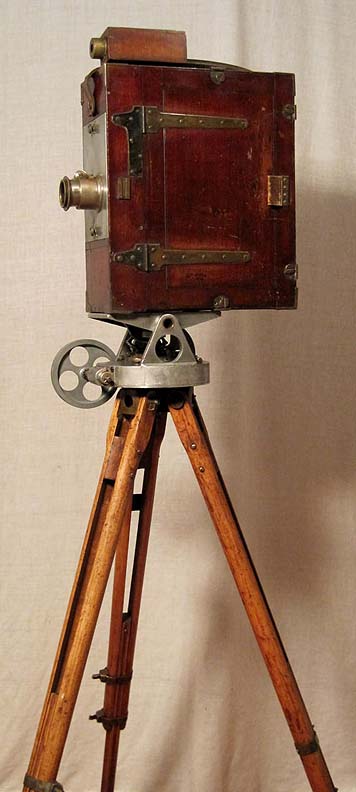
The following pictures and information have been kindly supplied by SAM DODGE the owner of camera number 108 which was used to film the 'Delhi Durbar'
kineGears
kineFilm
kineClaws
kine8
kine7
kine5
kine4
kine3

kine2
Kine1
 This is a leaflet advertising various Kinemacolor films.
Provenance of camera 108

Charles Urban used only the highest quality lens for Kinemacolor camera #108. It is a 1902 design Heliar f/4.5 serial number 108166 that was manufactured in early 1910. The Heliar patent states that the lens possesses great color distribution. Better color distribution would mean a broader grey scale and that made Kinemacolor work even better. This color distribution claim is astounding during the period of only black and white film. I’m certain that Urban chose this lens because of its color distribution claims.
http://www.Esp@ceThe Heliar lens was invented by Carl Harting he has three patents listed on the Esp@ce website:
GB22962 of 1900
GB13441 of 1902
DK16904C of 1913 (in Danish)
These patents appear by kind permission of;
The Director
European Patent Office
EPA/EPO/OEB
80298 Munchen
Deutschland
Espacenet Home Page
Almost every camera maker started serial numbers with 101. That would make this the eighth camera made by Kinemacolor. I would assume that the first two or three were prototypes and used as in-house experimental cameras seeing as most manufacturers kept at least two experimental cameras in the shop to work with at all times. They always had to think of new ways to make their cameras more useful to the customers and had to keep making them better than their competitors’ cameras.
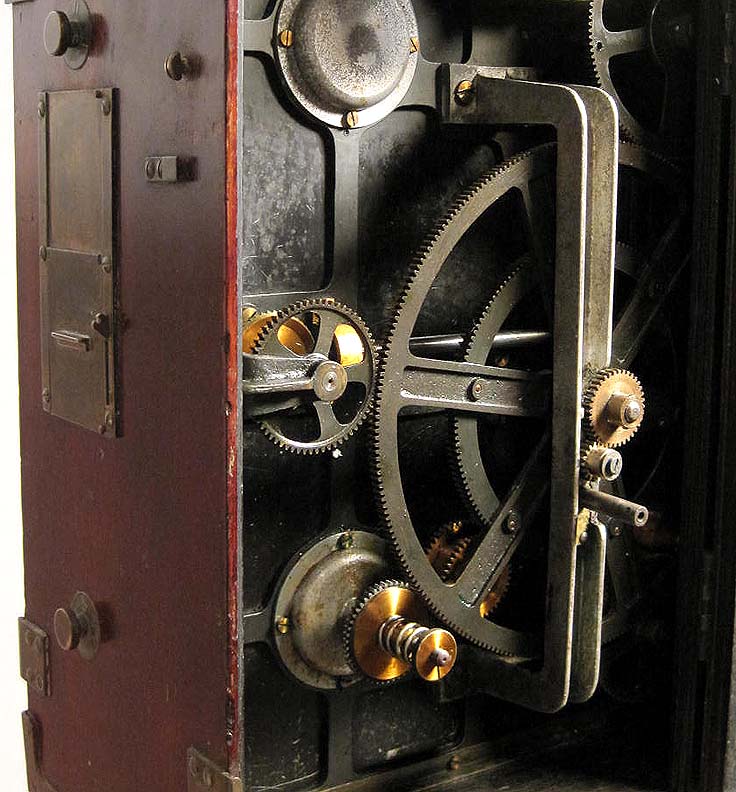
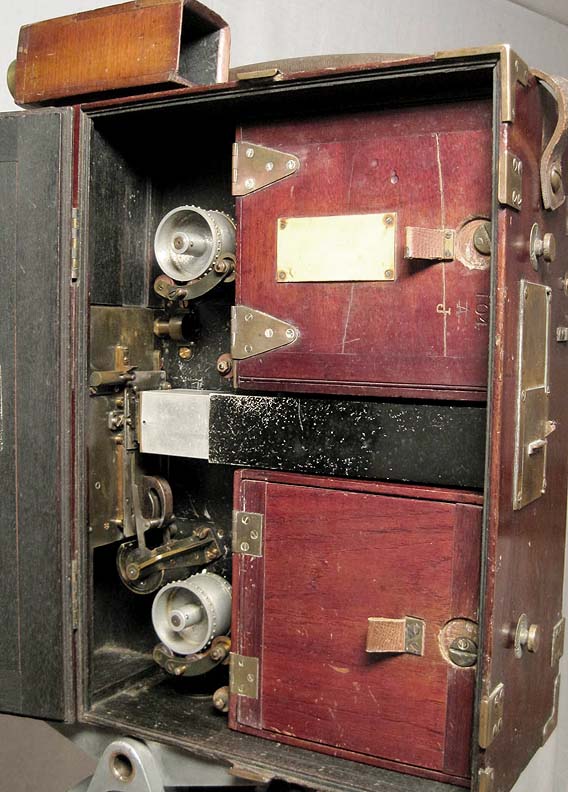
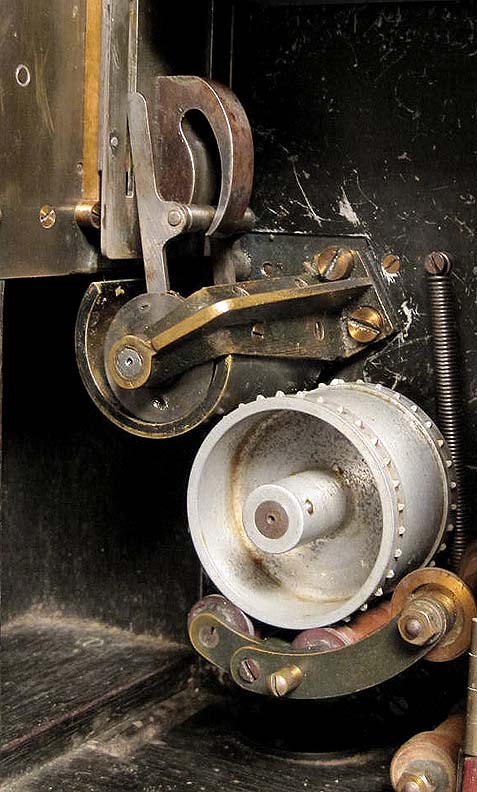
The movement is based on the Charles Urban Bioscope camera’s pulldown claw system inserted into a Moy and Bastie camera body with other modifications to allow for the camera to shoot at thirty-two frames per second and have two shutters running at different speeds. Charles Urban asked Alfred Darling, an early camera maker, to make the modifications. I find it very interesting that the Genesis period people were not quite as full of secrecy and rivalry as later years. Yes, they did protect themselves with patents but they often shared some knowledge with competitors. That behavior became quite scarce very soon.
It’s not exactly clear when Kinemacolor purchased or built its studio in Hollywood, 1909 seems to be the most popular year with Hollywood historians. What is clear is that in late 1913 or early 1914 D. W. Griffith took over the Kinemacolor Studio at 4500 Sunset Blvd. He took over Kinemacolor's failed plans to produce Thomas Dixon's “The Clansman”, which eventually became Griffith’s “The Birth of a Nation” (1915), the second huge blockbuster movie. It was because of the financial failure of Kinemacolor that Griffith got the rights to “The Clansman/Birth of a Nation” and made his own huge blockbuster. Kinemacolor started to produce “The Clansman” in New Orleans but something went terribly wrong and they stopped production. It seems that D. W. Griffith’s wife was in a starring role in the Kinemacolor failed version. Griffith had intimate knowledge of the screenplay before acquiring the rights for himself.
I have no doubt that Kinemacolor could not have made a good movie out of The Clansman as they had almost no success with ‘story pictures’. It’s a good thing that Griffith got the rights when he did. He made a very controversial masterpiece that took the box office by storm.