Dufaycolor
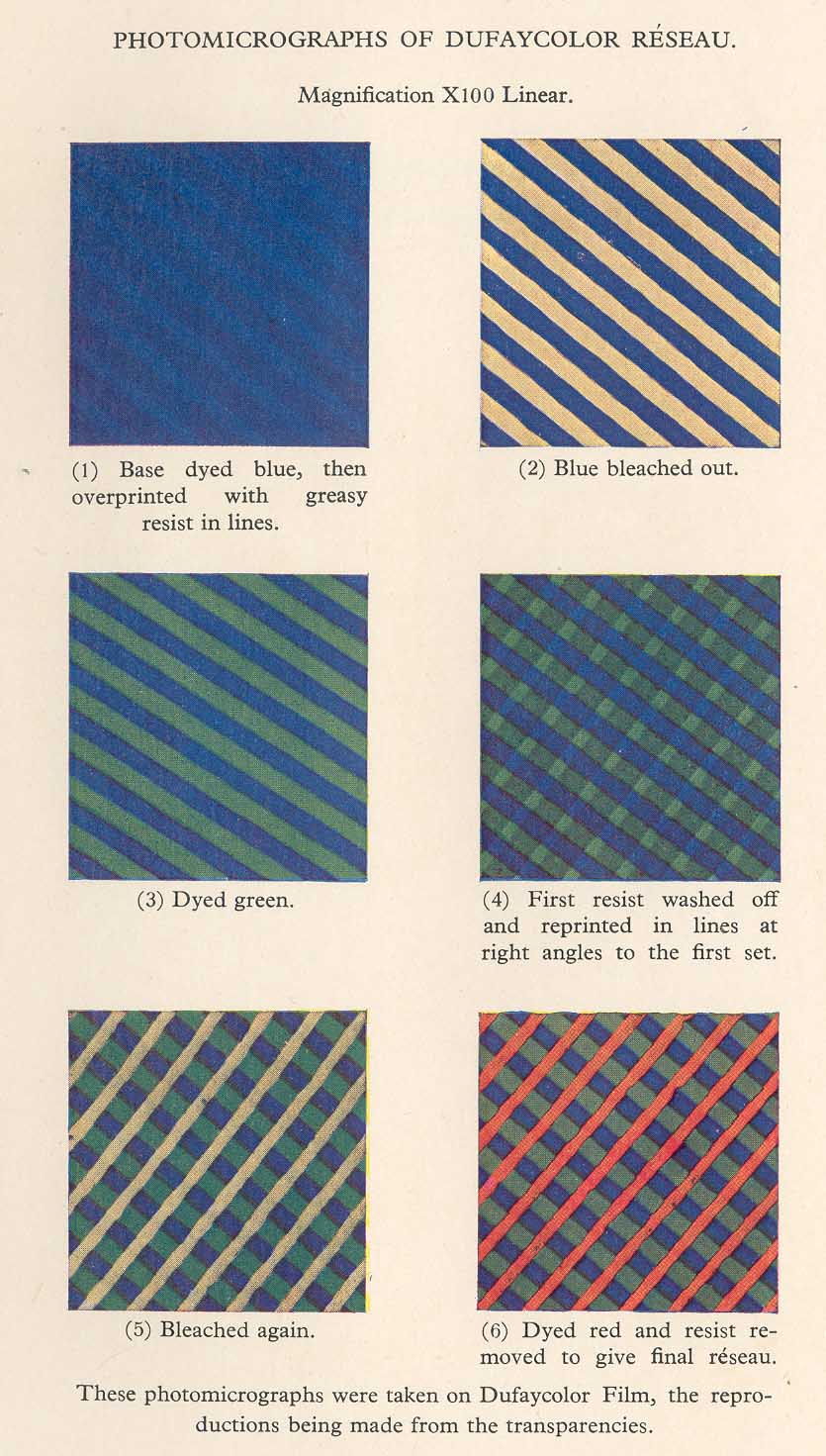


Stages in printing Dufay Reseau
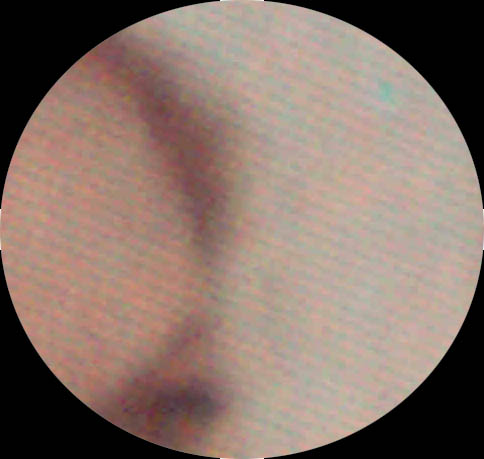
Close-up of Dufay Reseau
Dufay Advert
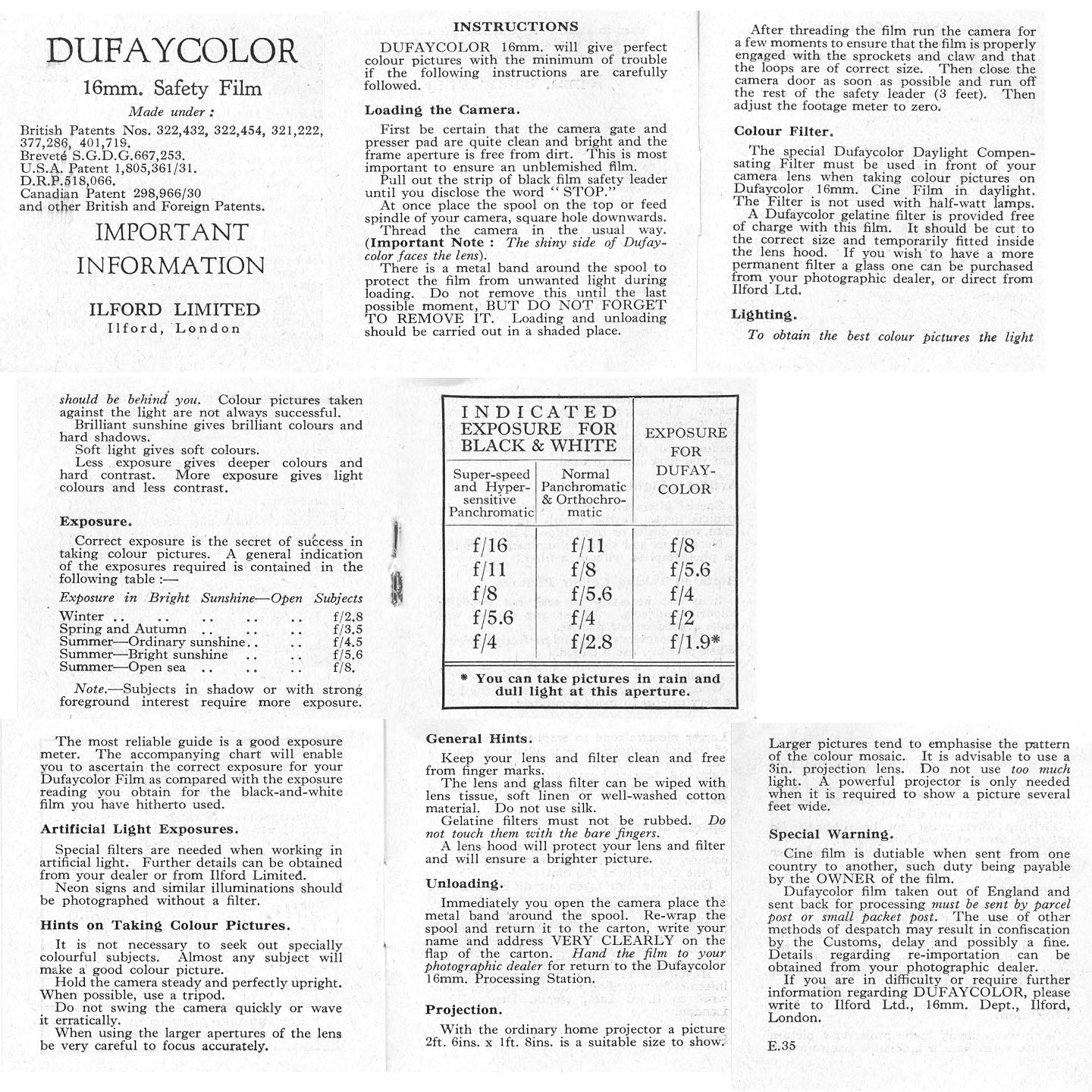
Leaflet inside a Film Box for 16mm Dufay olor
Click the images for a larger image.
Louis Dufay produced photographic plates with a micro-colour-screen between 1910 and 1917. They were known as the Dufay 'Dioptrechrome Plate'. From 1925 a large number of patents were granted for various aspects of the Spicer-Dufay Process.
The films have the reseau mechanically printed on the base of the film. The film has to be exposed through the base. The method of printing the reseau on the film base can be seen in the illustration from the Dufaycolor Book above.
First films were B/W reversal. The invention by Dr D A Spencer of Kodak Ltd in 1936 of the 'depth developer' made the negative/positive process possible. This restricted the development to the layer of emulsion next to the reseau on the base. This prevented spread of the image which caused desaturation of the colours.
In addition the negative reseau had red lines at an angle of 27 degrees to the edge of film and 45 degrees in the positive film to prevent moire fringes when printing. There was however, desaturation of the colours caused by overlapping of the colour lines. (Glafcides - Photographic Chemistry page 552)
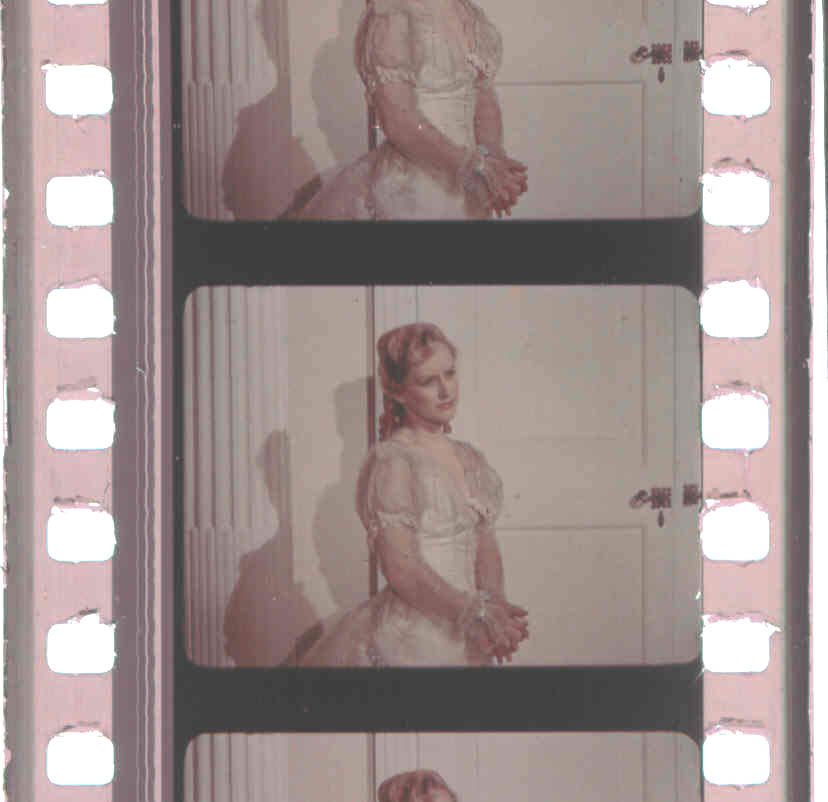
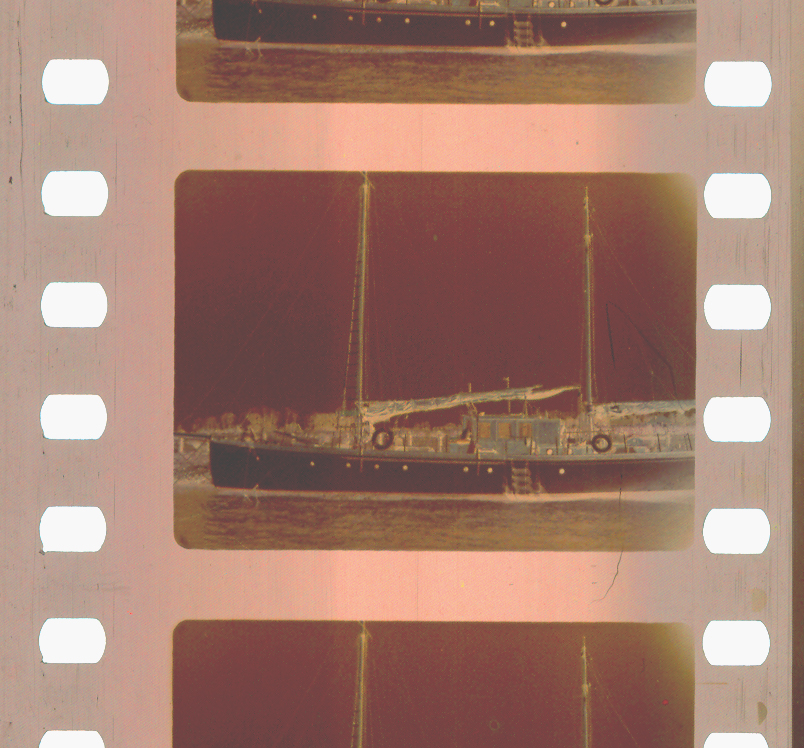
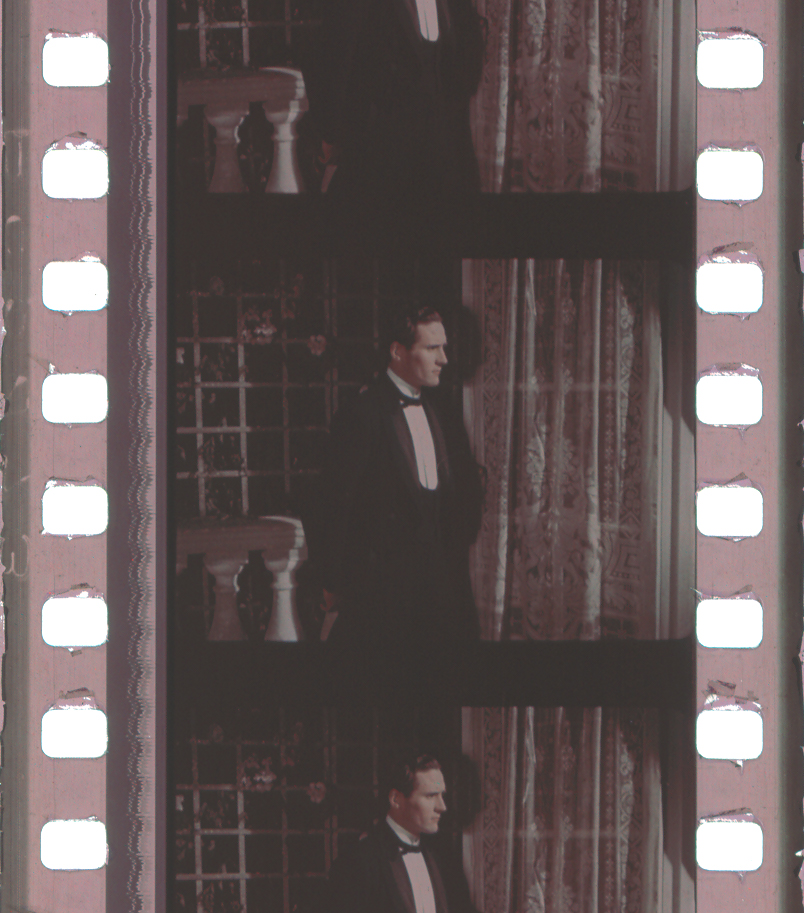
Dufaycolor Positive with Visatone Optical Sound Track
Close-up of Dufaycolor Image
Dufaycolor Colour Negative
Dufaycolor Print with Visatone Optical Sound
Click the images for a larger image.
Dufaycolor Print with an enlargement to see the reseau. Note the clear edges to the film showing that it is not a reversal print like the 35mm below.A Dufaycolor negative and a Dufaycolor print with Visatone track

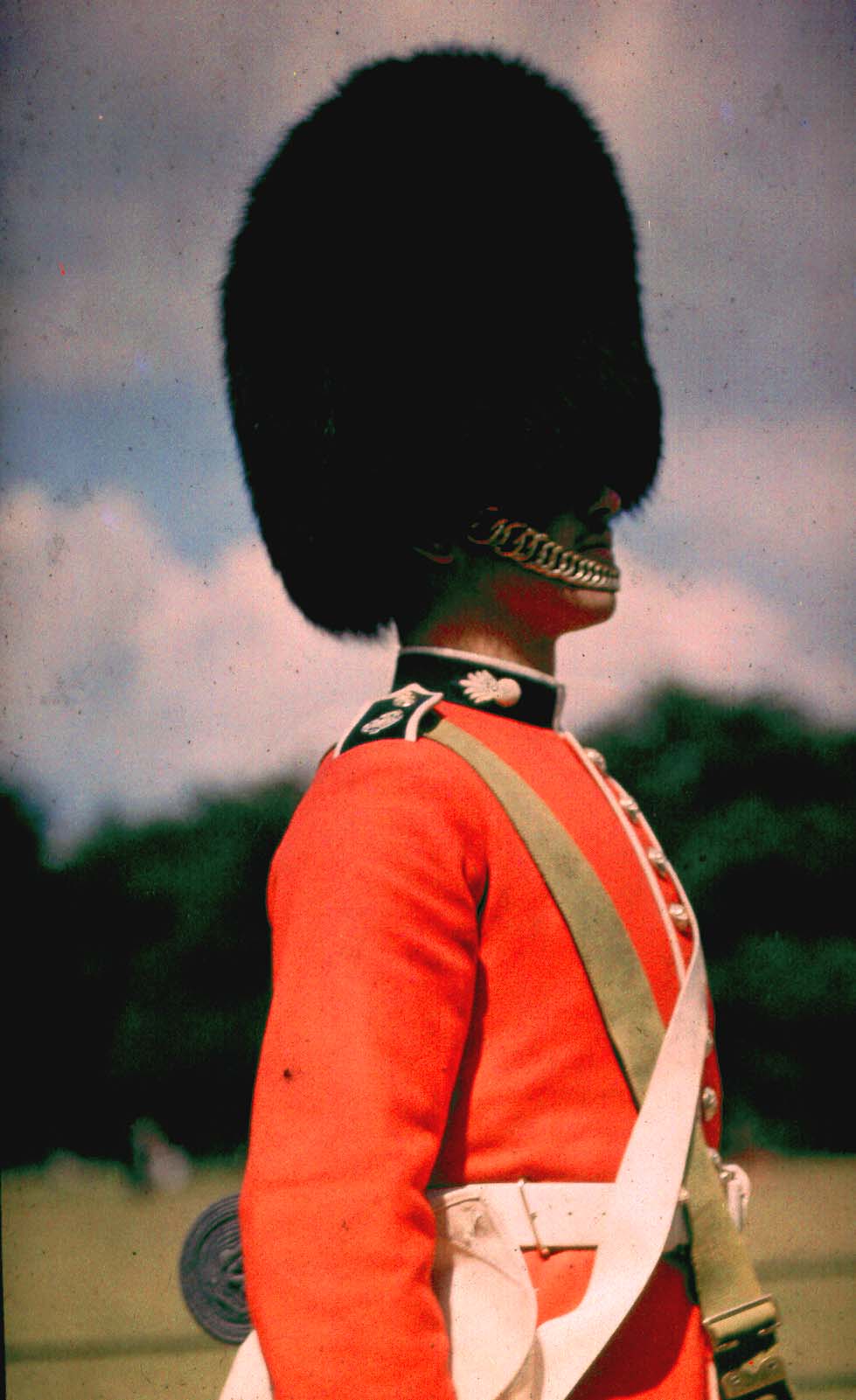
35mm Dufaychrome Slide
Dufaychrome Colour Slide
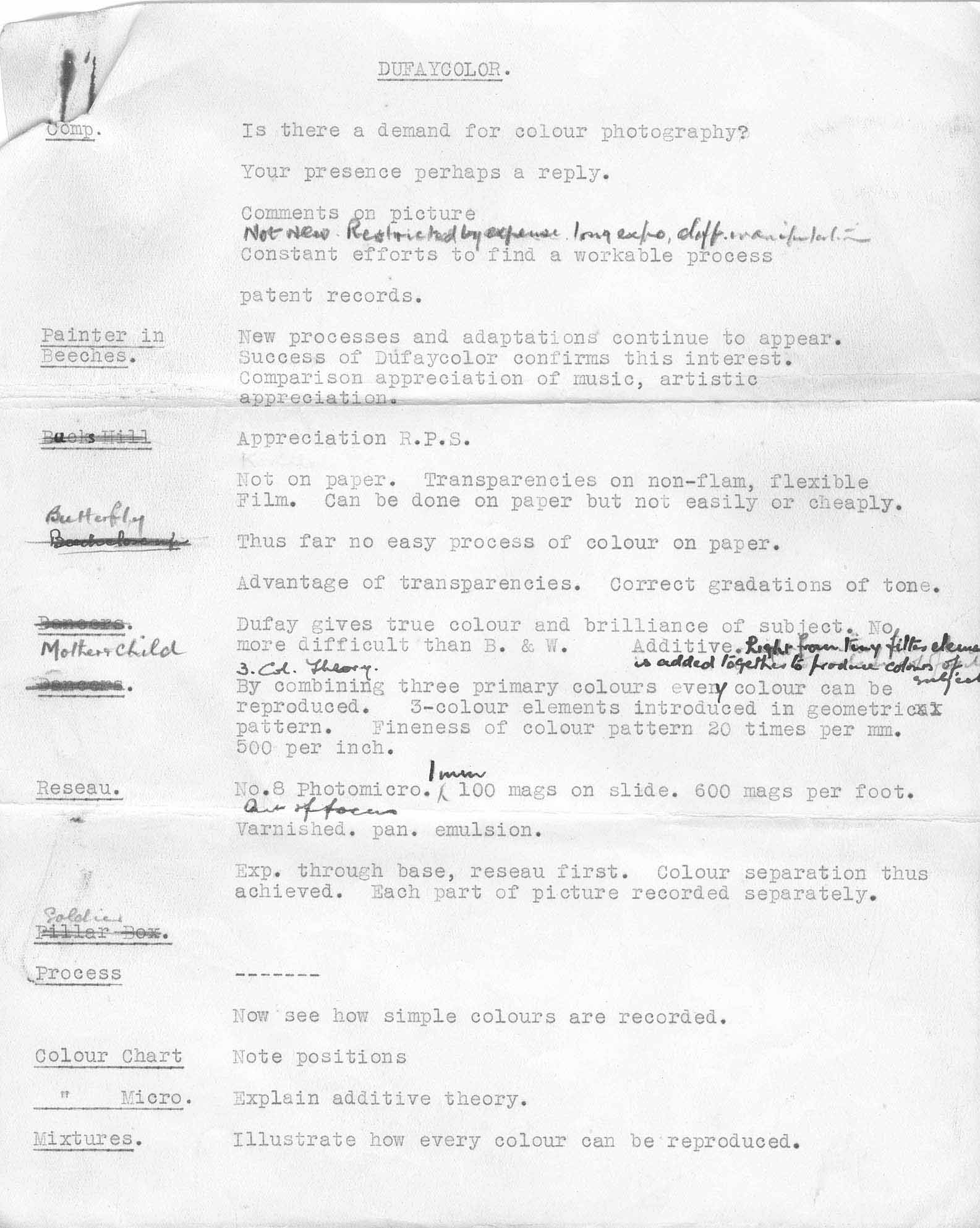
Running Order for a Lecture by Jack Coote
These pictures come from slides made by Jack Coote for his lectures to photographic clubs etc. Also the first page of his lecture notes. They were rescued from a rubbish dump by Charles Fairall who was Video Preservation and Engineering Manager at the NFTVA, Berkhamsted at the time..
Dufaycolor
Some Chronology:
1931 First satisfactory films exhibited in England (copying was a problem)
1932 Spicer-Dufay Ltd incorporated
1933 Name change to Dufaycolor Ltd.
1934 Ilford Ltd acquire the British Empire rights.16mm film on the market for amateurs. Sequence in 'Radio Parade' shot (see frames below) Claude Friese-Green was the cameraman. Shot on reversal with reversal prints.
1935 British Movietone News shot Jubilee processions on Dufaycolor
1936 Coronation film shot by Pathe Pictures Ltd using Dufay Negative/positive system
1937 Dufay-Chromex Ltd formed from the interests of Spicers, Ilford and Cinecolor Process (not the American Cinecolor). Processing Laboratory established in Thames Ditton. special printing machines were made by Vinten, Lawley and Debrie.
1938 Improved reseau (the three colour screen)
This information comes from 'Colour Cinematography' by Adrian Cornwell-Clyne
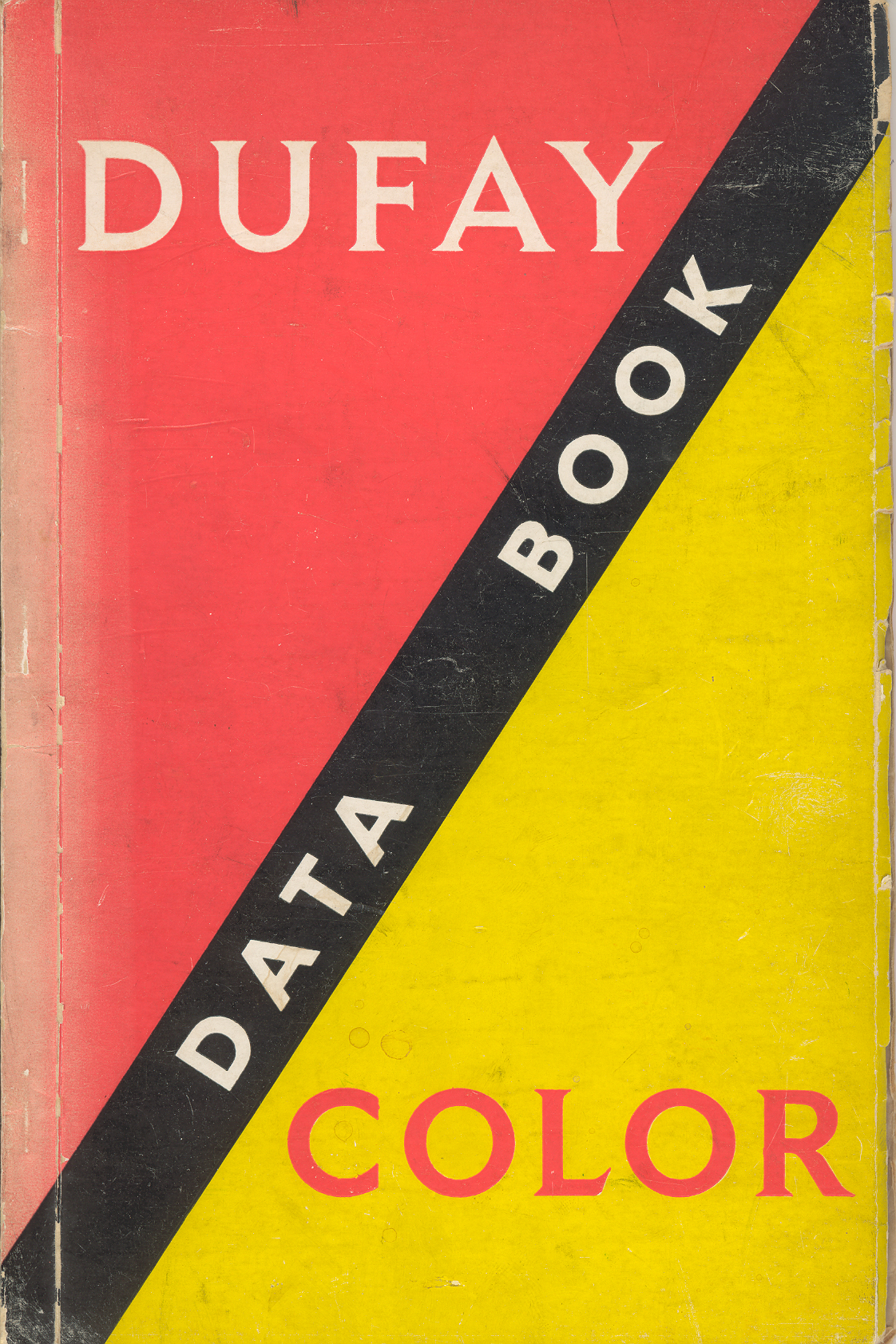
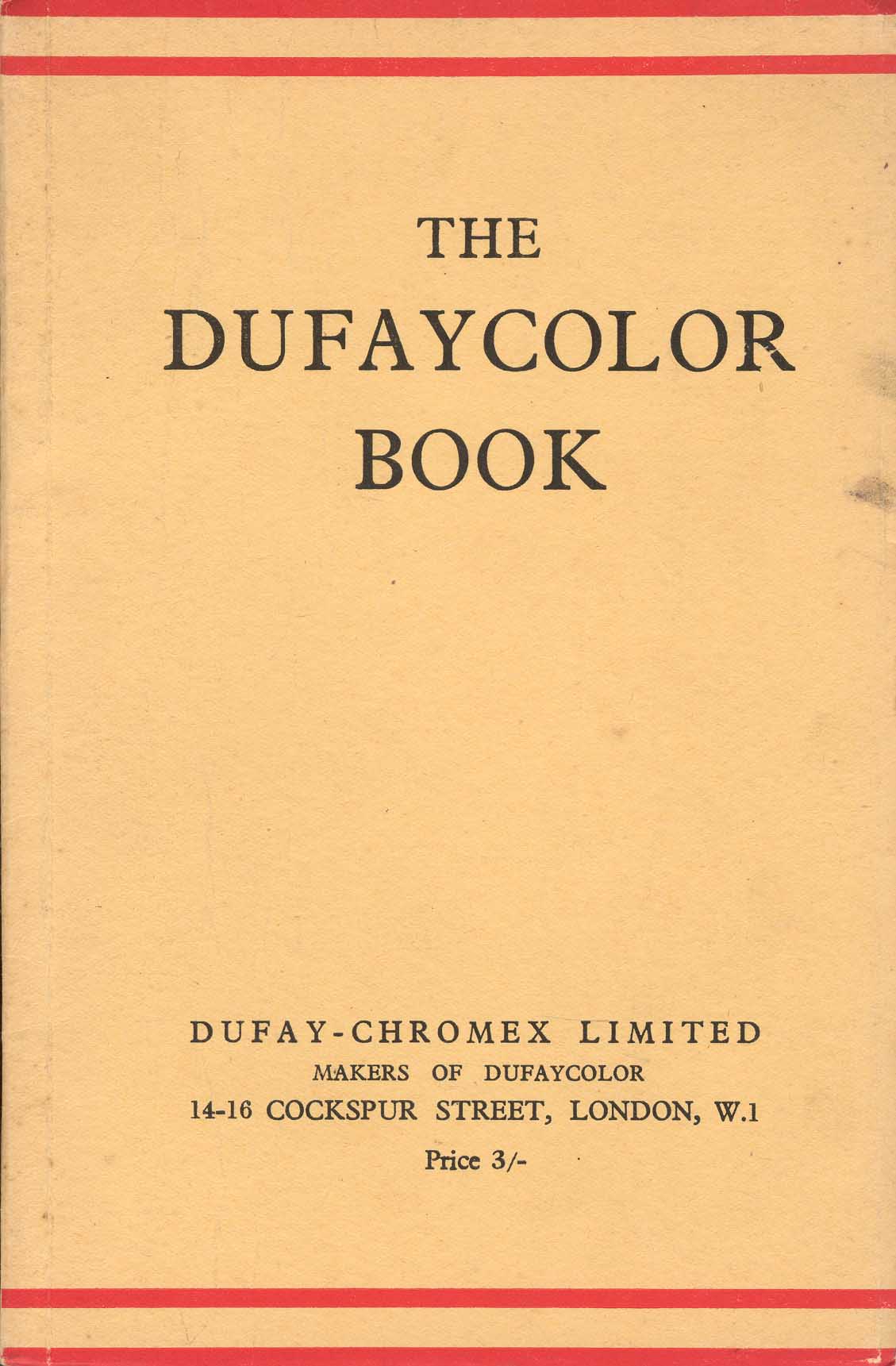
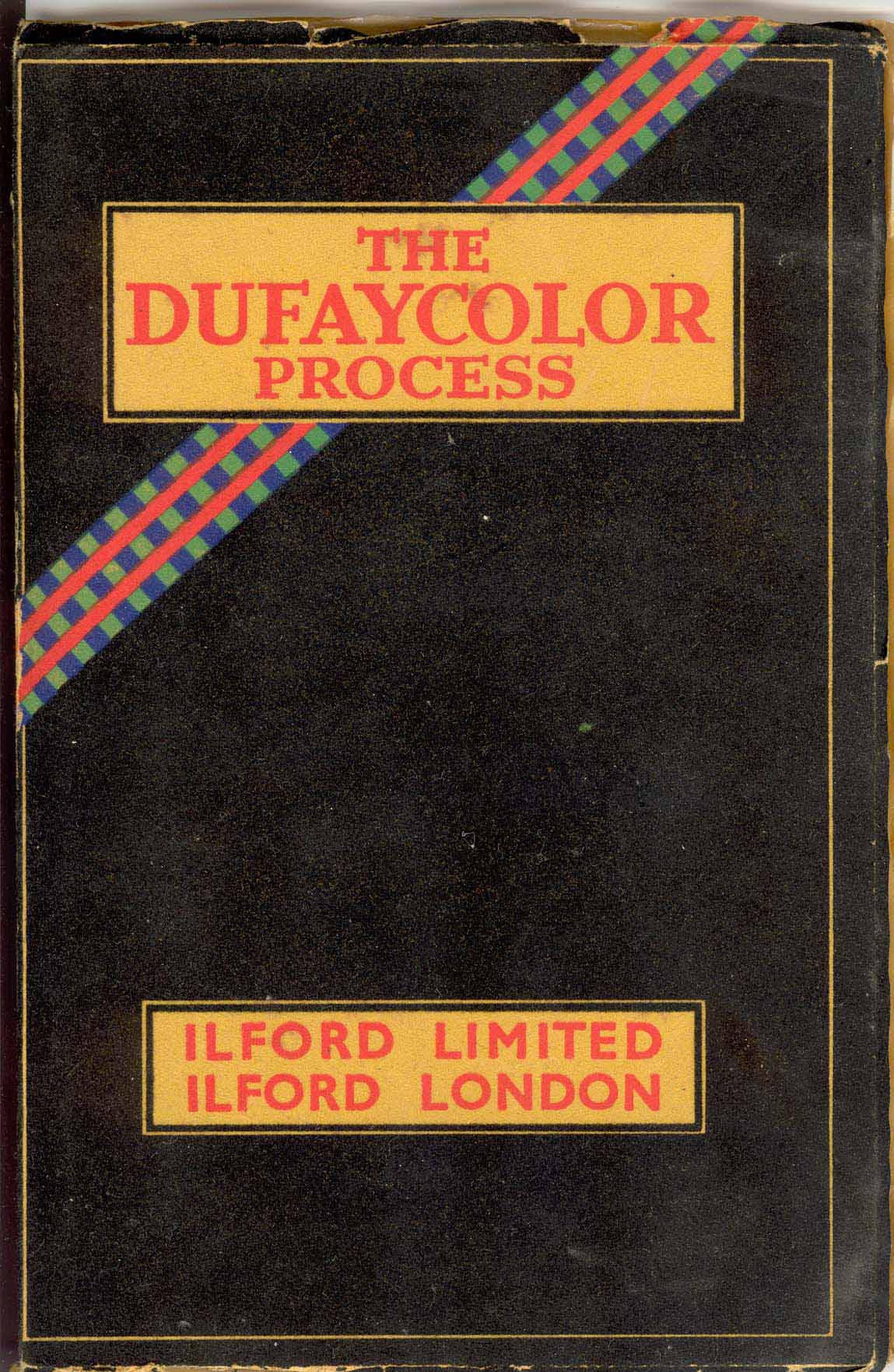
These are three Dufay publications.
Dufaychrome
Formally British Tricolour.
A private company sponsored the development of the patents of Jack Coote. See JSMPTE June 1948 for a description of Jack's beam-splitter camera, similar to the Technicolor camera.
Cornwell-Clyne says on page 32 of 'Colour Cinematography':
The print process used a two layer emulsion containing non-diffusing colour couplers and subsequently re-sensitised for the third colour.
However on page 414 he says:
The blue record negative is printed onto a positive (non-colour sensitized) emulsion layer containing an immobile yellow colour former. The latent image formed by the first printing operation is not immediately developed, but, instead, the film is re-sensitized with positive emulsion - this time containing an immobile magenta coupler.... the film is again sensitized with a positive emulsion - this time containing an immobile cyan coupler.
The rights were acquired by Dufay-Chromex Ltd in 1948
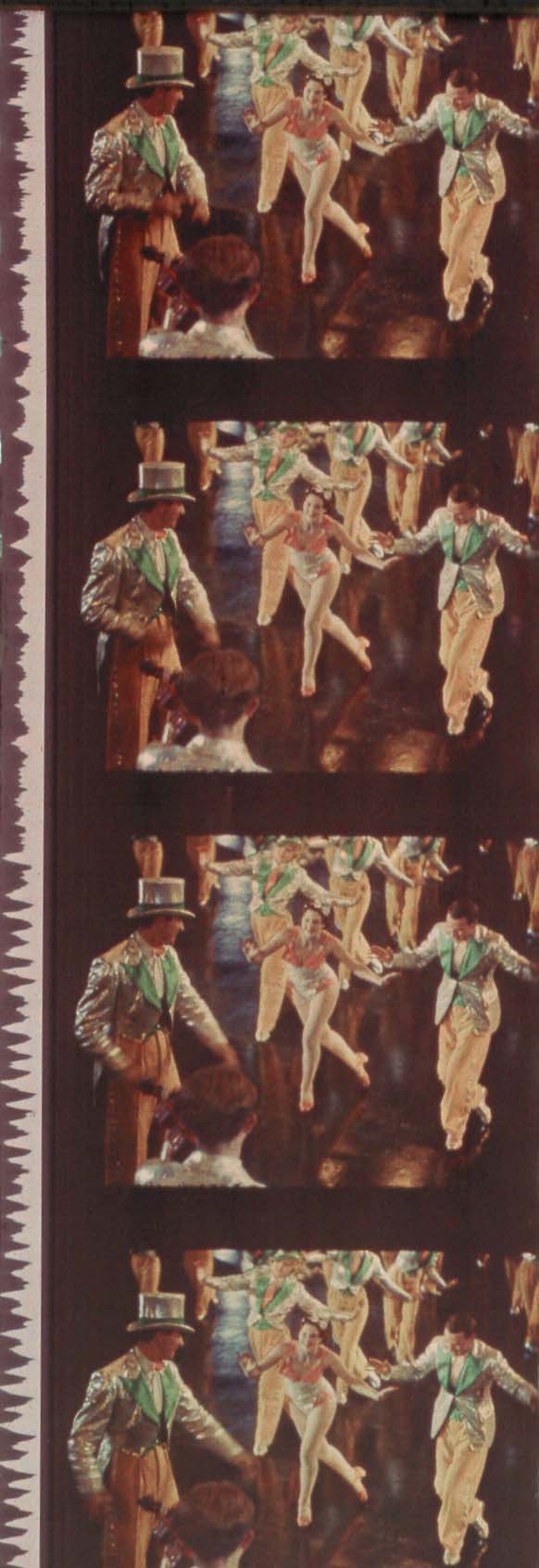
'Radio Parade' 1934
Directed by Arthur Woods
Cameraman Claude Friese-Green
British International Pictures Ltd.
Colour sequences shot on Dufaycolor
Dufaytissue
Prints could be made from still images using Dufaytissue. Separation negatives had to be made from the transparency and then printed onto Dufaytissue. Here is the section from 'The Dufaycolor Book'
