Strange and Interesting Samples Page 2
Please click image to see larger image
Item 50
Item 51
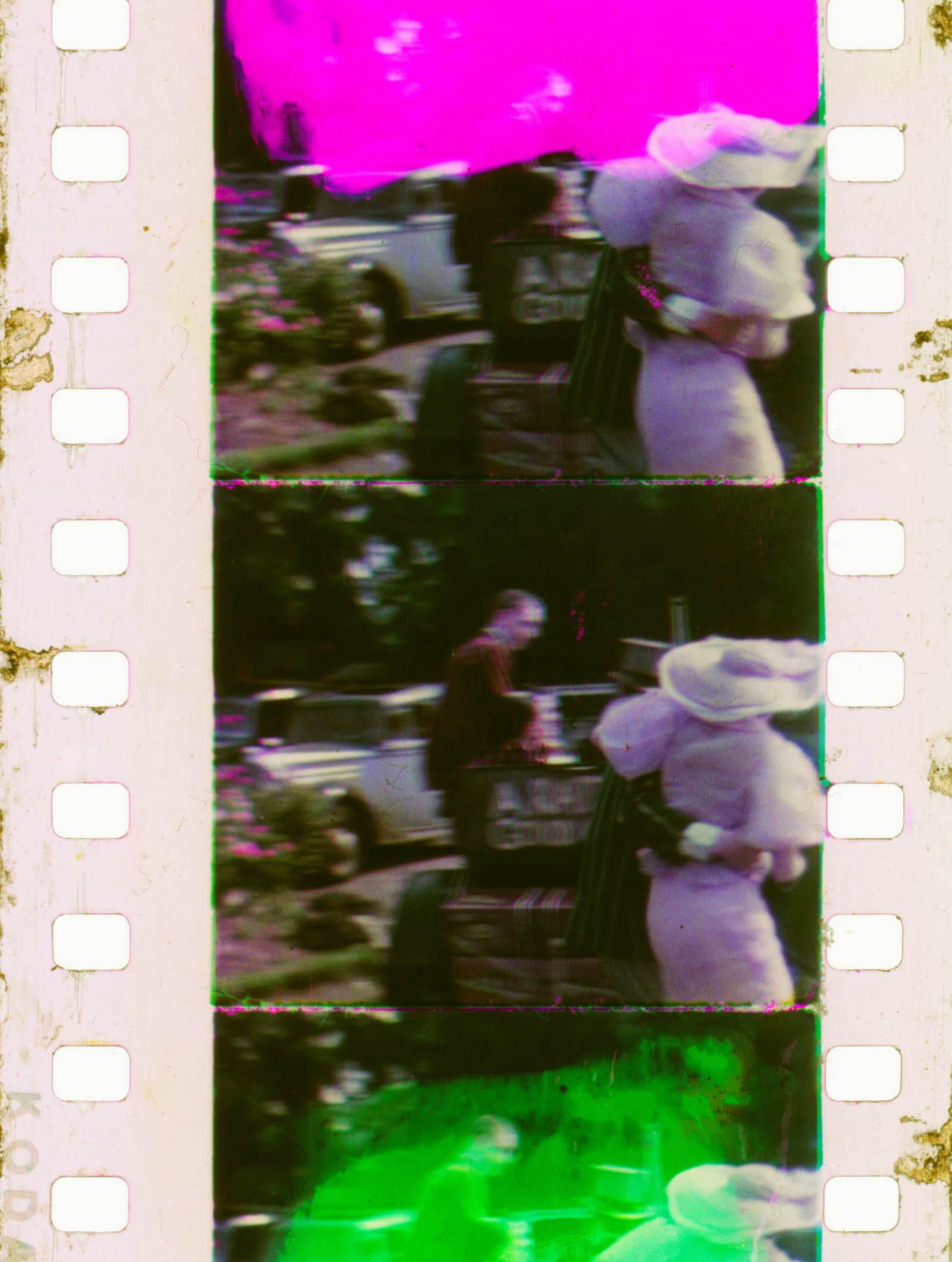
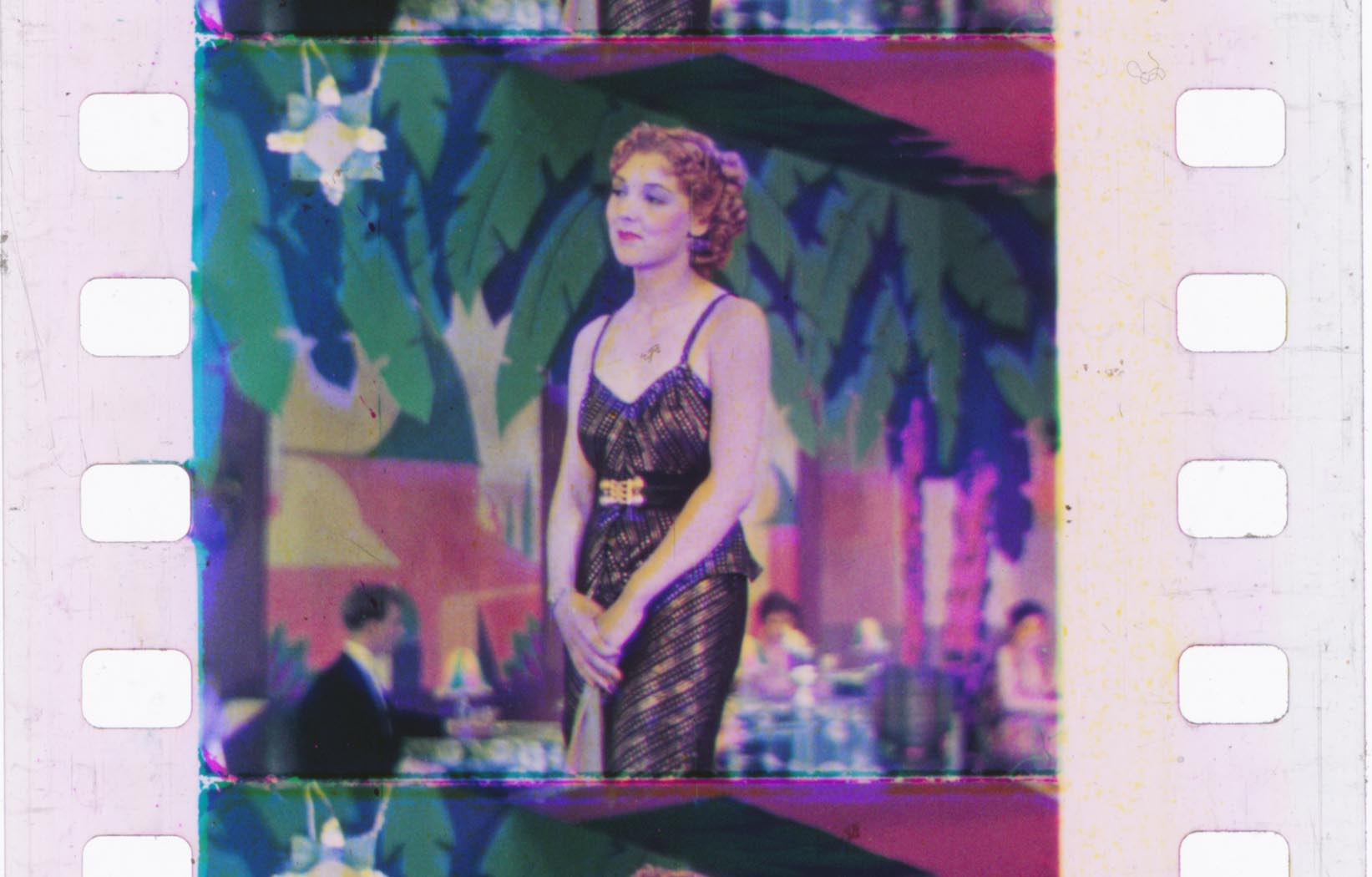
Item50 and 51Sample of Brewstercolor. Note that this is a duplex system with emulsions on both sides of the film. Emulsion has been removed from each side to show magenta and green images. Invented by P D Brewster the camera had a rotating mirror to capture the three colours. The negatives were printed onto duplex stock, the red negative on one side which was then dye toned cyan and the green image printed onto the other side and dye toned magenta. The blue image was printed in yellow by imbibition on top of the red toned image. You can see where the emulsion has been removed leaving either a magenta or green image (yellow plus cyan). Close examination of the image shows registration problems due to time parallax errors and printing difficulties.
The first picture was scanned from a frame in the middle of a pan, the frame on the right is much sharper.

Item 52
Item 53
Item 54
Item 55
Item 56
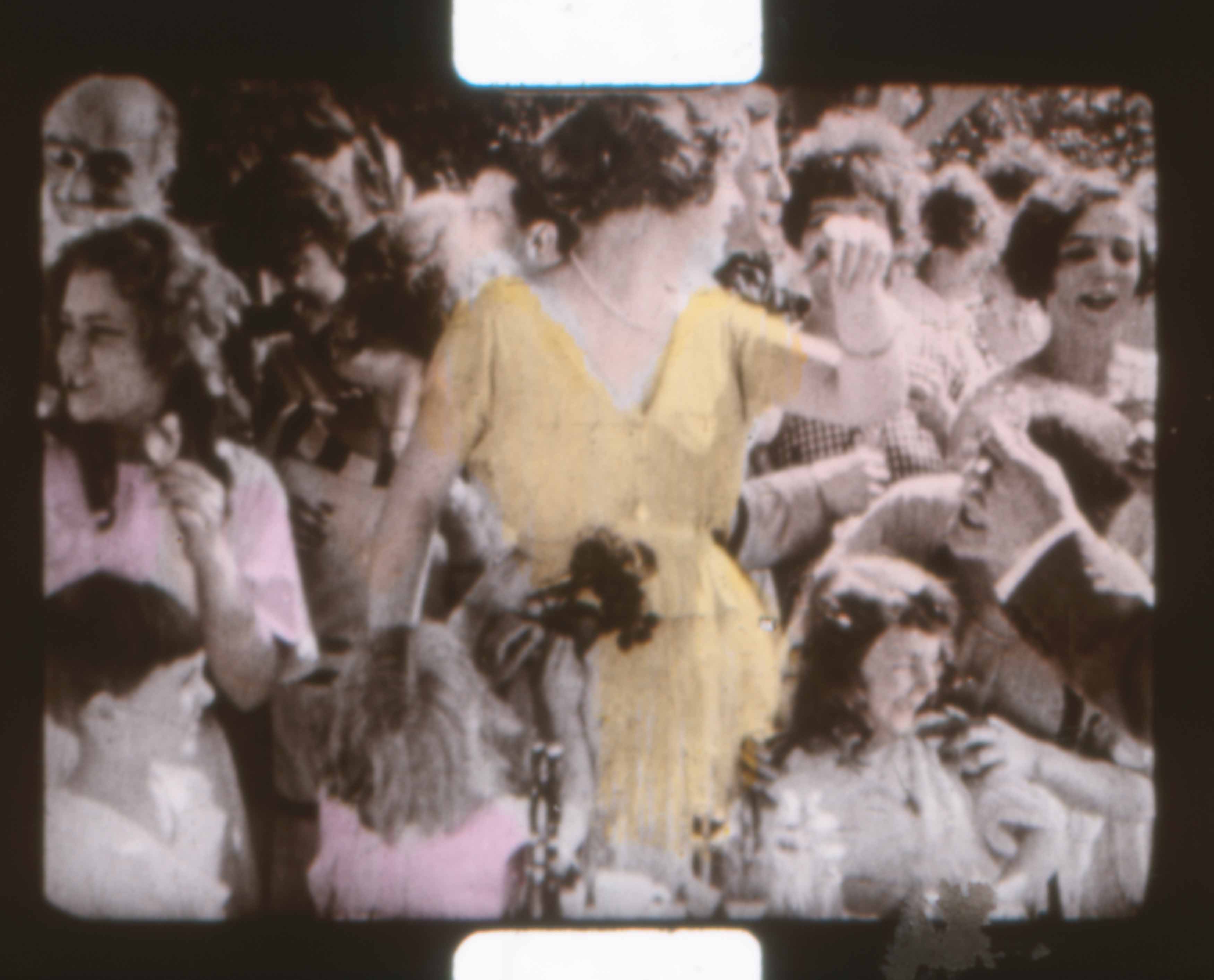
Item 57
Item 52 & 53
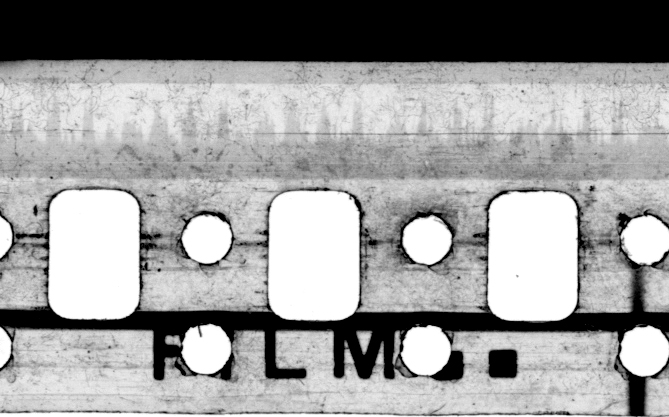
A piece of 35mm combined Black and White Positive with 4 small holes at each perforation. Close examination shows that there is a unilateral variable Area track. (see second picture)
Item 54
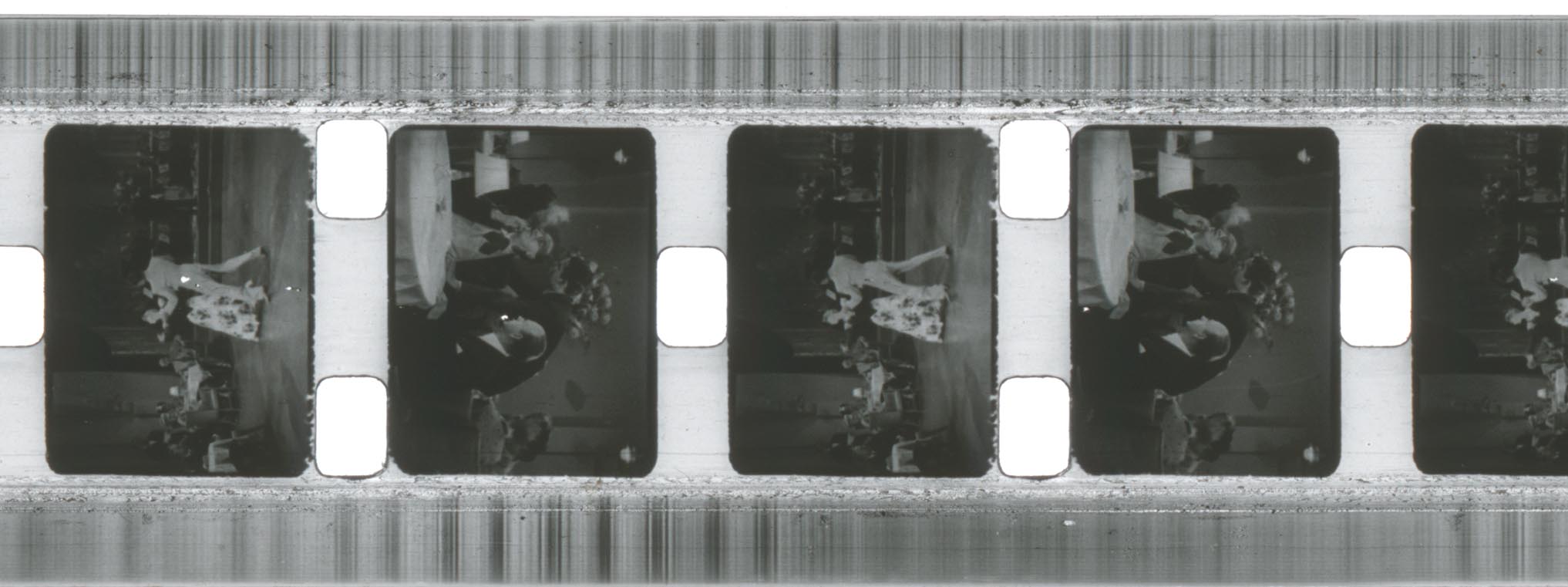
A sample of 16mm from the 1930s. There is a track each side and alternate frames are upside down and also alternate single and double perforations. The film had a note with it saying that the system was designed to run at 4/5 the speed of 35mm rather than the 2/5 of normal 16mm and thus increase the sound quality.
Item 55
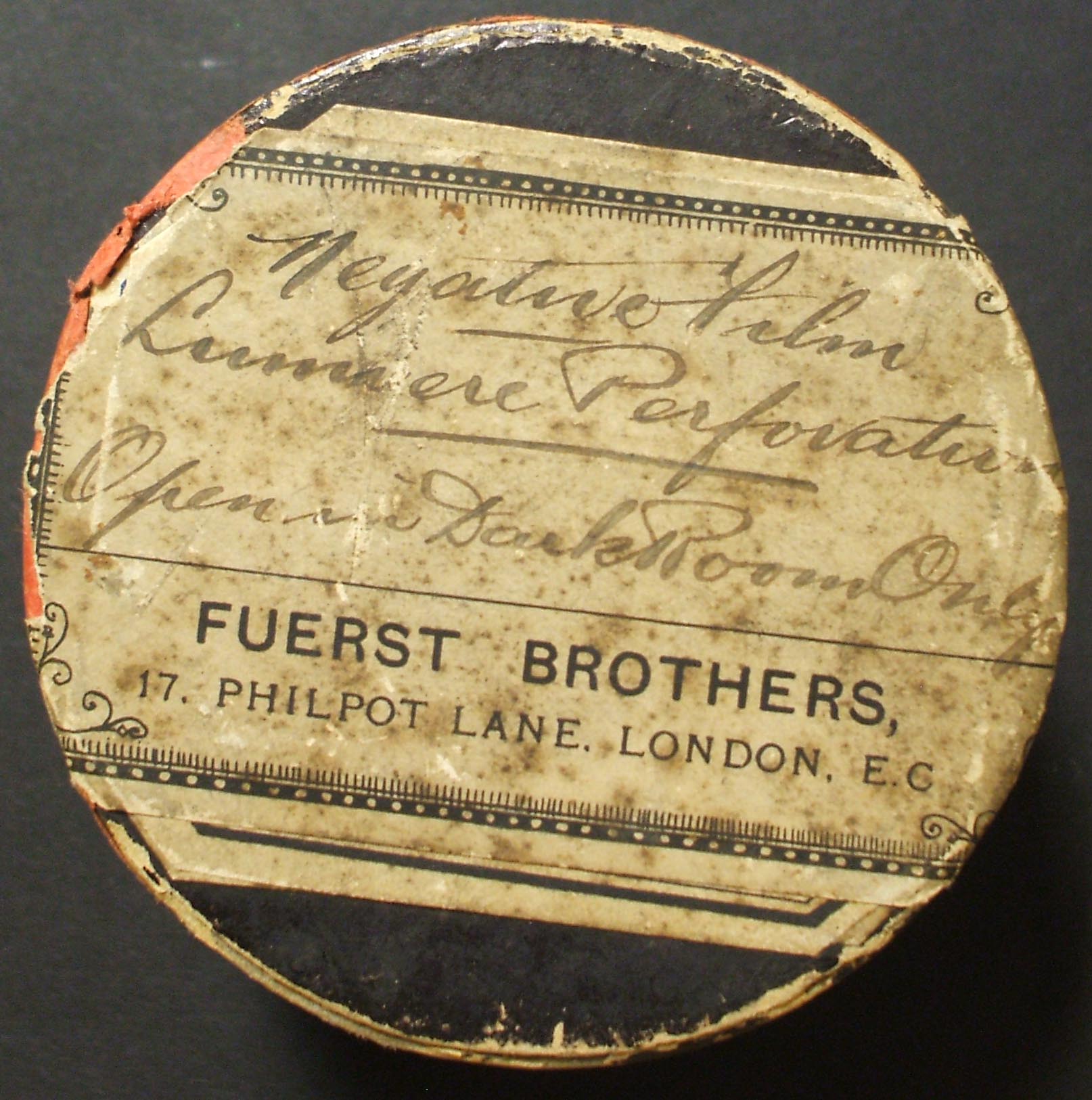
An unopened roll of unexposed film supplied by the Fuerst Brothers. The label says 'Negative Film Lumiere Perforations - Open in Darkroom only'
Fuerst Brothers started trading in 1884. They were operating from the address on the can in 1899 and still there in 1915.
Itm56 & 5
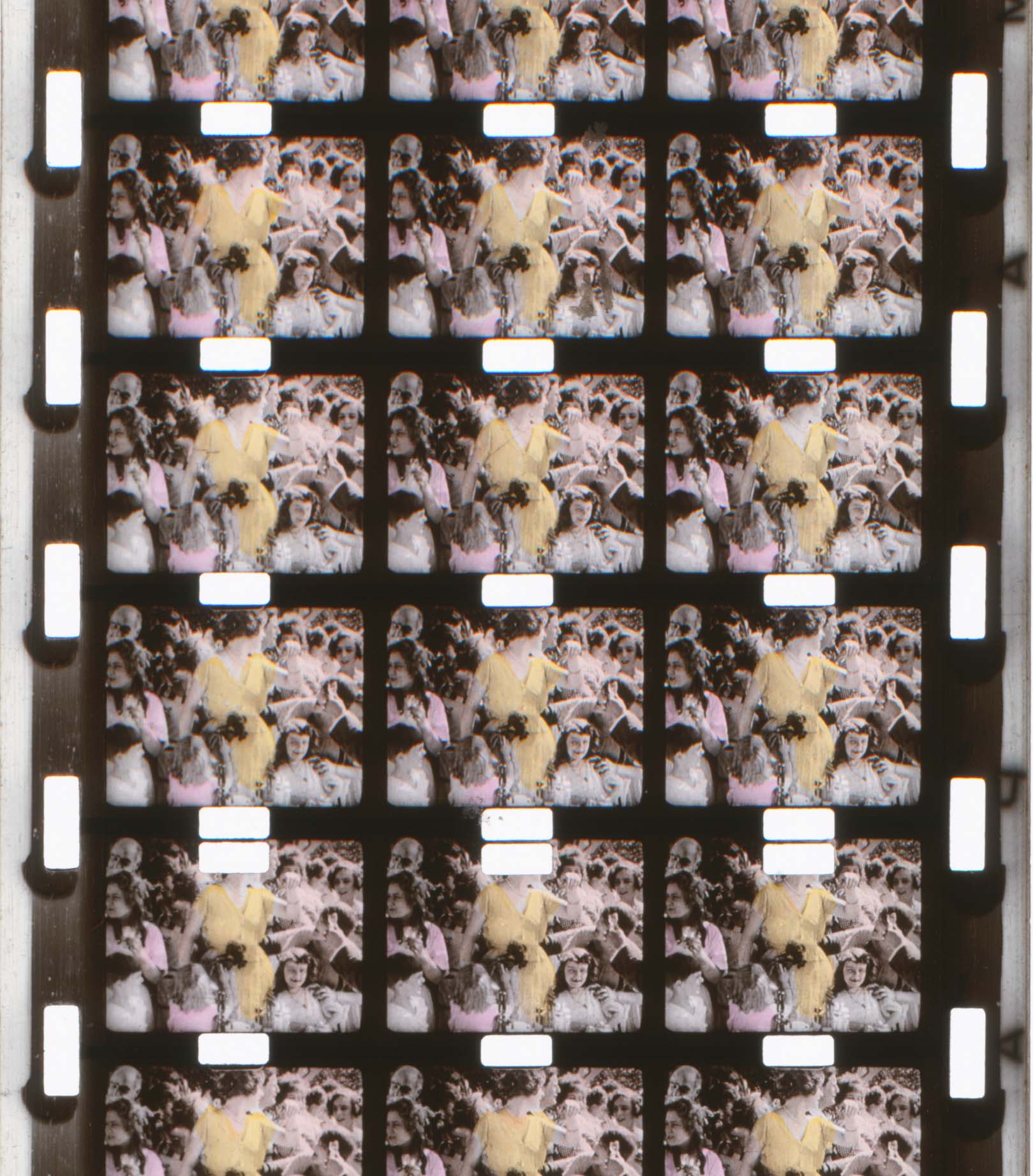
A sample of three row 9.5mm Stencil colour. The frame on the right is an enlargement. Note also the faulty perforation second row from the bottom of the main image.
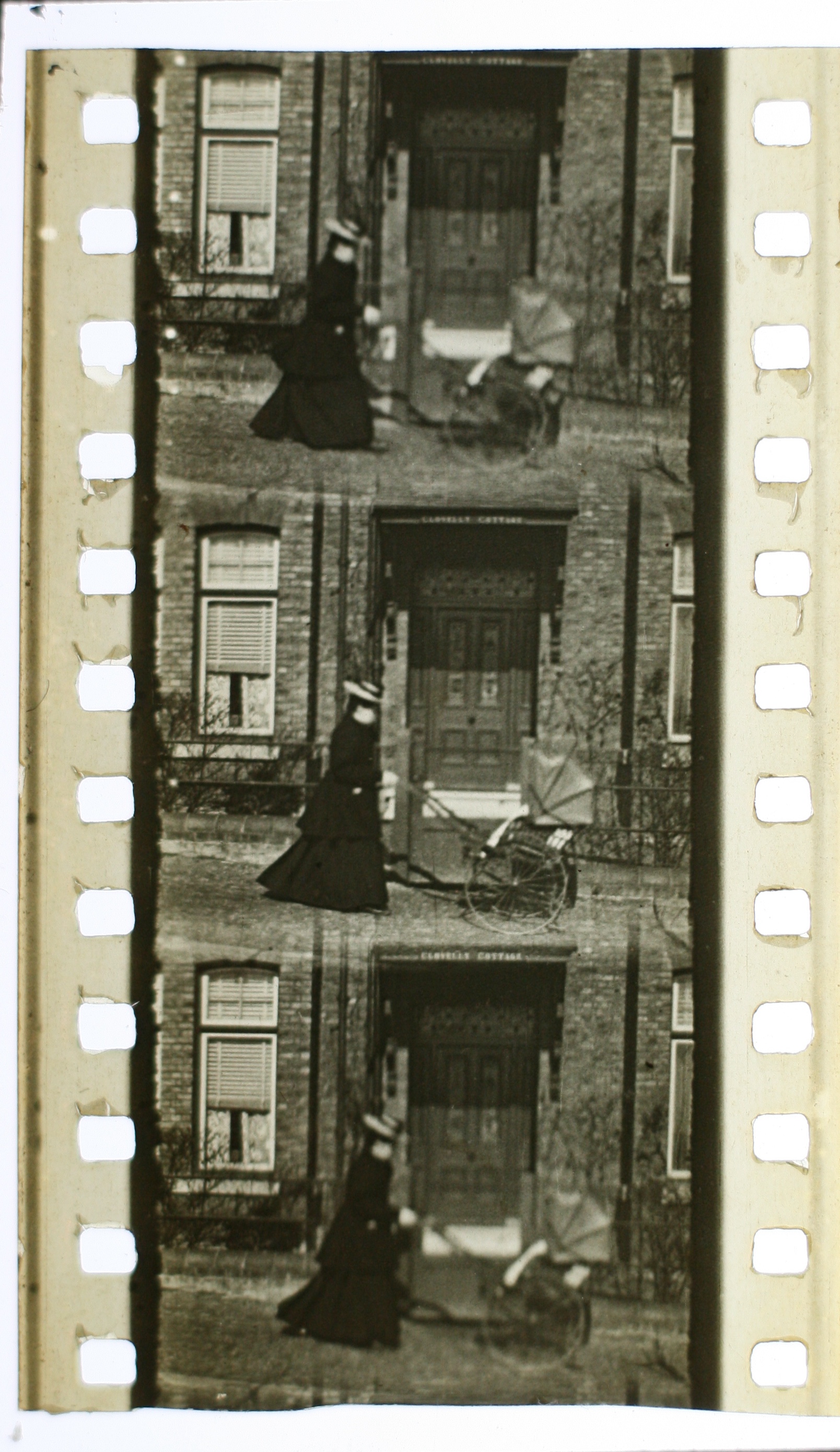
Item 57
Item 57 & 58
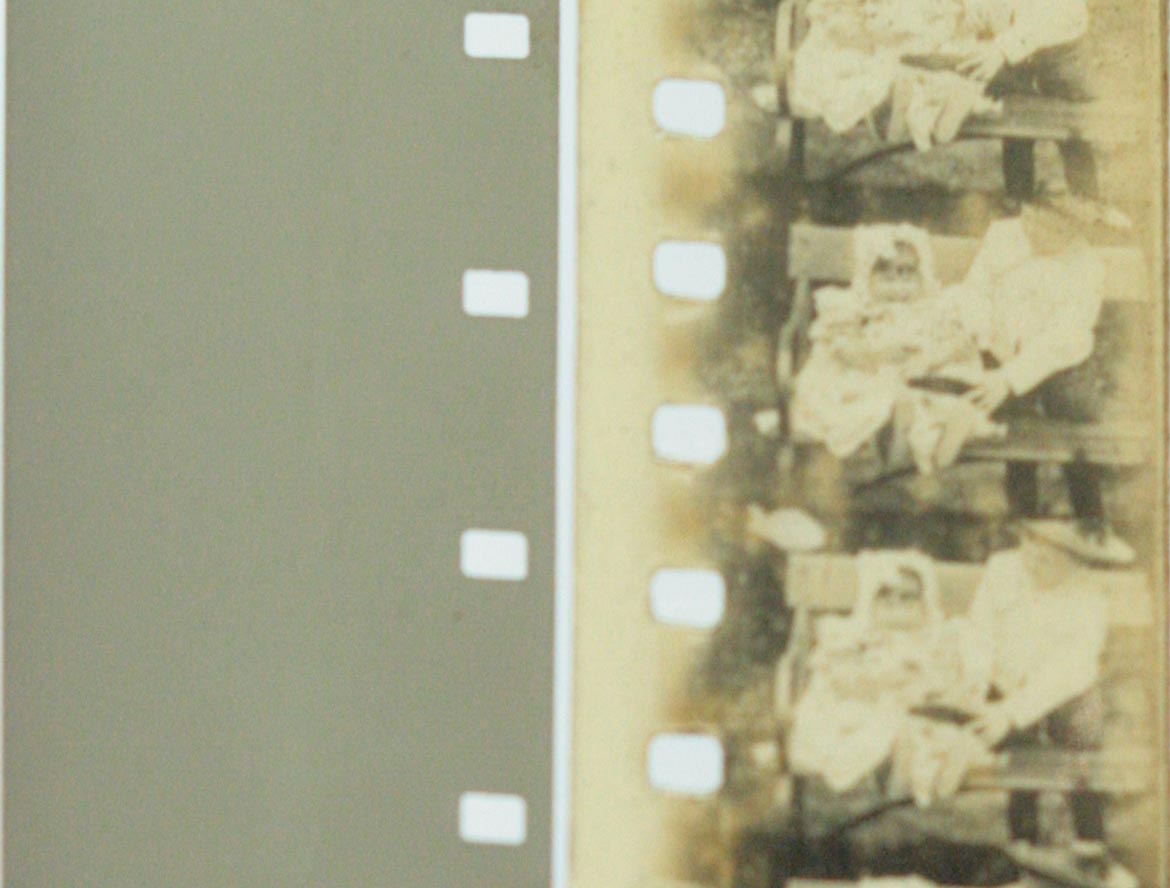
This is a B/W positive from the National Media Museum in Bradford. The note with it is shown with the note typed on the right. The film was shot by Birt Acres
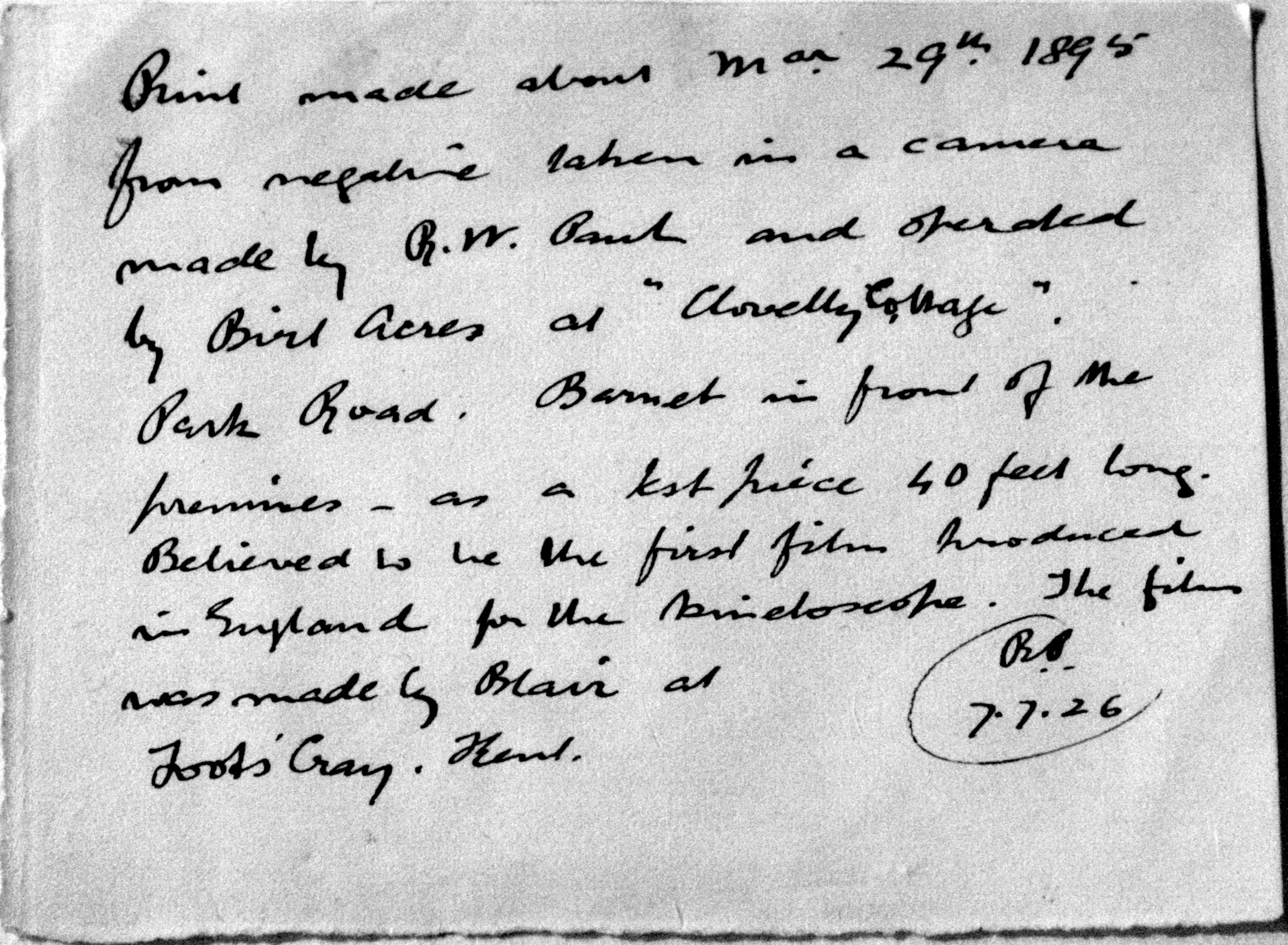
Item 58
Print made about Mar 29th 1895 from negative taken in a camera made by R W Paul and operated by Birt Acres at “Clovelly Cottage”, Park Road, Barnet in front of the premises as a test piece 40 ft long and believed to be the first film produced in England for the Kinetoscope. The film was made by G Blair at Foot’s Cray Kent.
B.A 7/7/26
Note typed out.
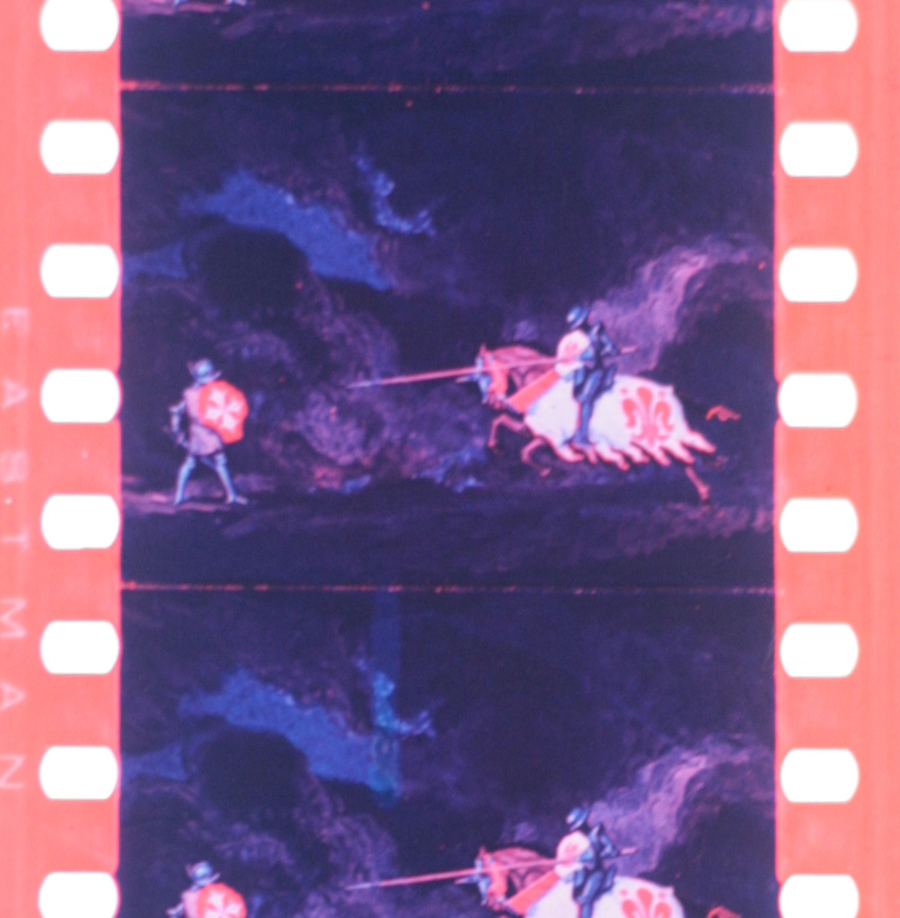
Item 59
Item 59 A sample of unknown 2 colour film . Item 60 Here is a piece of film with a piece of 16mm for comparison. It appears to be 17.5mm wide with 2 perfs per frame. This is a sample from the National Media Museum, Bradford.