Lee-Turner Project with the National Media Museum
- the world's first colour moving images
The project was instigated by Michael Harvey - Curator of Cinematography at the National Media Museum, Bradford and funded by Screen Yorkshire.
The work was carried out by David Cleveland and Brian Pritchard in 2012
We are grateful for the assistance and facilities provided by the Conservation Specialists at the bfi/National Archive through the good offices of Charles Fairall, Head of Conservation.
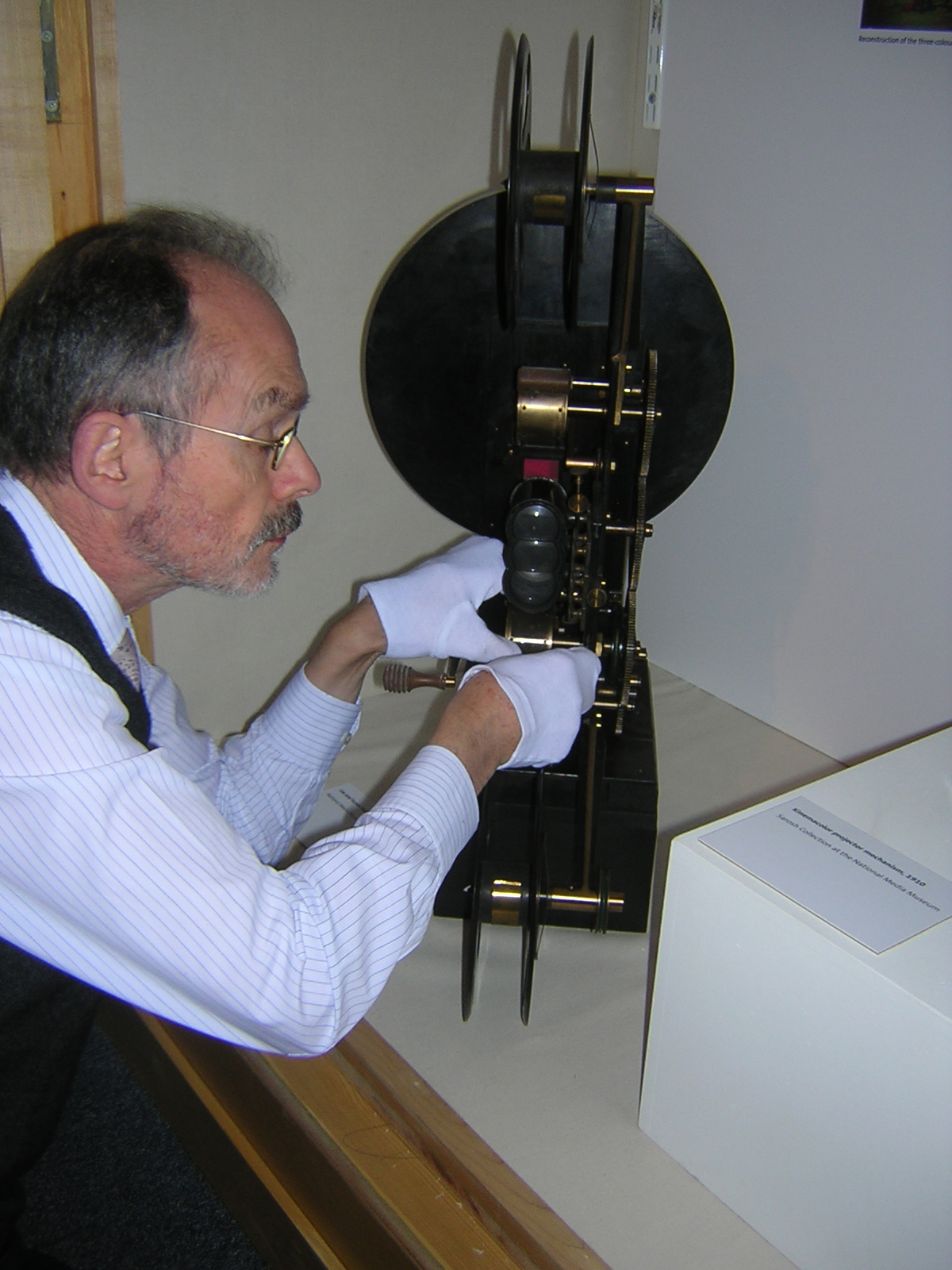
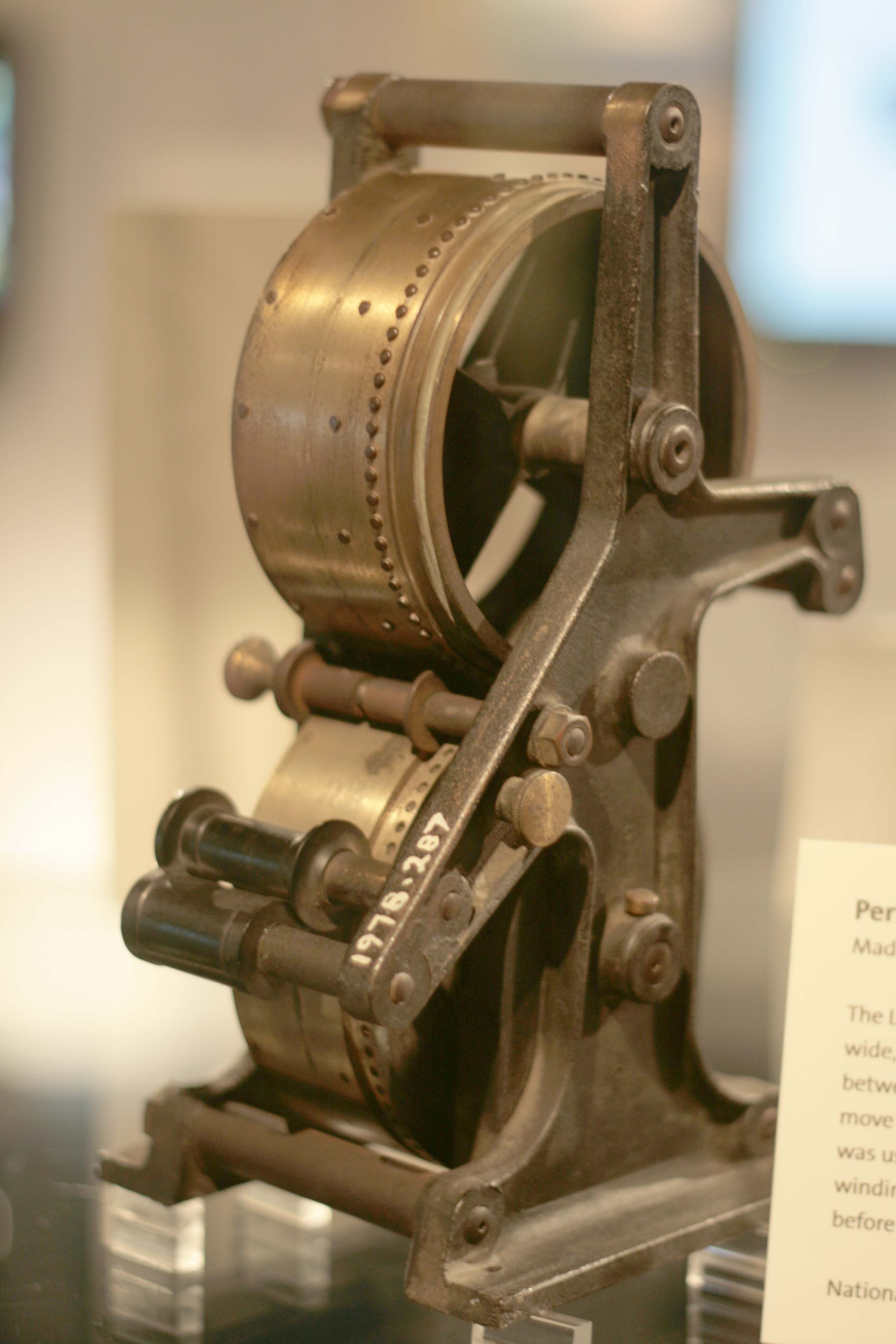
There is a display at the National Media Museum at Bradford of various artefacts such as the projector and perforator, you can see the films.
Here is a link to the Youtube video http://www.youtube.com/watch?v=XekGVQM33ao
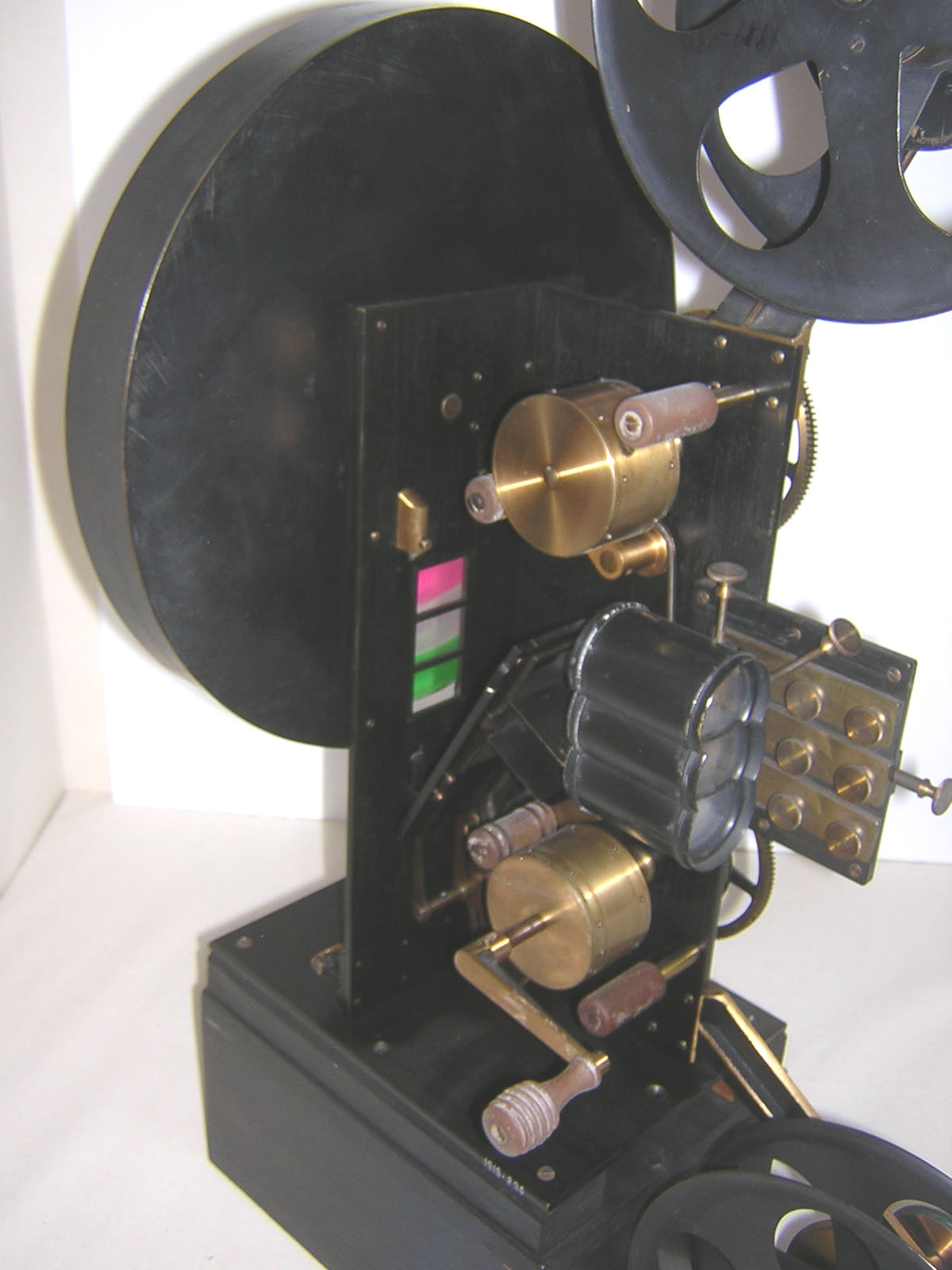
Frederick Marshall Lee was the financial backer of Edward Raymond Turner. They were the first to produce moving colour pictures. Other people had suggested various systems but Turner used his system to actually shoot film. Their perforator and projector are at the National Media Museum in Bradford, UK; they were made by Alfred Darling in Brighton. The NMM also hold most of the film shot by Lee-Turner. The film was shot as 1½ inches wide although due to the shrinkage that takes place with nitrate film during processing the processed film is 1 15/32 inches wide. It is usually maintained that the film was shot at 48 frames per second but examination of the film indicates that it was shot at around 16 frames per second. This confusion seems to stem from the fact that you were looking at three frames at a time, however the projector pulls down one frame at a time and the colour images look correct at 16 fps.
Lee and Turner patented the process in 1899, patent number: GB189906202A
The patent appears by kind permission of:
The Director
European Patent Office
EPA/EPO/OEB
80298 Munchen
Deutschland
Espacenet Home Page
The film was shot using red, green and blue filters sequentially. The positive film was projected using a projector with three lenses which superimposed three frames at a time through a rotating filter with red green and blue filters. You first viewed (as an example) frame 1 through a red filter, frame 2 through a green filter and frame 3 through a blue filter simultaneously. The projector pulled down the film one frame; the filter wheel rotated and you viewed frame 2 through a green filter, frame 3 through a blue filter and frame 4 through a red filter and so on. Unfortunately Turner was unable to achieve steady, satisfactorily registered pictures with his projector. After he died further attempts to make the system work by Urban and George Albert Smith were unsuccessful.
Illustrations
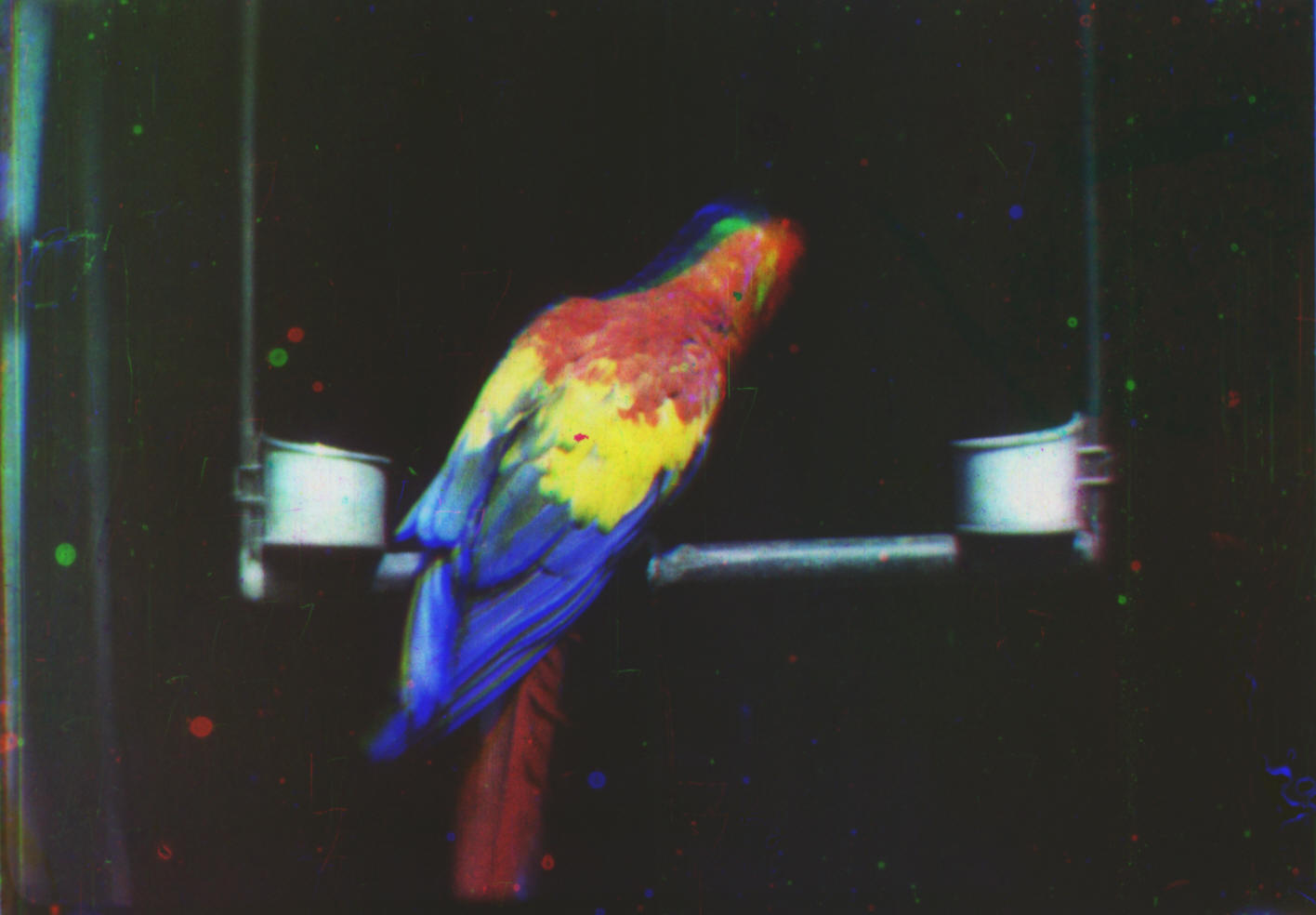
David and I were asked by Michael Harvey if we would like to see if we could restore the films. We took the films and the NFA kindly stored them in their nitrate vaults. We we given permission to use one of their optical printers. I built a special gate for the printer which held one frame at a time in the gate. It was not possible for economic and practical reasons to mechanise the gate so each frame had to be positioned in the gate using register pins. There were negatives and positives. The positive frames were photographed onto Kodak Fine Grain Duplicating Negative, and the negative frames onto Kodak Duplicating Positive. The camera was wound on and the next frame positioned in the gate. There were 5381 frames to be copied, it took us about two weeks to complete the copying. After they had been processed at the NFA the negatives and dupe positives were scanned on an Arri scanner at 4K to DPX files. The files were then taken to Prime Focus in London where Turners method of combining the red, green and blue frames onto a single frame and then combining green, blue and red frames for the next frame and so on and was carried out digitally. A digital dupe negative was made of all the material and a 35mm colour print was made for projection.
.jpg "3rd Test Neg (1)_small")
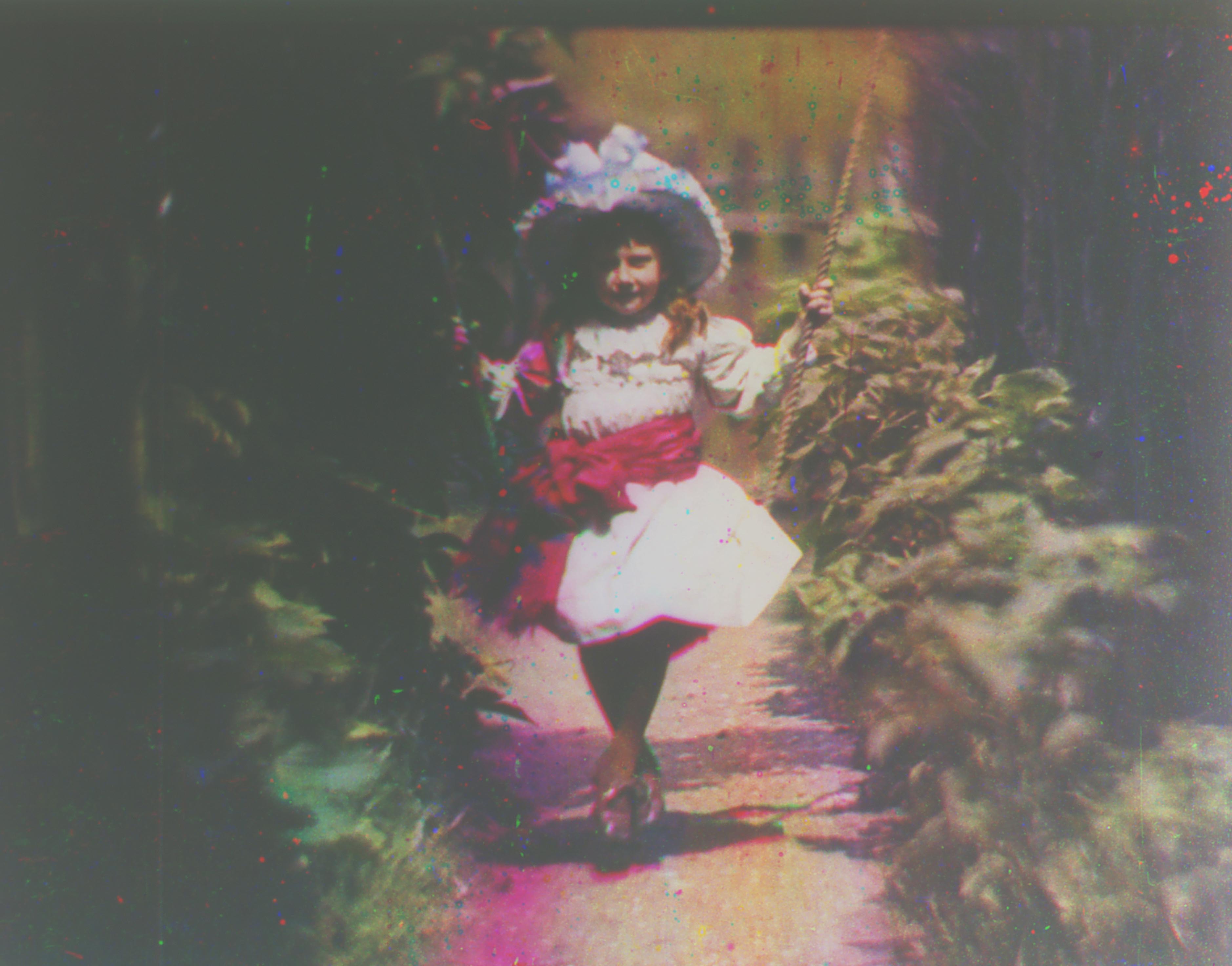
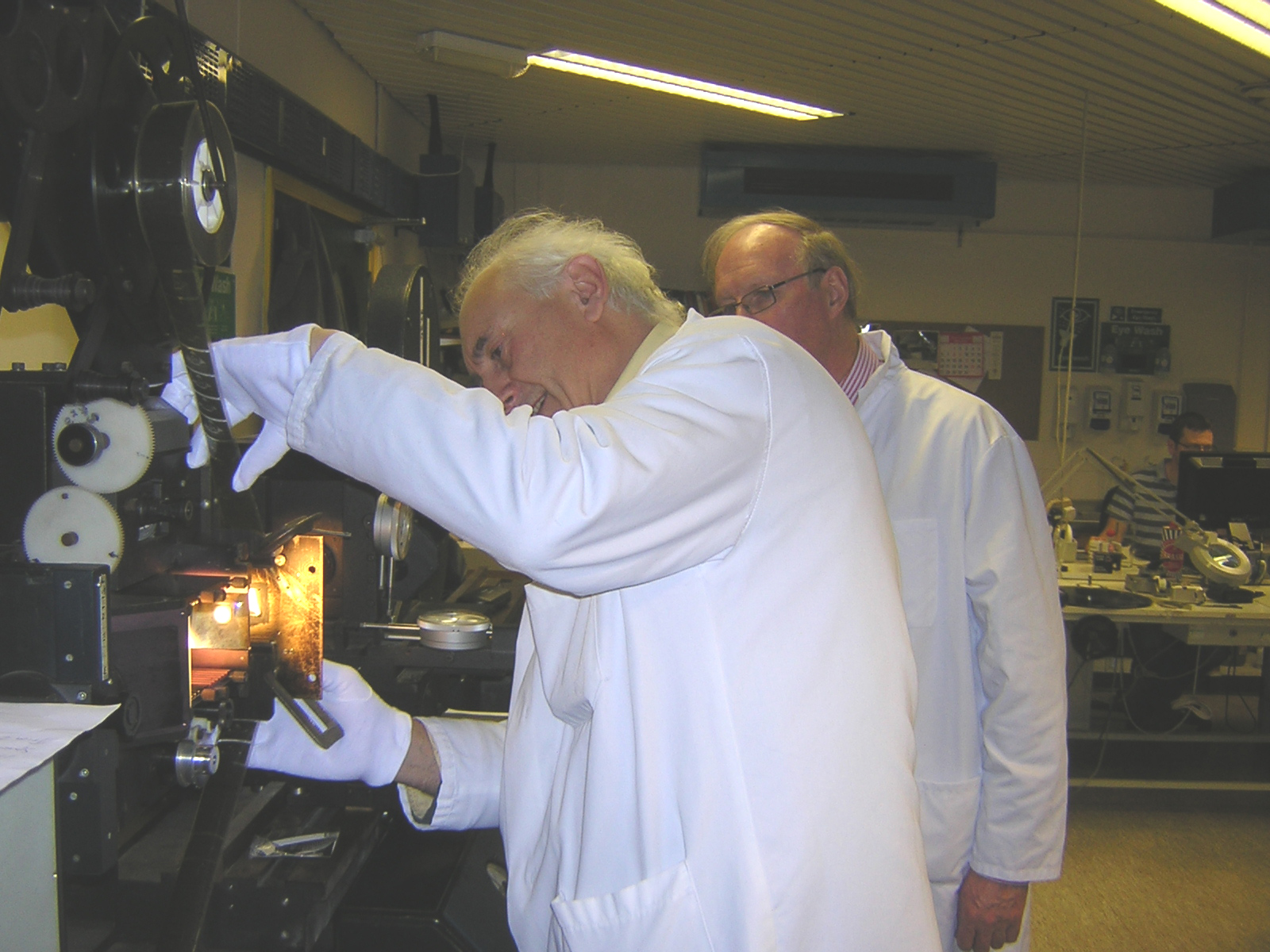
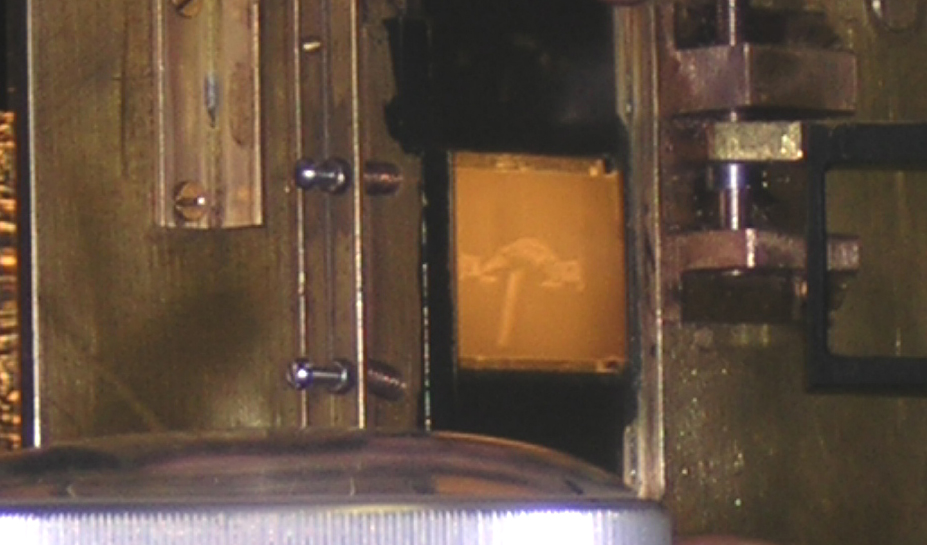
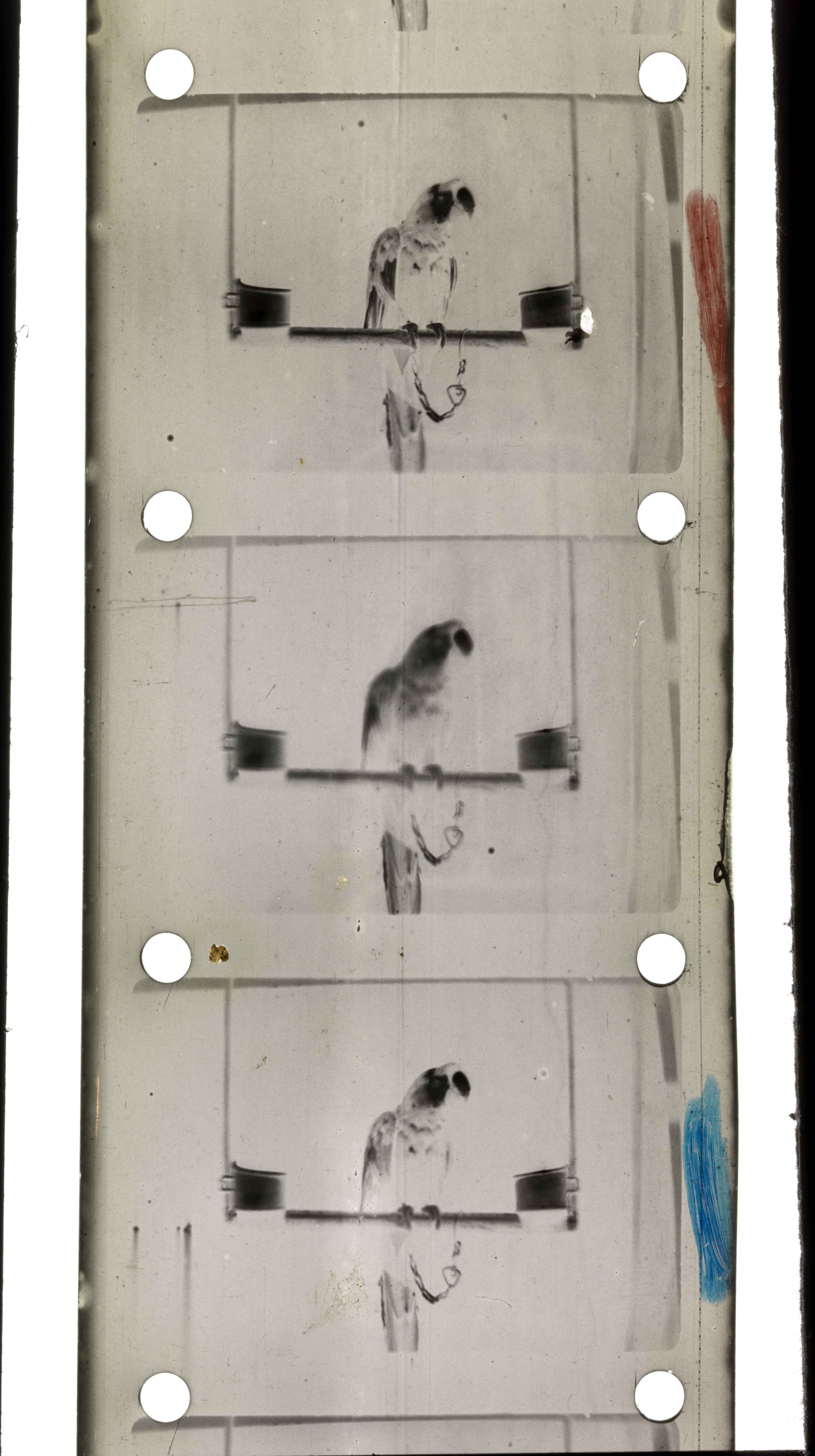
Pictures from left :to right
Lee-Turner projector
Michael Harvey with the projector
Digital composition from copied original
Original 1 ½ inch film with crayon marks to indicate which frame is which colour
First test printing
Digital composition from another set of frames note, the fringing caused by movement of the subjects between taking the red, green and blue frames. This is known as time -parallax error
David Cleveland and Brian Pritchard printing at the National Archive printing the originals
Gatebuilt by Brian Pritchard containing frame
Perforator built by Alfred Darling - on display at the National Media Museum, Bradford.