Strange and Interesting Samples
Here are some pictures and film samples I have collected over the years, I hope you find them interesting.
Item 1

Item 2
Item 3
Item 4
Item 5
Item 6
Item 7
Item 1
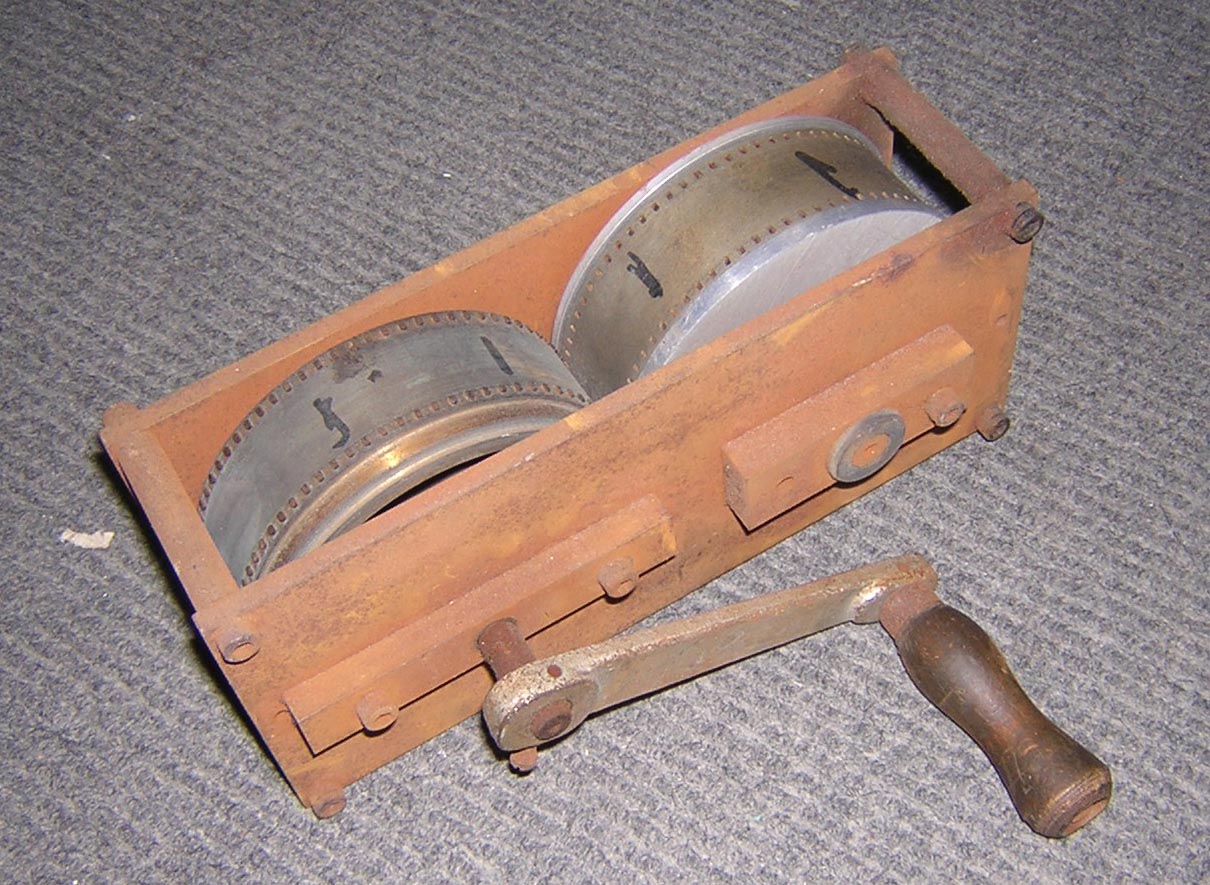
This is a perforating machine. It was owned by the late Tony Scott of Film and Photo. It was apparently made during World War II.
Item 2
Picture printed onto aluminium base.
This is an article from 'Home Movies and Home Talkies June 1939

The system was patented in 1925 by Robert W Carter here is his patent CA249966A
A French PhD thesis by Philippe Rouyer www.uk-us.fr/agedor.pdf covered the process.
Here is a translation of the section
kindly provided by Mikael Barnard and Boris Curwen
Item 3, 4, 5, 6. 7.
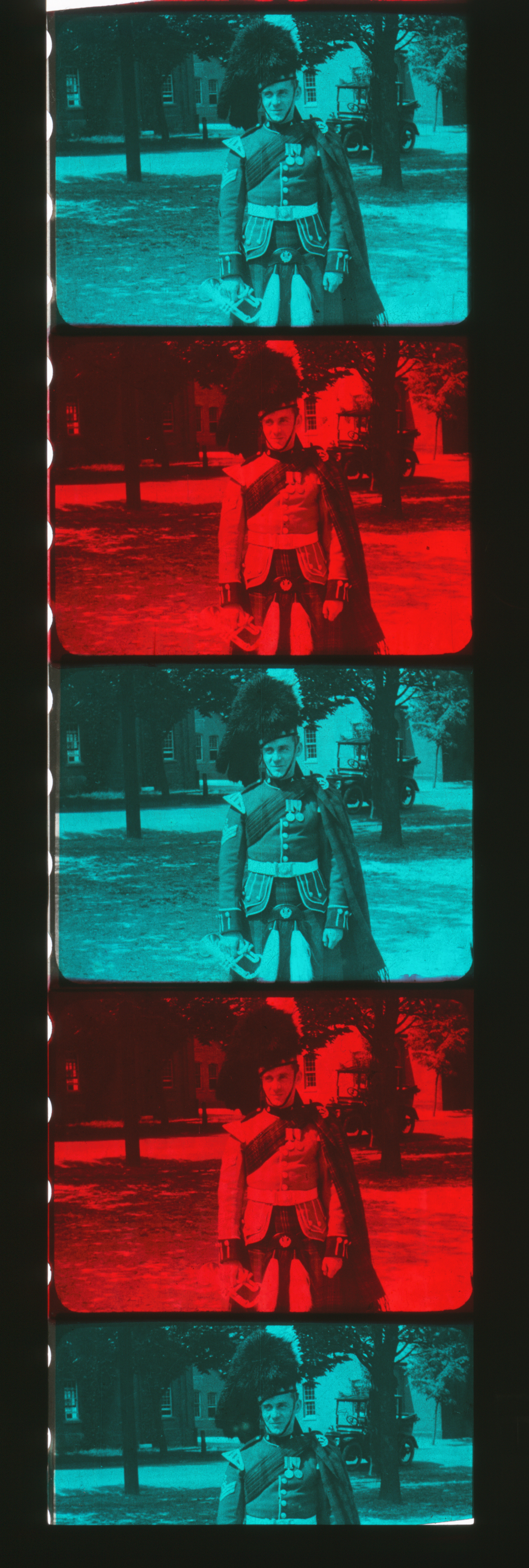
Item 3. This is a piece of two colour additive film. The film is sepia toned and alternate frames coloured red. It is possibly an early test by G Albert Smith, inventor of Kinemacolor. I have recently come across the picture on the right Item 4 which is Biocolor so the left hand picture is probably a test by Freise-Green and not Smith
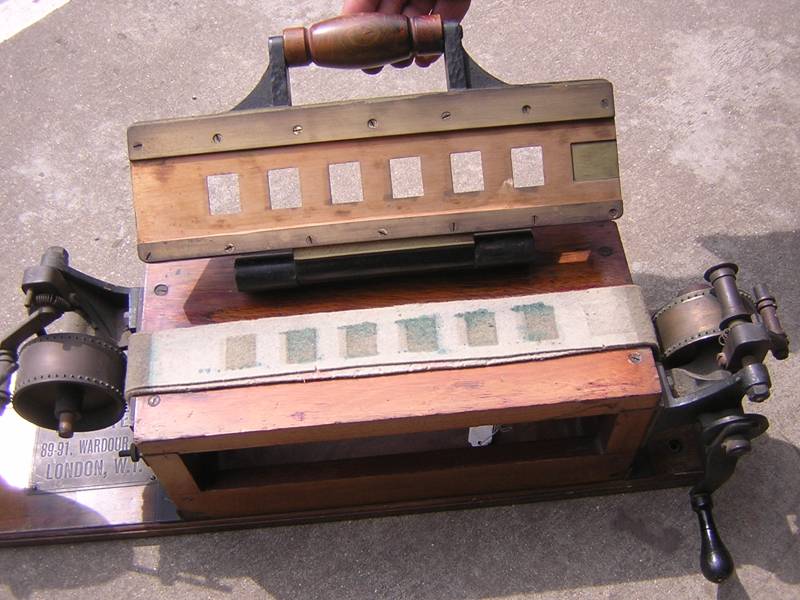
Item 5. This is a device used by Claude Friese Green to colour film with dye and a paintbrush. Made by William Vinten.
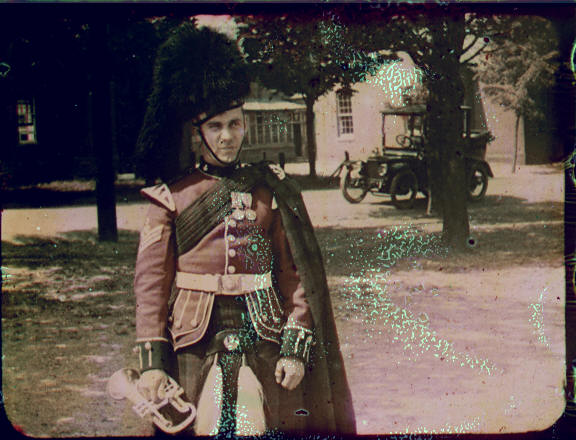
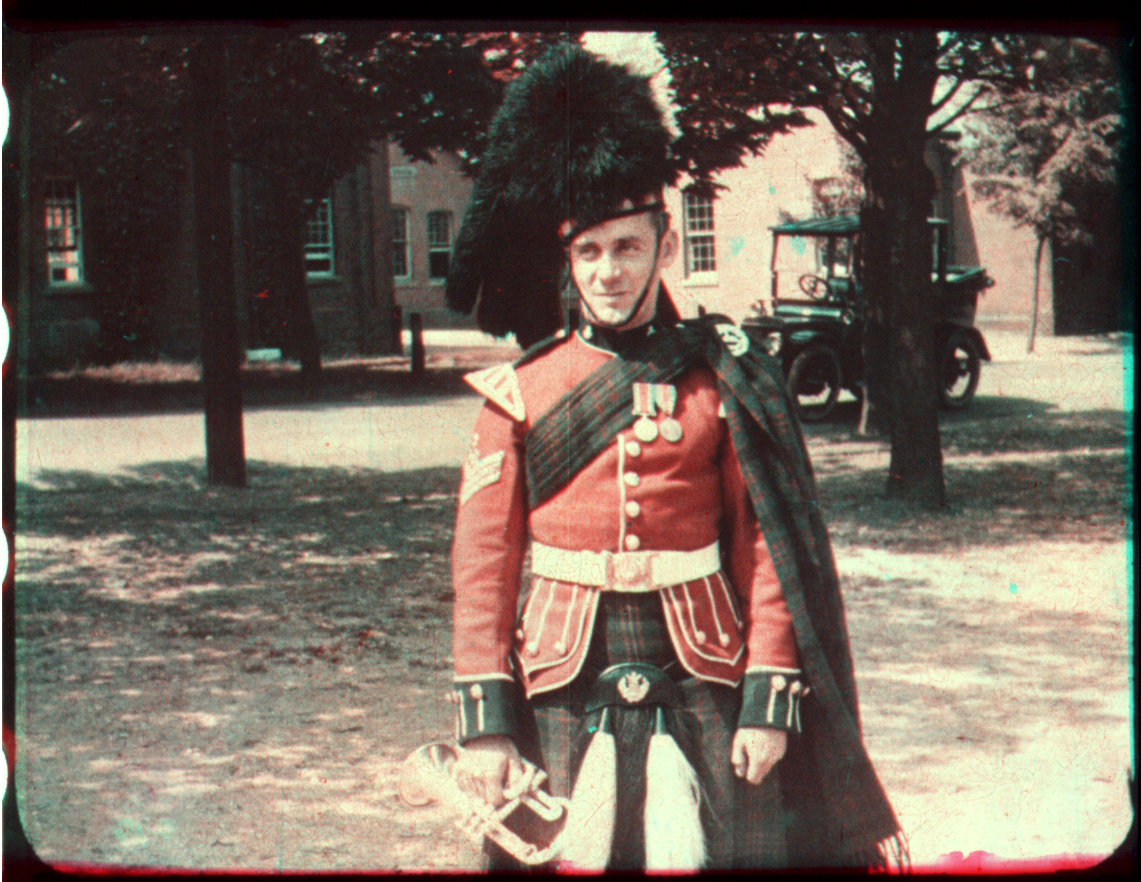
Item 6 is a digital composition from Item 1 frames made with Photoshop 7 and Item 7 is from Item 4.
Item 8
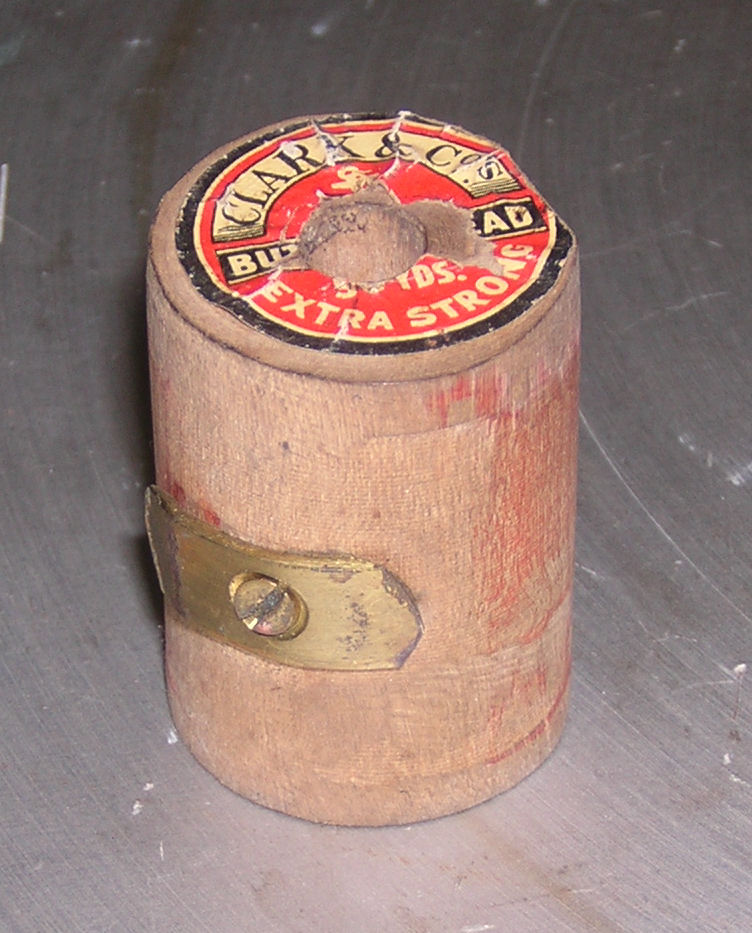
A film core made from a wooden cotton reel.
Item 9
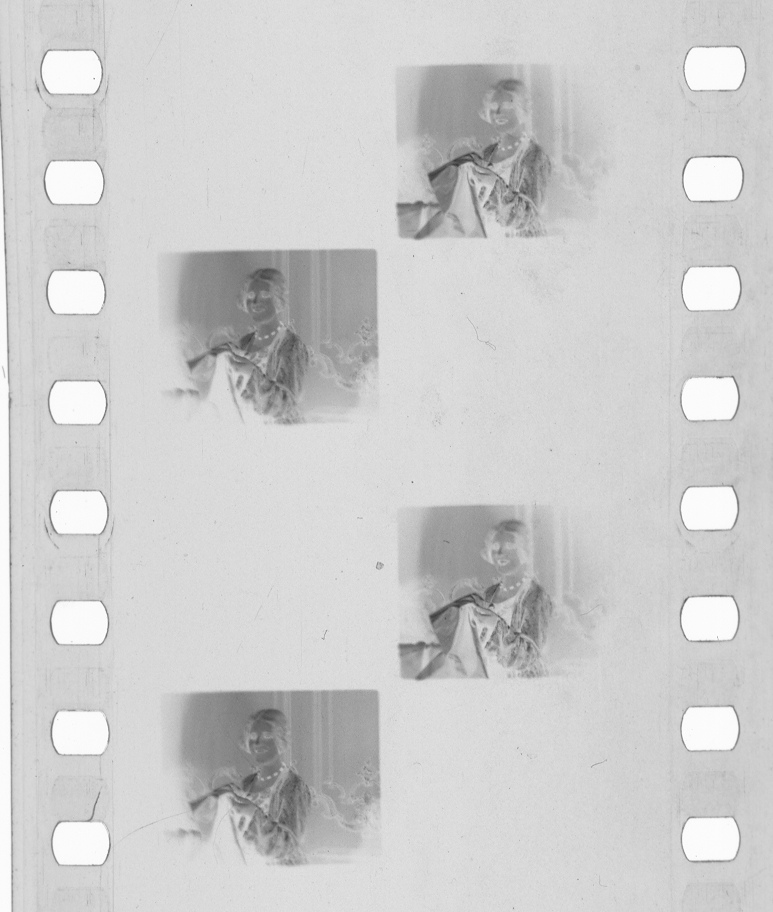
Raycolor from 1929. Two quarter sized frames on 35mm black and Whtie Negative
Item 10
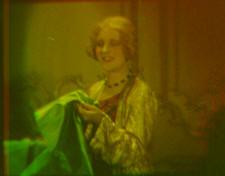
This is a digital composition from the frames made with Photoshop 7.
Item 8
Item 9
Item 10
Item 11
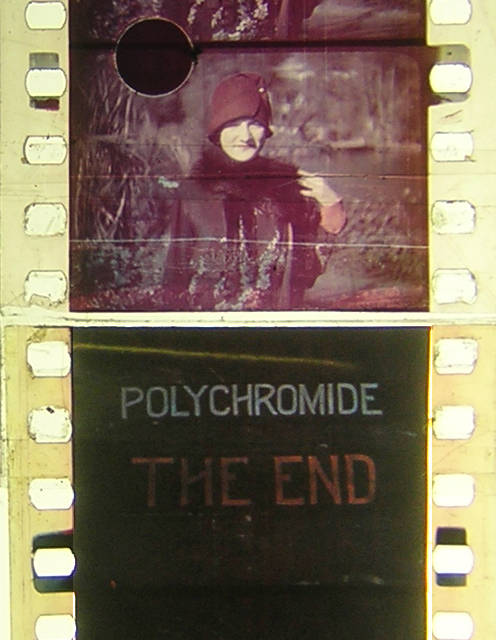
Polychromide process. Invented by Aron Hamburger. His 1922 patent GB203358 describes the method of dye-toning. The original negatives were made with a beam-splitter camera. An orthochromatic negative sensitised with erythrosine and a panchromatic negative sensitised with pinacryptol were used. Positive prints were made on duplex stock (emulsion on both sides) the print from the orthochromatic negative was toned with magenta and auramine and on the other side the print from the panchromatic negative was dyed with malachite green and helio safranin. The film was then bleached, cleared, washed and dried. Further details can be found in 'Colour Cinematography' by Cornwell-Clyne pages 339-341
Item 11
Item 12
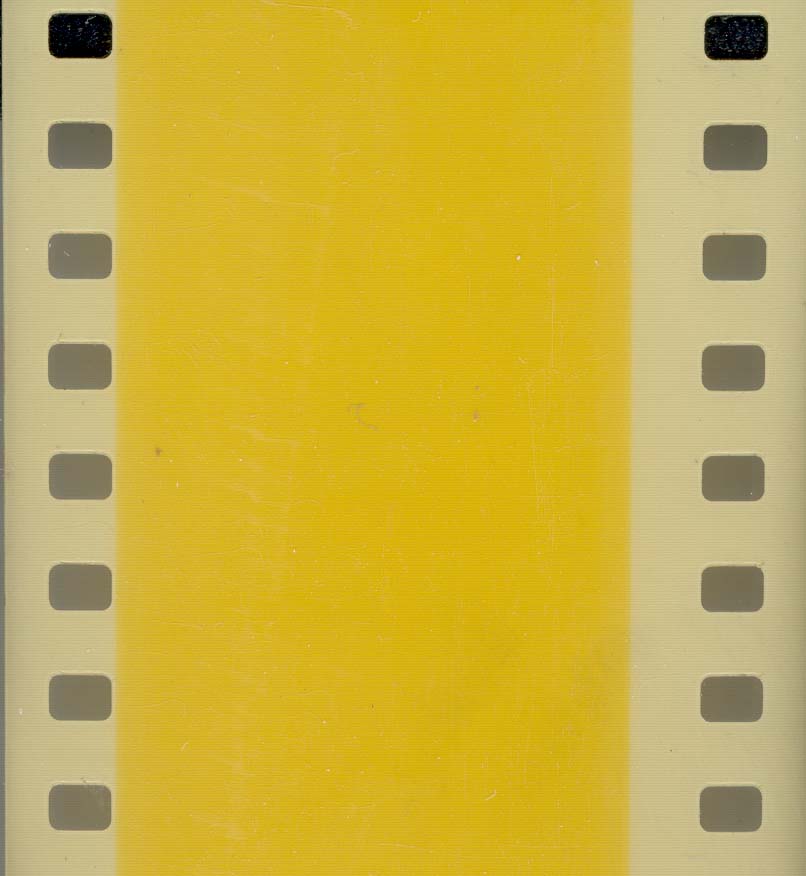
This is a piece of pre-tinted raw stock where the area for the sound track has not been tinted so that the yellow tint does not affect the sound volume. I believe that this was called 'sunshine' yellow. Eastman introduced this stock in May 1929 and called it 'Clear Track'.
Item 13
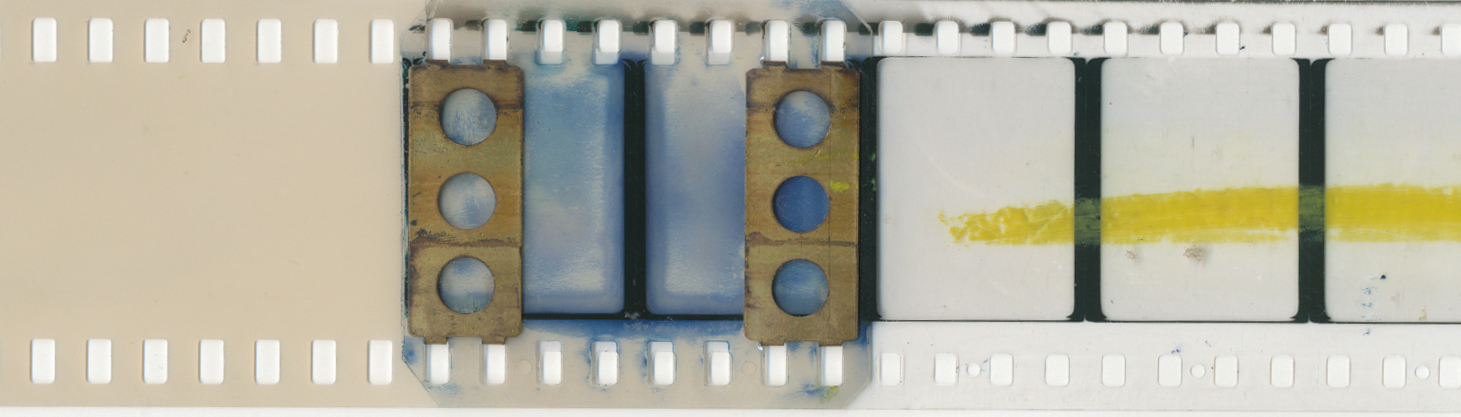
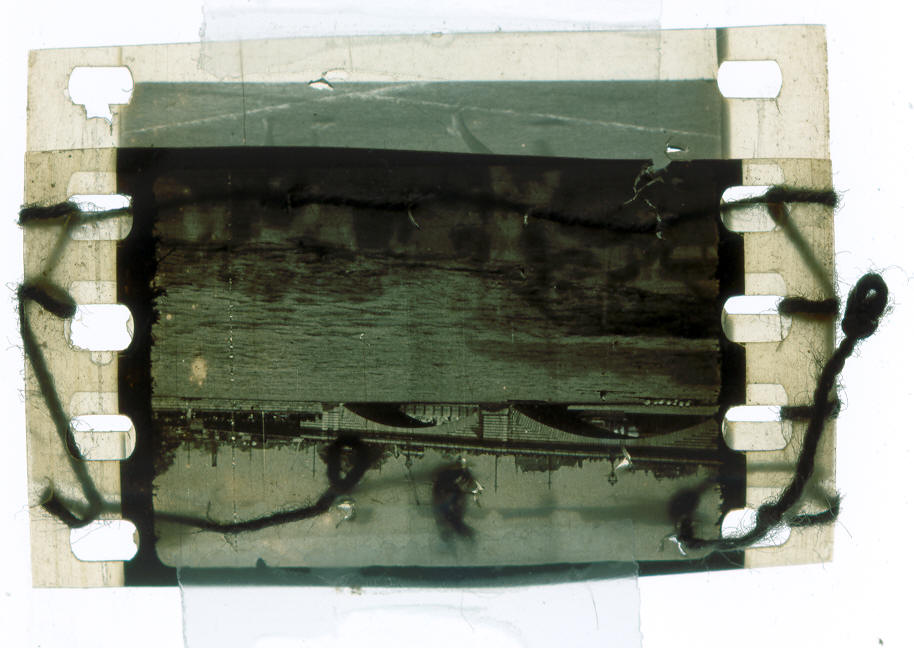
A stitched join, the film is joined by sewing the two parts together
Item 12
Item 13
Item 14
Item 15

Item 16
Item 14
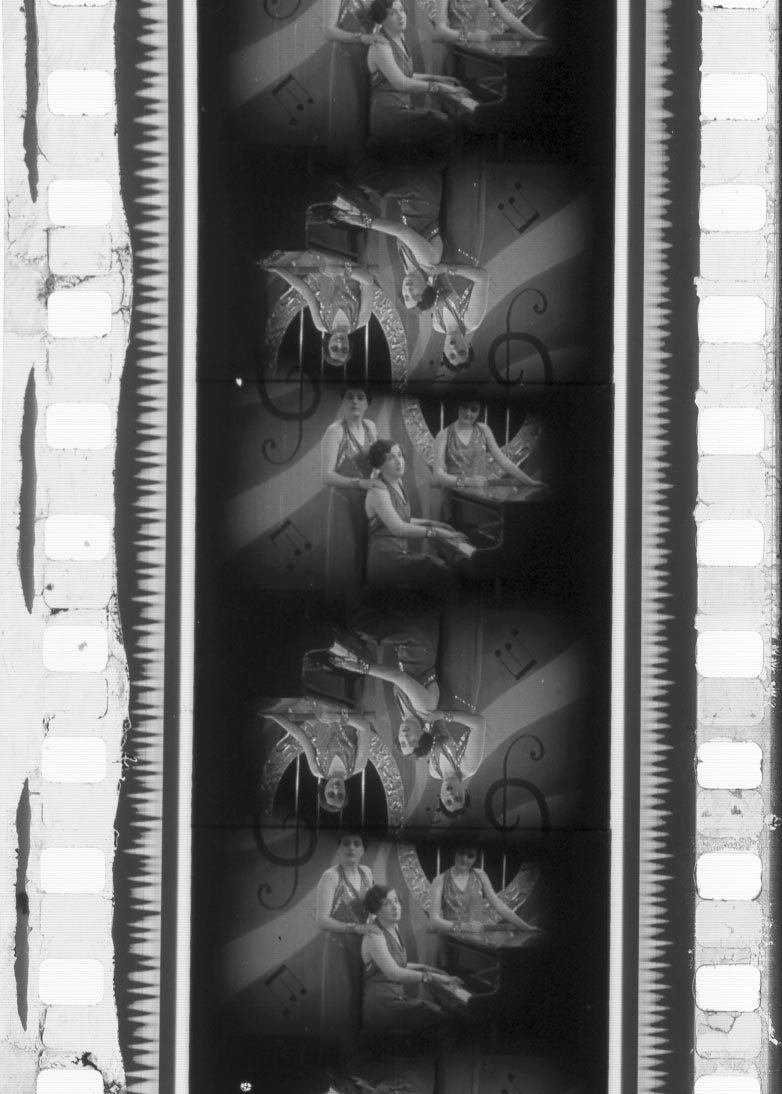
This sample is an early version of '2 perf' print. The images are 2 perforations high but alternate images are upside-down. The film was produced to project first one way showing every other frame through a 2 perf mask in the centre of the normal 35mm academy mask.
The film was then shown from the other end to project the second set of pictures. The two sound tracks correspond to the two sets of pictures. This all enabled a normal reel of film projected at 24 frames a second to last twice as long.
Item 15
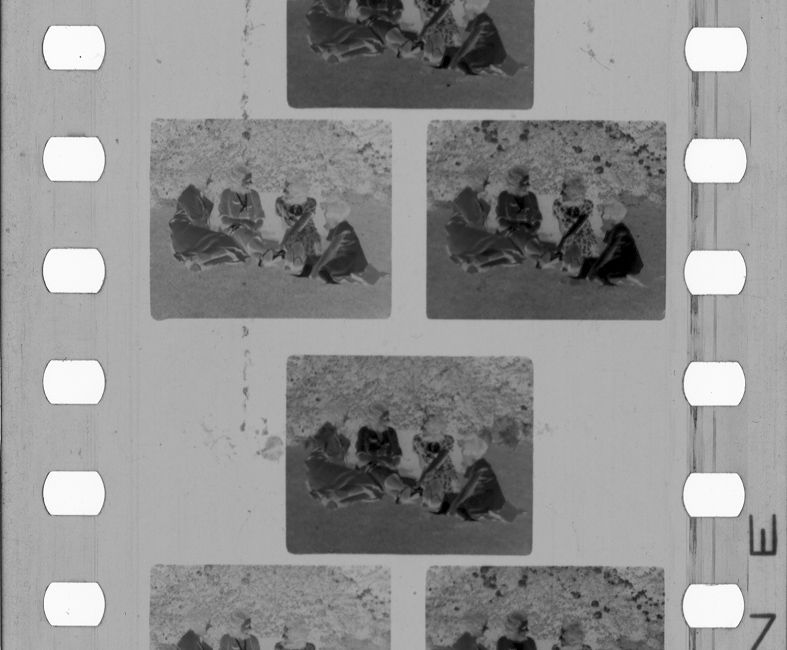
Francitacolor process. Three frames on 35mm width film. A normal B/W print was projected using a projector with three objectives through red, green and blue filters. The main problem was the usual one with additive systems - lack of picture brightness. A feature was made using this system in France and exhibited in July 1935 in Paris
Item 16
This is a digital composition from the frames made with Photoshop 7.
Item 17
Item 18
Item 19
Item 17
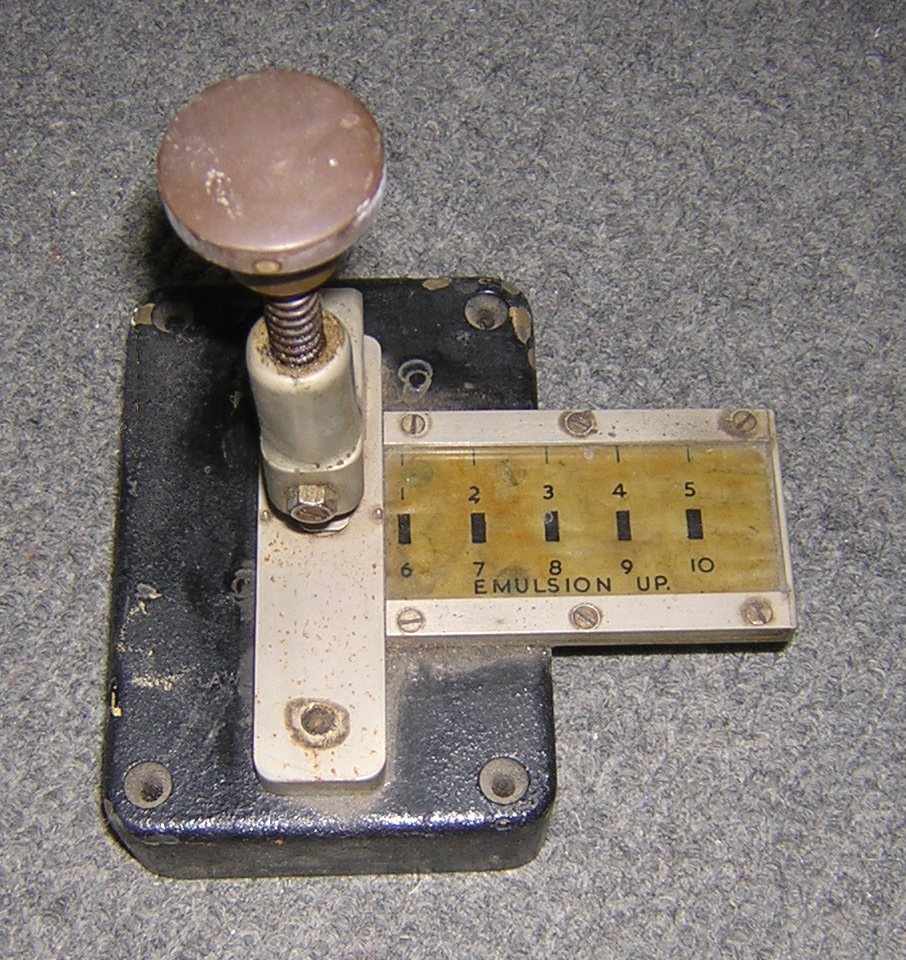
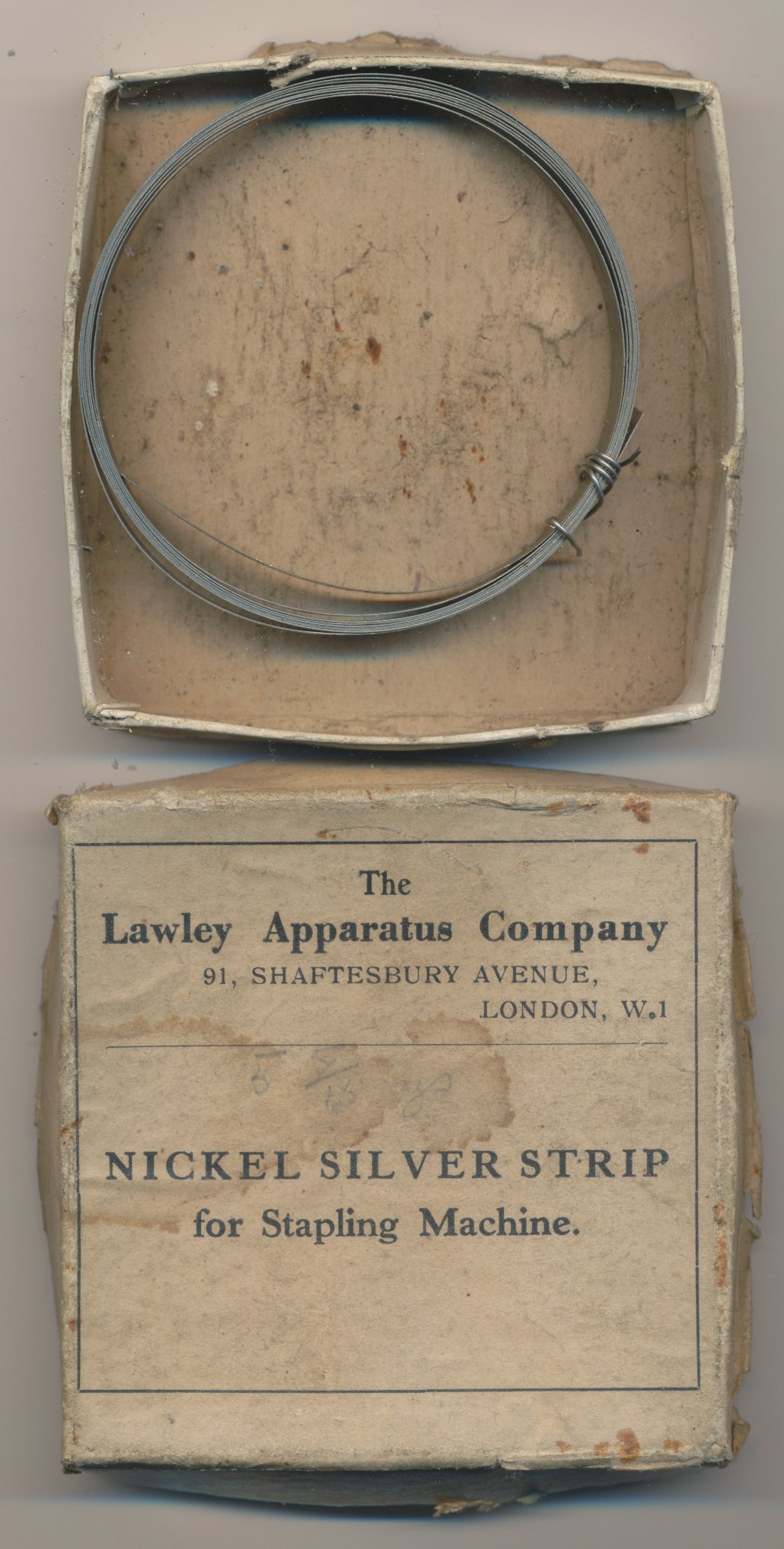
16mm Lawley clip inserter. Lawley clips were nickel-silver staples inserted in the perforations. The strips were punched from a roll of nickel silver.(see below)
Further Information on Lawley clips
Item 18
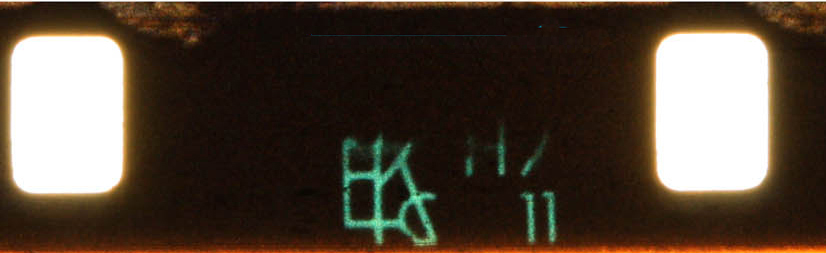
A Kodak logo found on some Ektachrome 16mm print film. It appears to be the EKC logo. I believe that it was printed by Kodak when processing Kodachrome film.
Itm 19
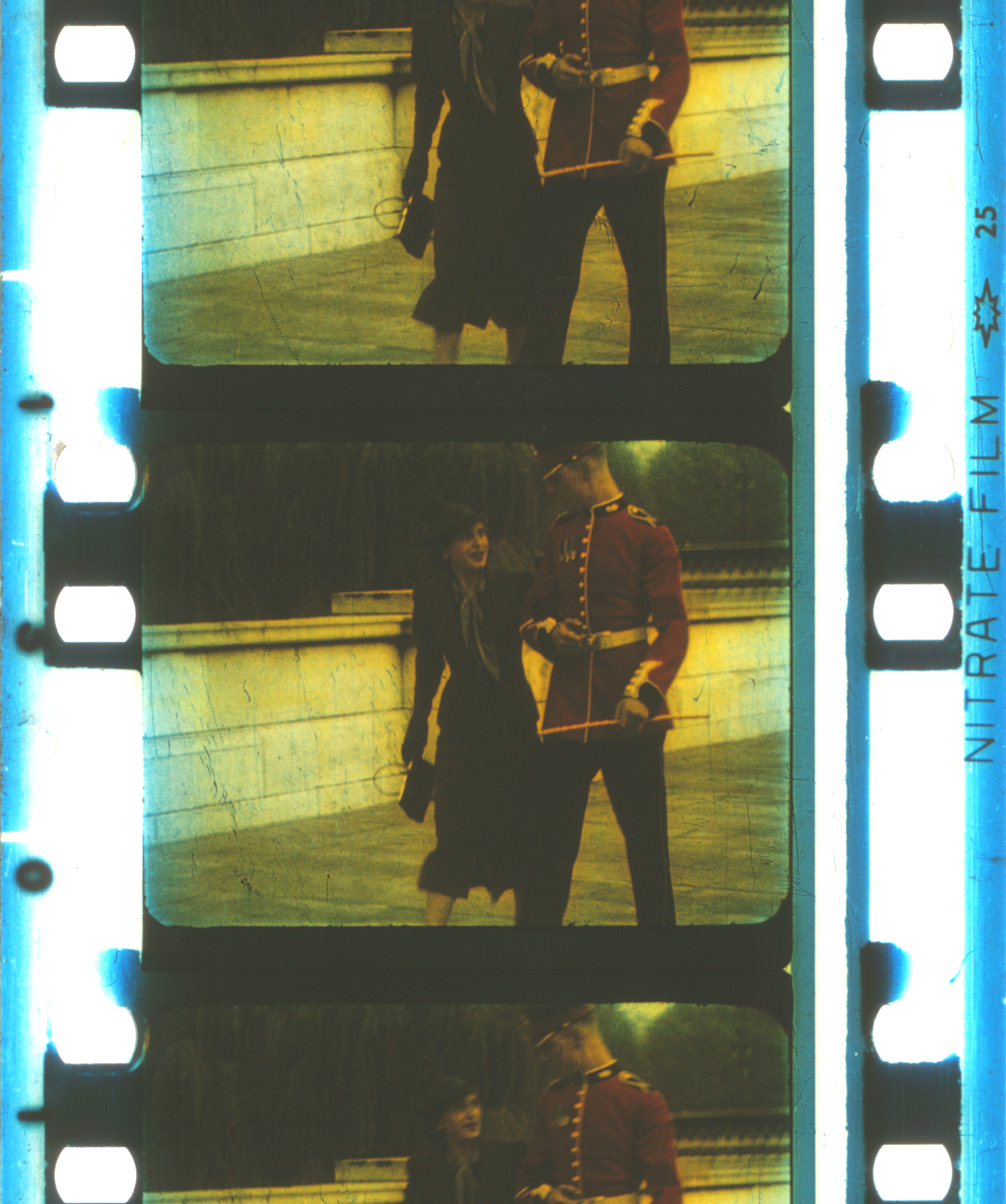
Dunning Colour from The National News issued on October 12th 1937. There doesn't seem to be much technical information on this process. Dunning Process was an early forerunner of travelling mattes and used for B/W. The print is single -sided and has an Iron tone blue and an orange dye. Humphries Film Labs carried out Dunning Colour.
Item 20.
Item 21
Item 22
Item 23
Item 24
Item 25
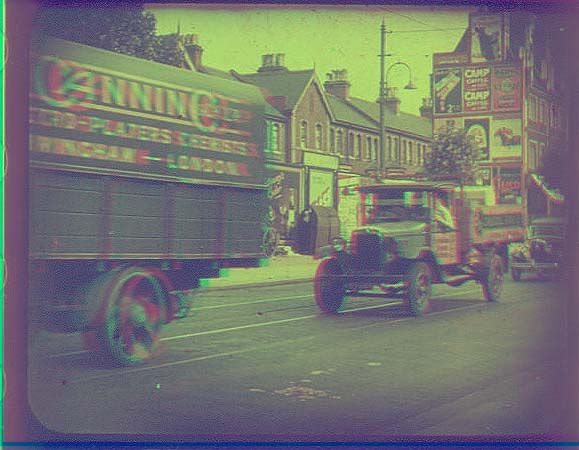
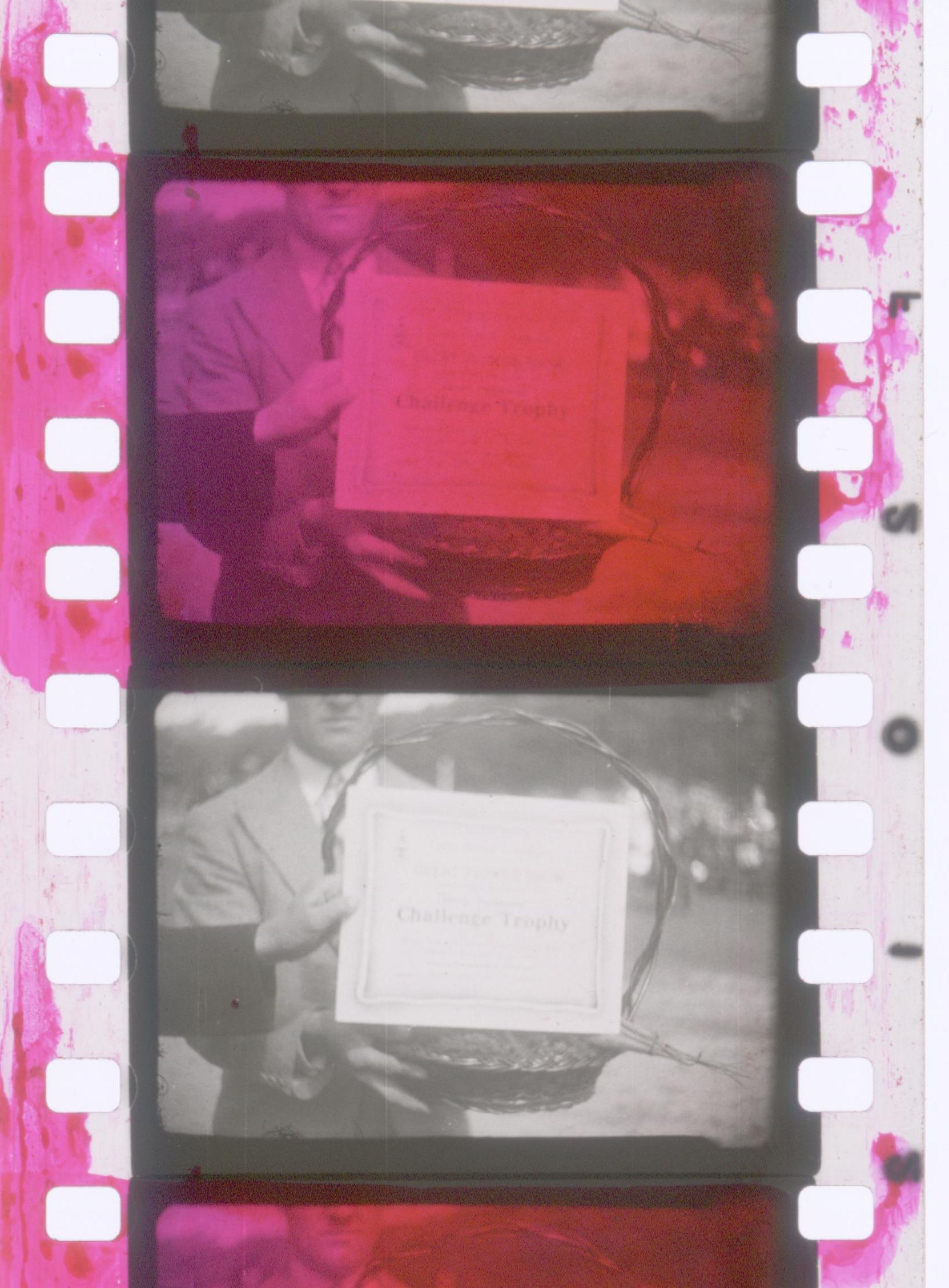
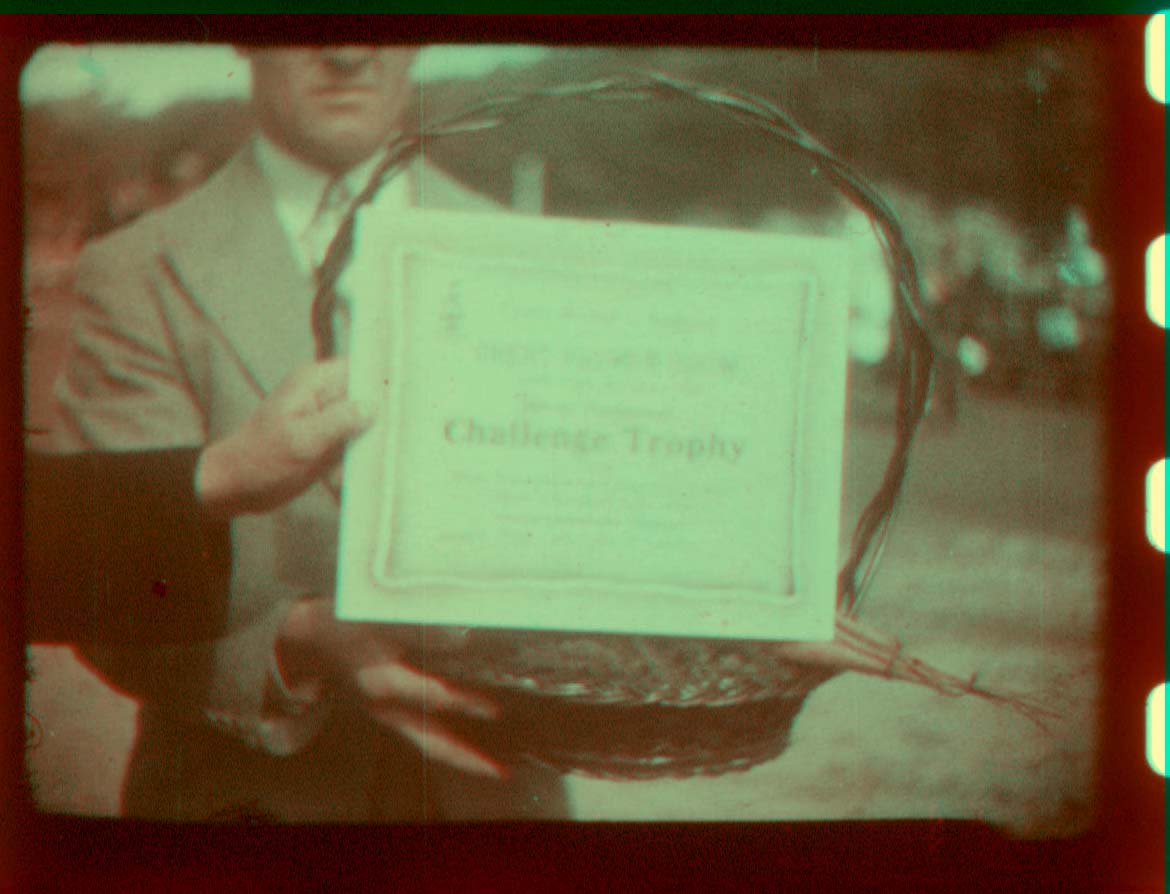
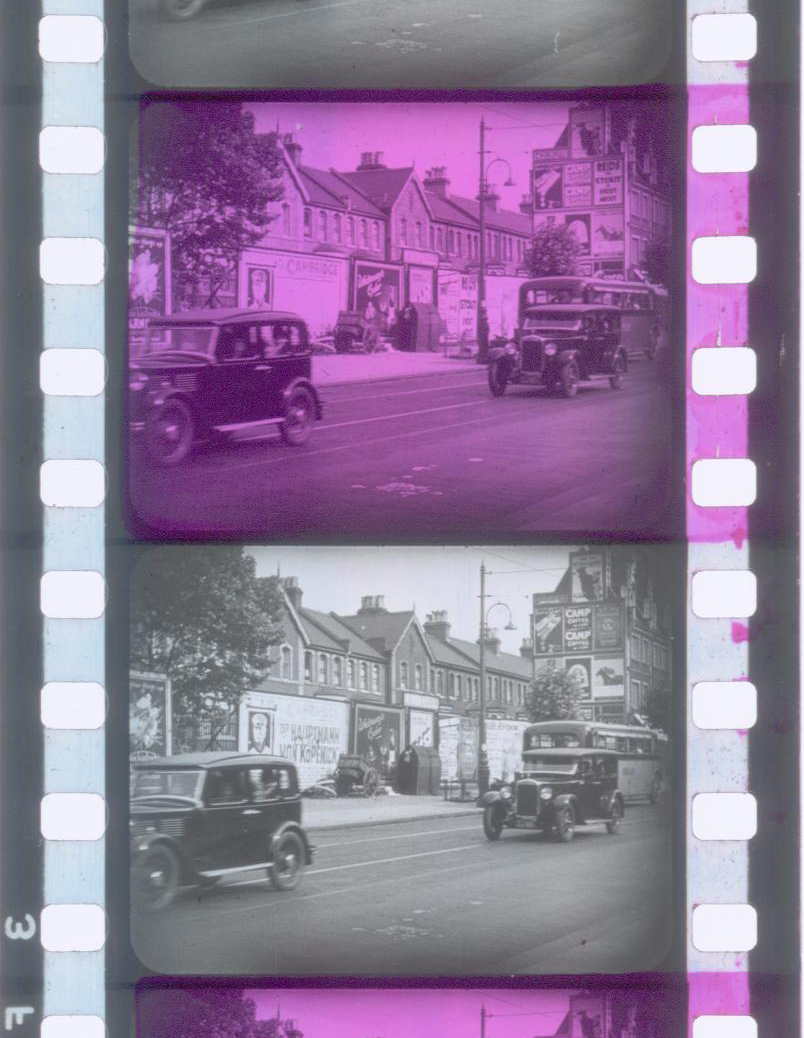
Items 20, 22 and 24
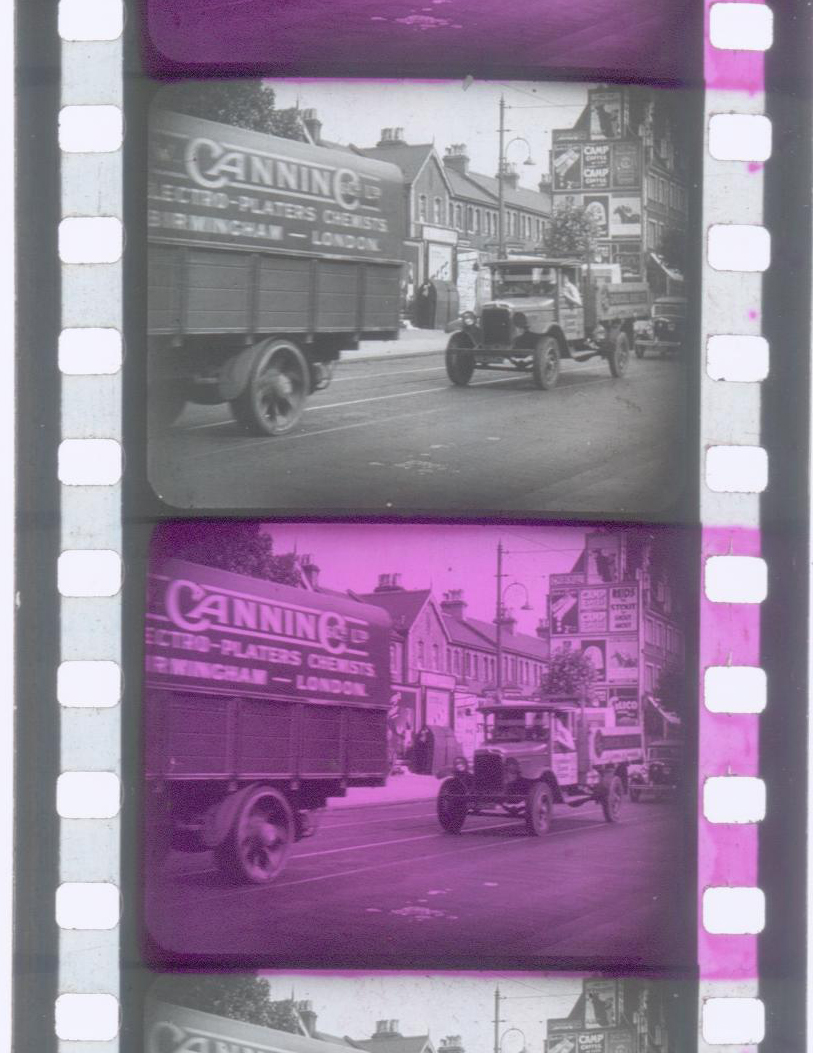
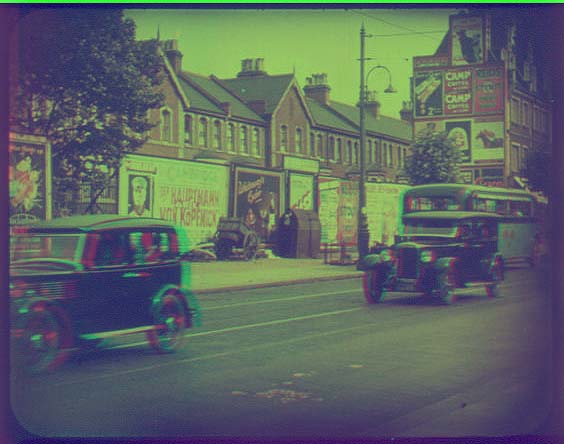
From a London collection. It appears to be someone's experiments with two colour.
Items 21, 23 and 25
Digital compositions using Photoshop 7.
Note the fringing caused by time-parallax error. The objects have moved between the two frames

Item 26
Item 27
Item 26
35mm Black and White Tinted Positive with circular perforation.
Item2
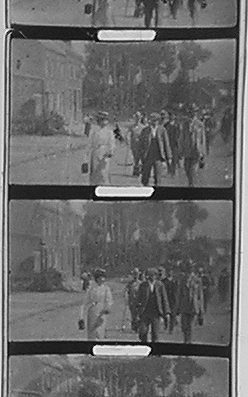
17.5mm Film Biocam. These frames come from a comedy film by G A Smith. The format was around from 1899 to approximately the First World War.

Item 28
17.5 mm with 2 Central Perforations. Duoscope introduced in 1912
Item 29
Item 30
Item 31

Item 32
Items 29, 30 and 31
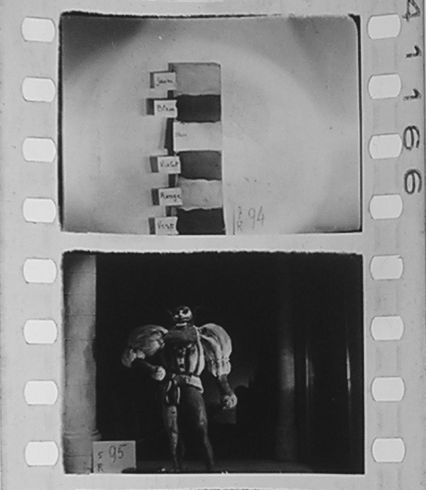
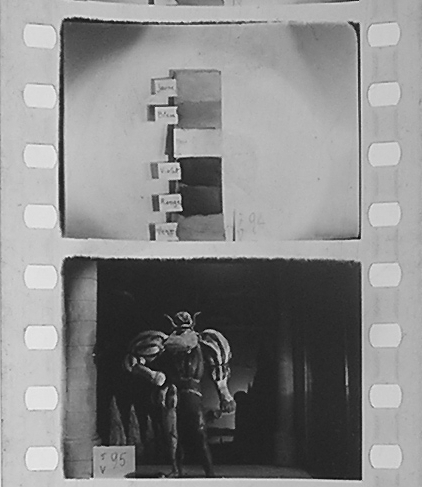
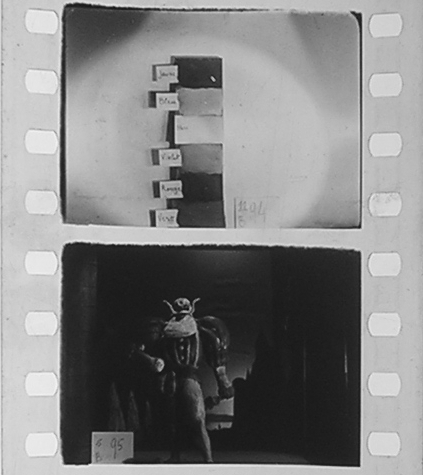
Unknown three colour separation tests. The colours are labelled in French
Item 32
Digital Reconstruction using Photoshop 7
Item 33
Item 34
Item 35
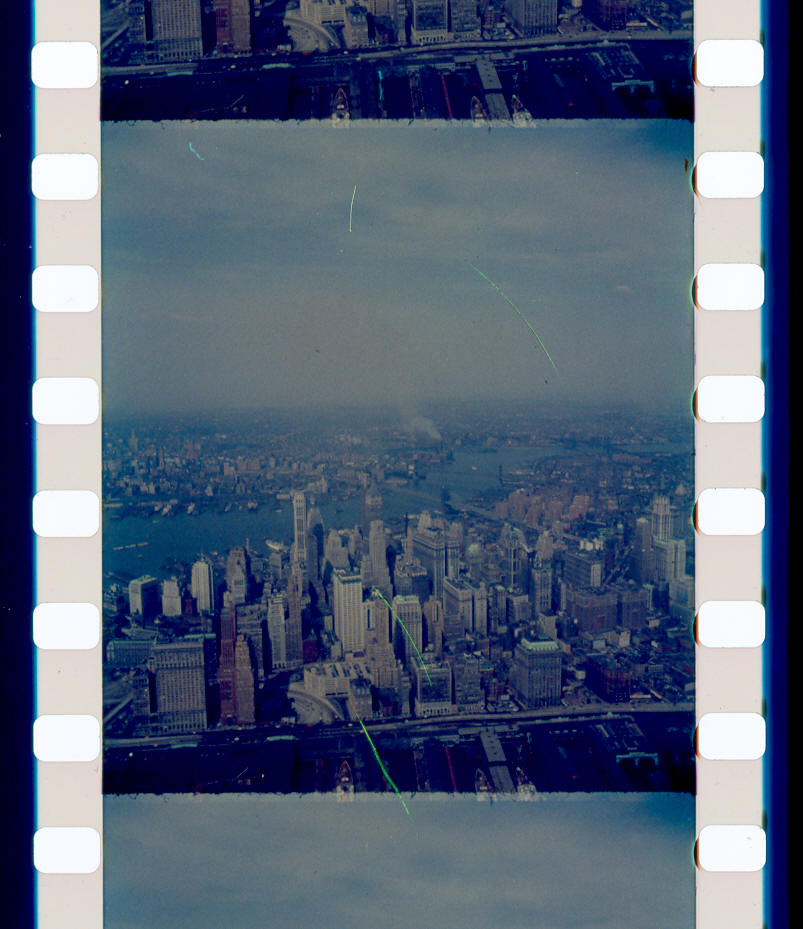
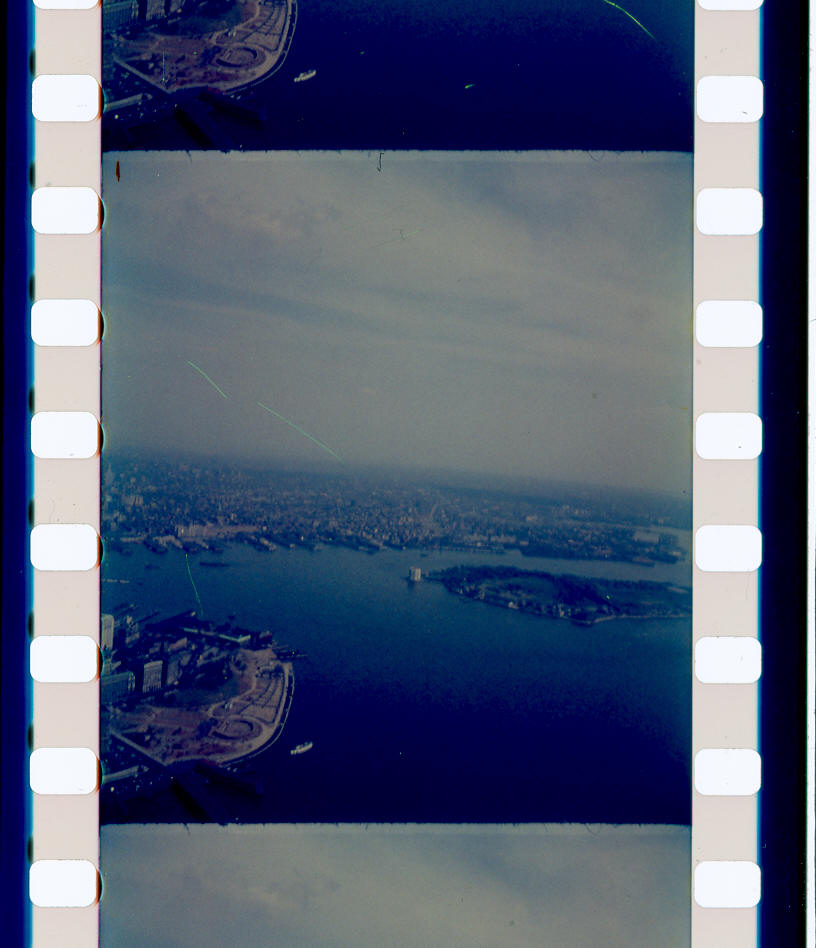
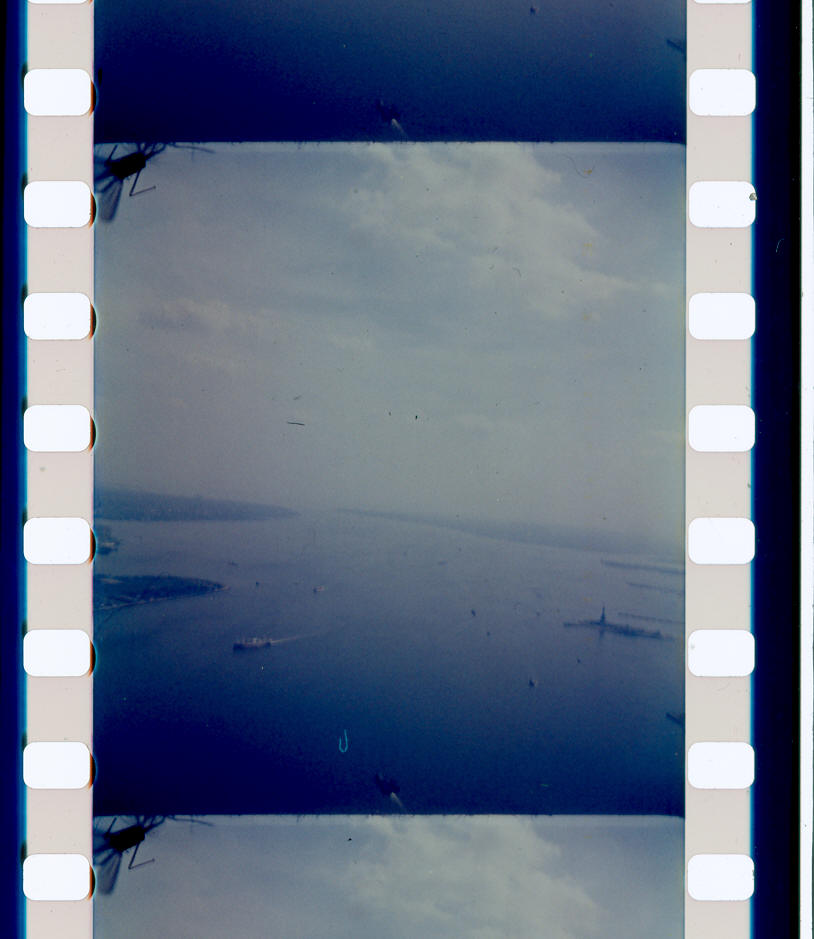
Three Cinerama Images
Item 36
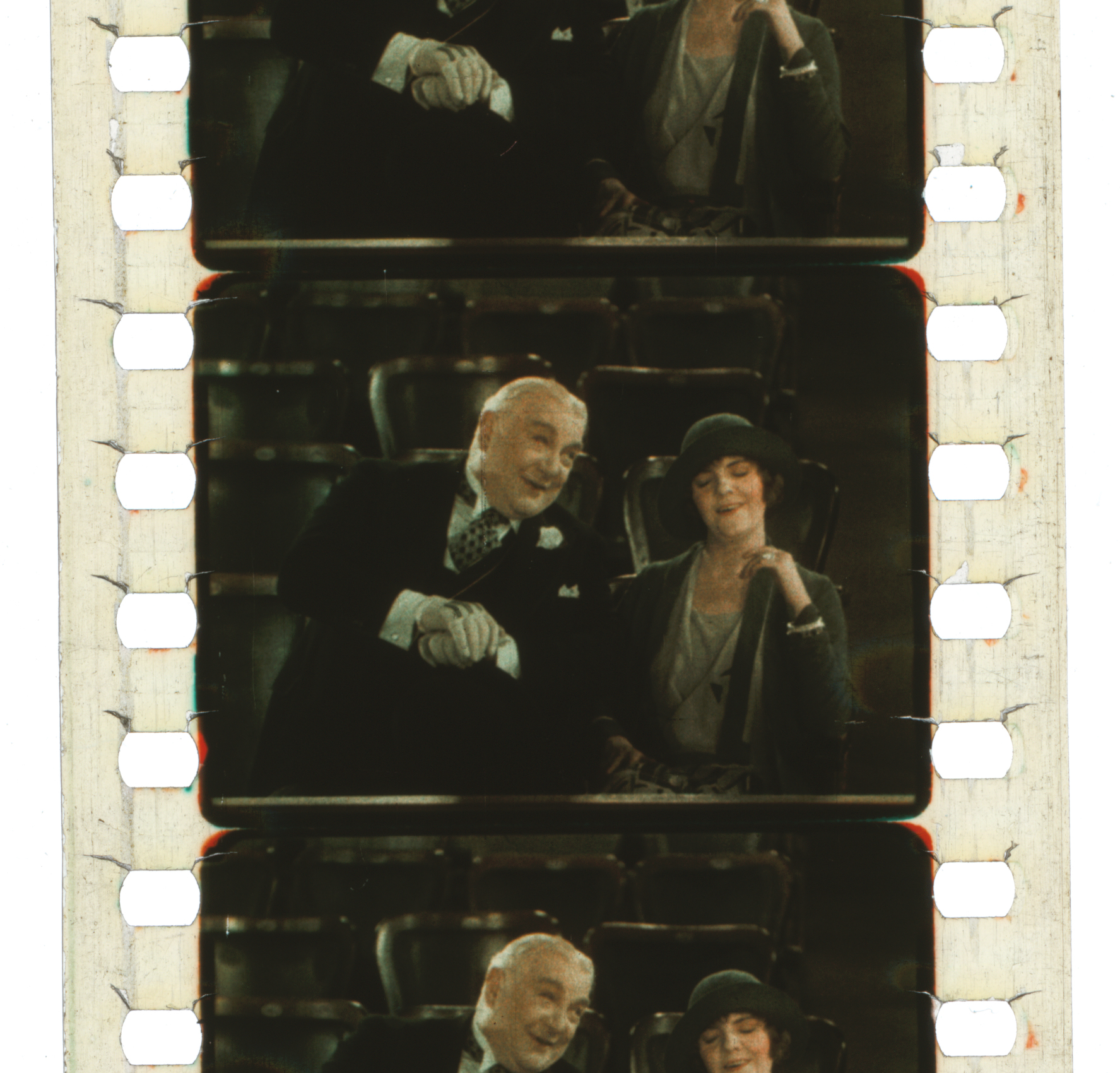
This is two colour Technicolor, you can see traces of the orange/red and green images on the edges of the frames. I have been informed by Nicolay Sharkanov that this frame comes from "Gold diggers of Broadway" (1929) and Winnie Lightner and Albert Gran appear in the frame.
Item 37

Item 38
Item 39
Item 40
Item 41
Item 42
Item 43
Item 37
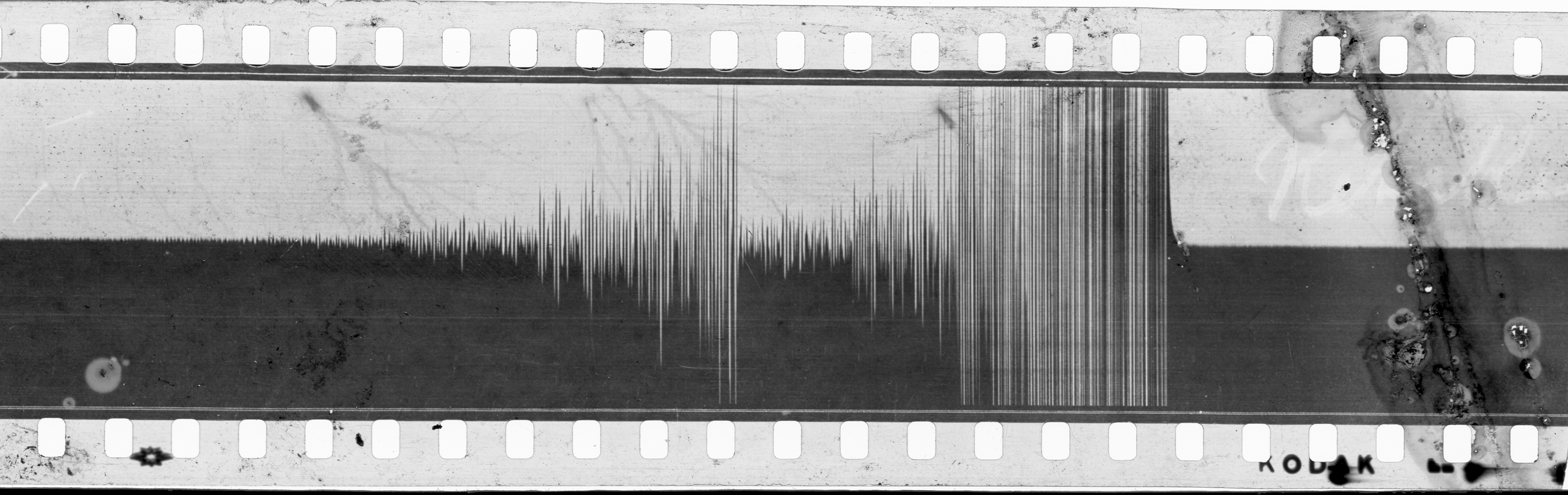
Early sound recording. The date code on the film is UK 1927, it is 35mm nitrate film.
Item 38
This is a sample of Dascolor, It was a 2 colour duplex process, emulsion on both sides. One emulsion was toned with Iron Ferricyanide and the other toned with an orange dye. You can see traces of the orange dye in the perforations
Item 39
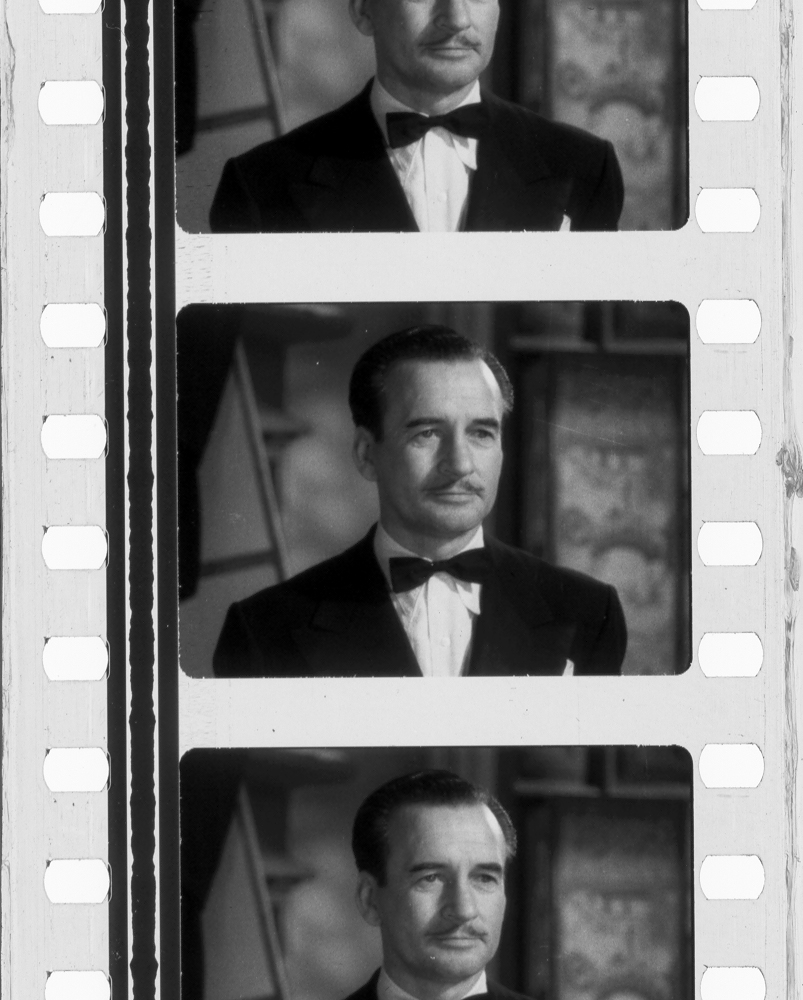
35mm Kodak Lenticular Color print. The base had moulded lenses to split the light which was then projected through three colour filters. The same process was used for16mm Kodacolor Lenticular film.
Item 40
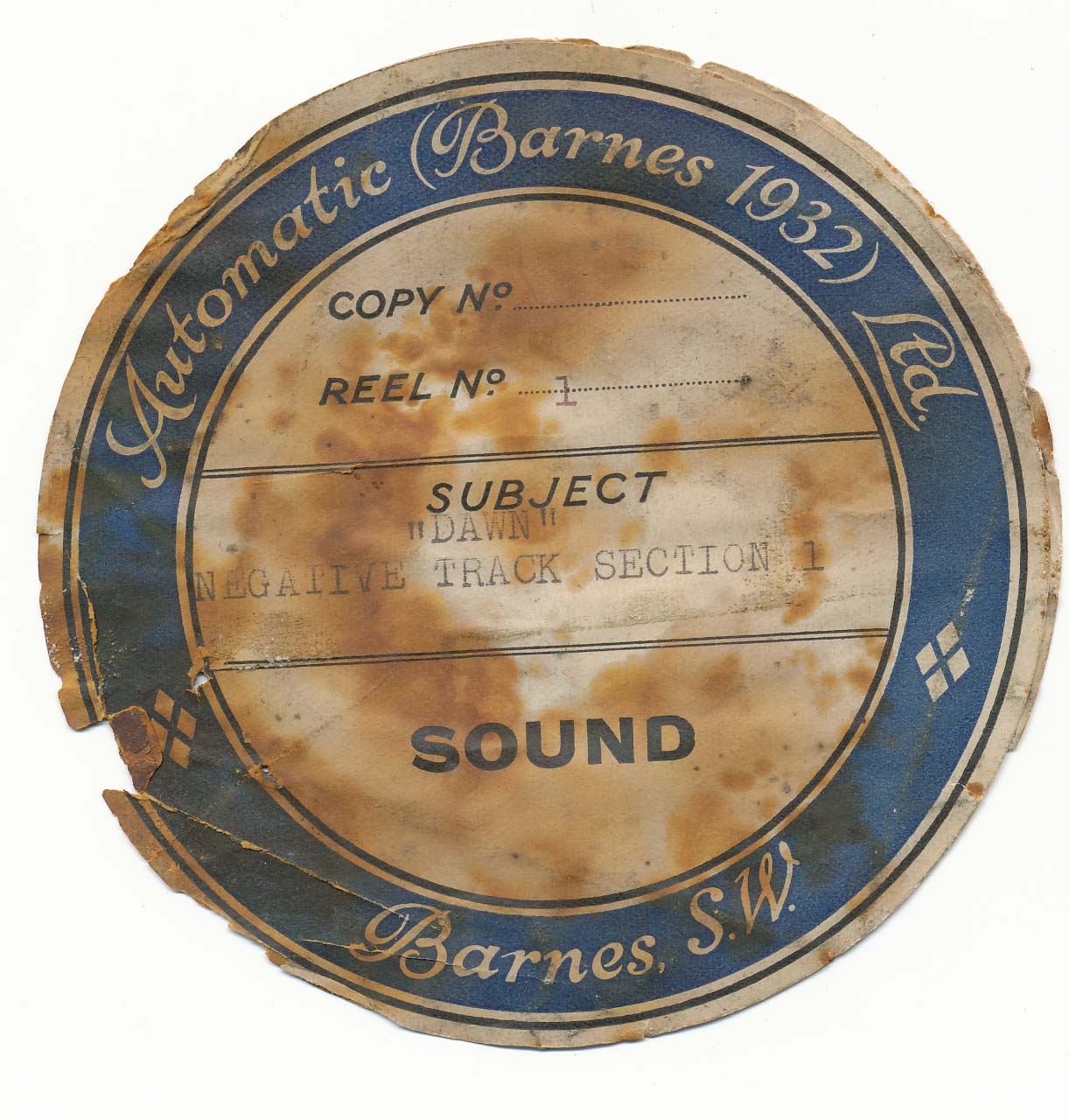
This is a can label from Automatic (Barnes 1932) it was from a Dufaycolor sound neg of a film called 'Dawn'
Item 41 and 42
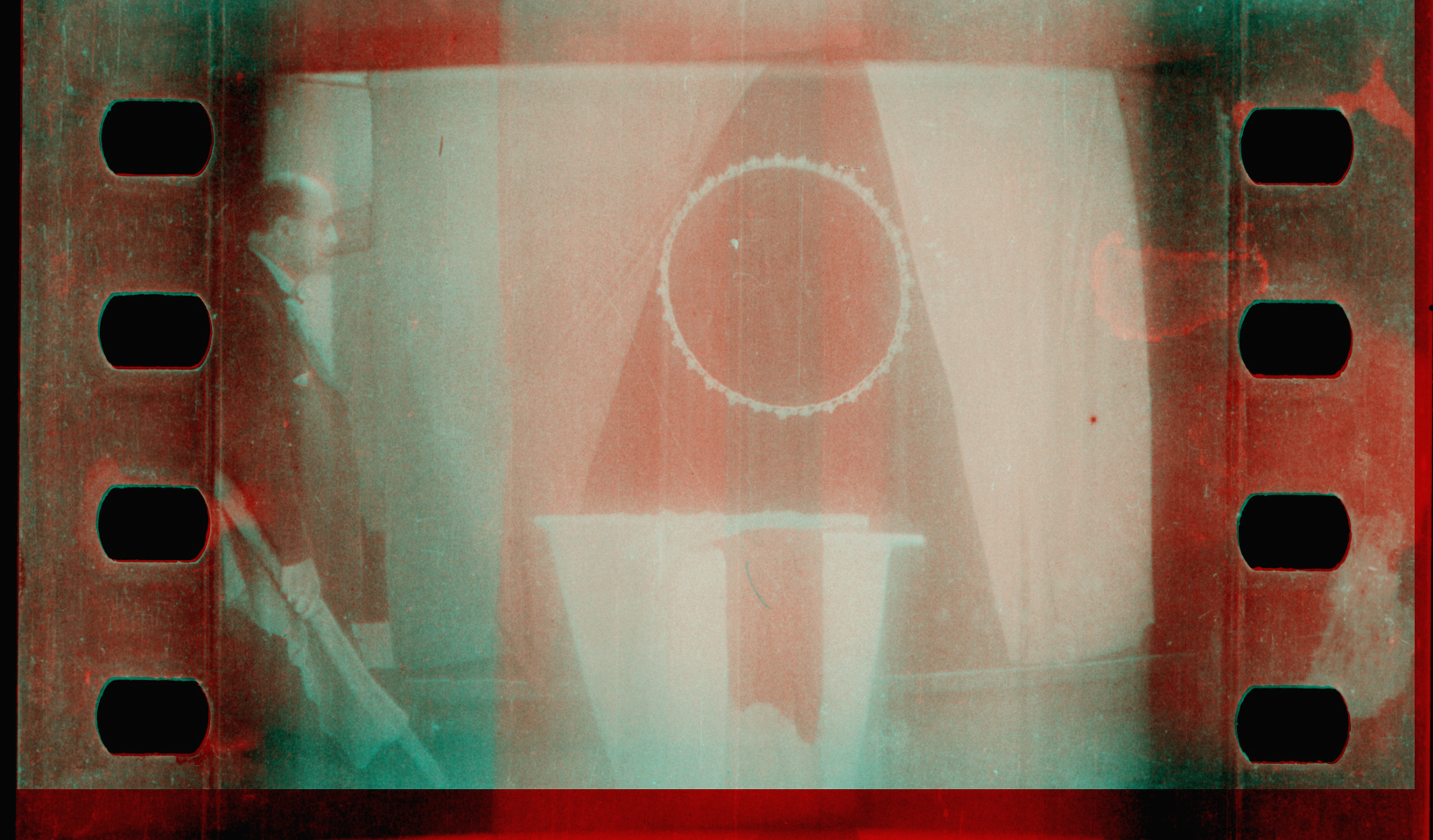
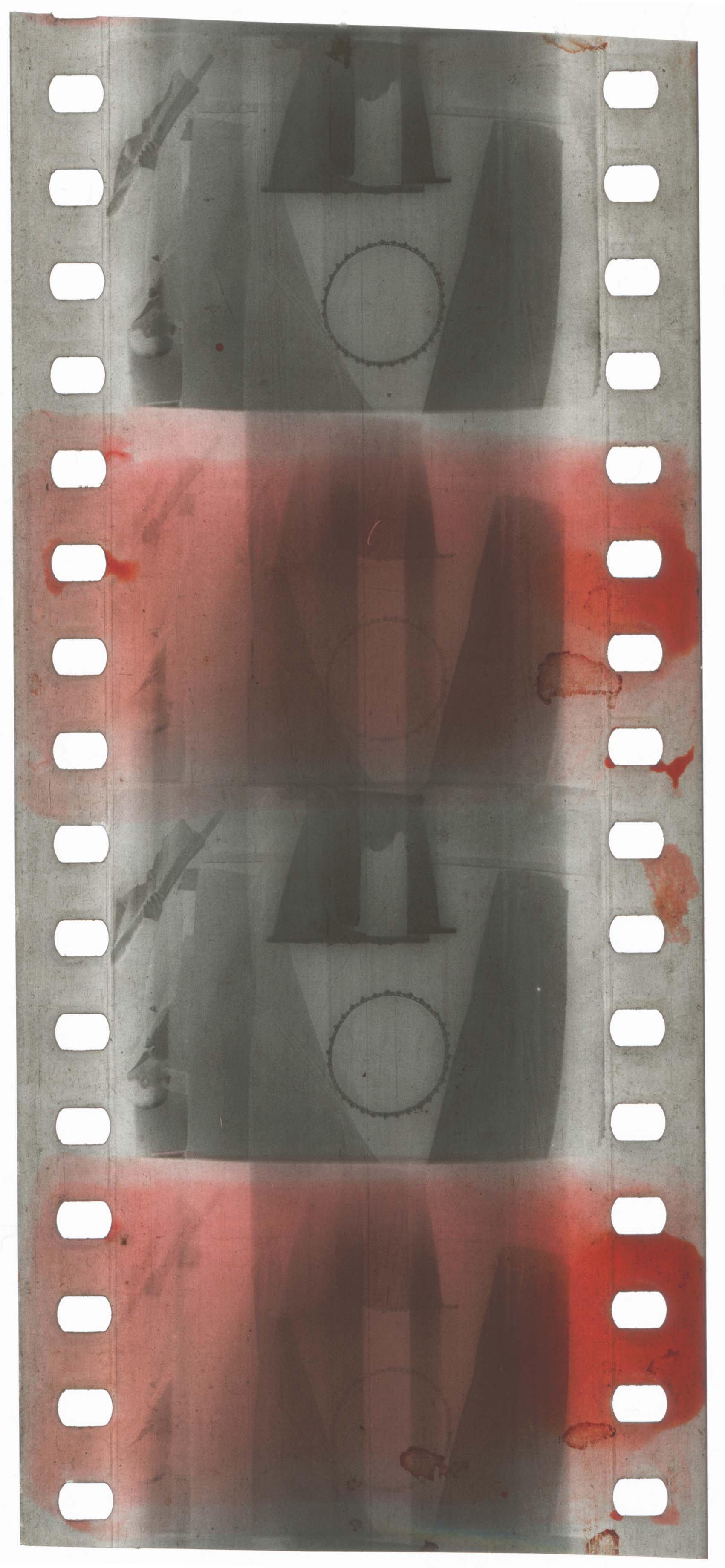
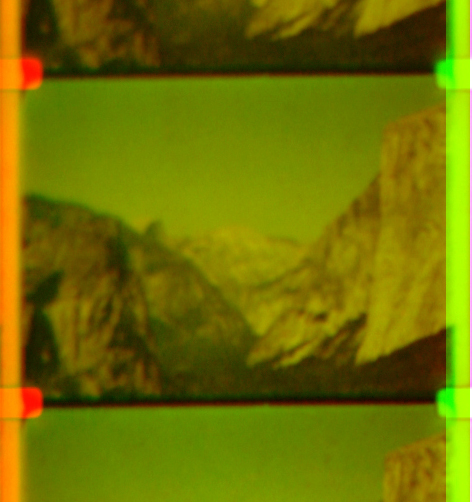
This is a piece of B/W Negative that has been coloured red on alternate frames. I wondered if it was painted before exposure but it would have been difficult to ensure it was in rack in the camera and could have washed off in processing. As an experiment I decided to combine the images using Photoshop, the red image in the red channel and the plain image in the blue and green channels. The image was inverted and adjusted for brightness and contrast. This is the result.
Item 43
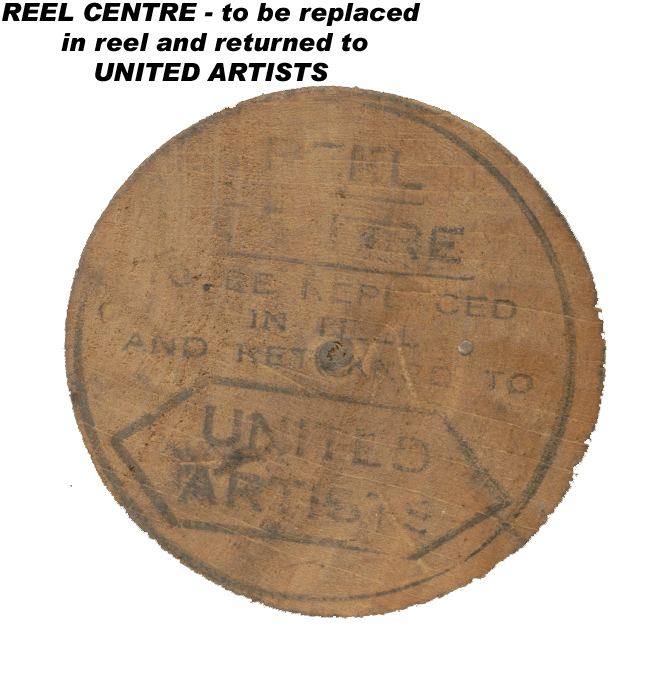
A wooden reel centre from United Artists. Note there is no hole through the centre
Item 44
Item 45
Item 46
Item 47
Item 48