Printer Grading Charts and Bands
After a film has been graded it is necessary to comunicate the grading information to the printing machine. This can be done by mechanical charts, By charts containing Waterhouse stops with and without colour filters, by metal clips,by punch tapes or computer control, CD’s. floppy discs or wifi.
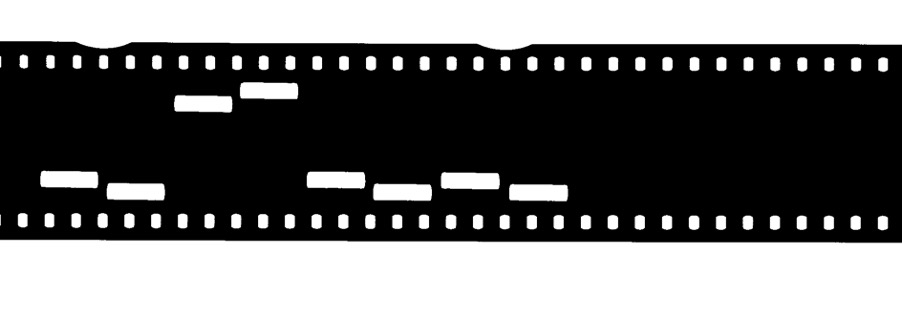



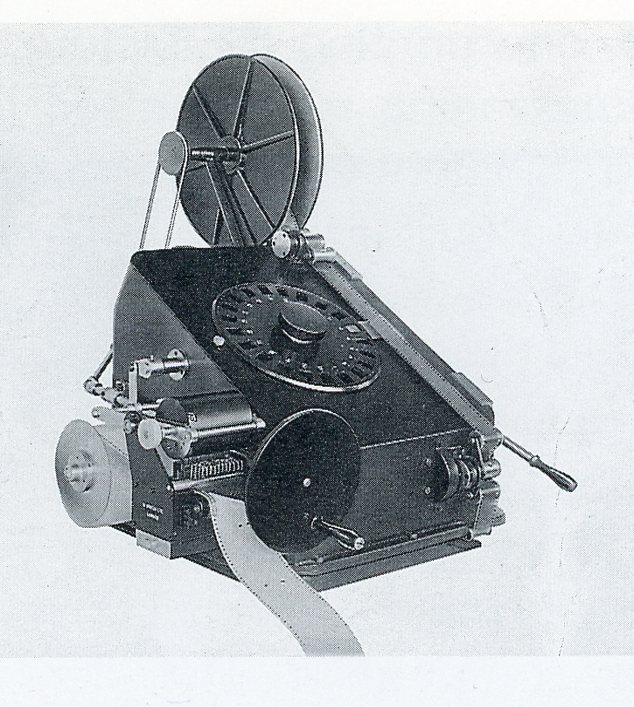
Debrie Chart
Colour Grading Chart (Waterhouse Stops)
Bell and Howell Punch Tape
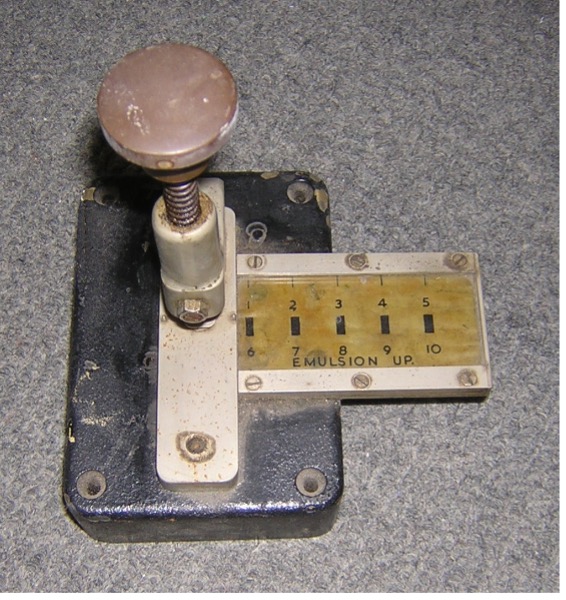
Debrie Chart Cutter
Lawley Clip Inserter
Vinten Grading Machine and Tape cutter
Please click on image to see larger image.
In the early days negatives were graded by the printer viewing the negative through a red filter over the outside of the printing aperature as it was exposing the positive stock. The printer used his judgement to increase or decrease the brightness of the printer light which was a gas flame in the earlest days. Eventually notches were cut into the side of the negative so that the printer knew when he had to alter he printer light. For many years the notch cut into the edge of the film was the usual method for triggering grading light changes. There were two main types of notches, the Bell and Howell notch and the Debrie notch.

The Bell and Howell Notch
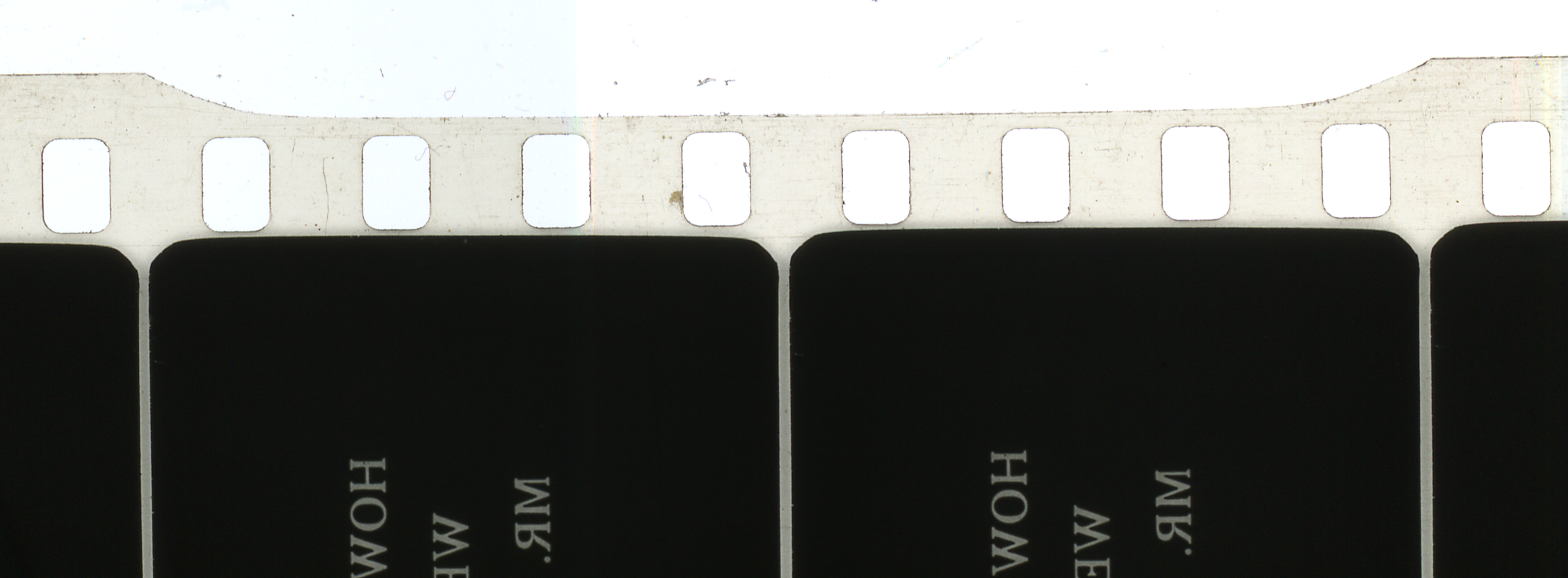
A Debrie Notch was longer than a Bell and Howell Notch, it covered 2 Frames.
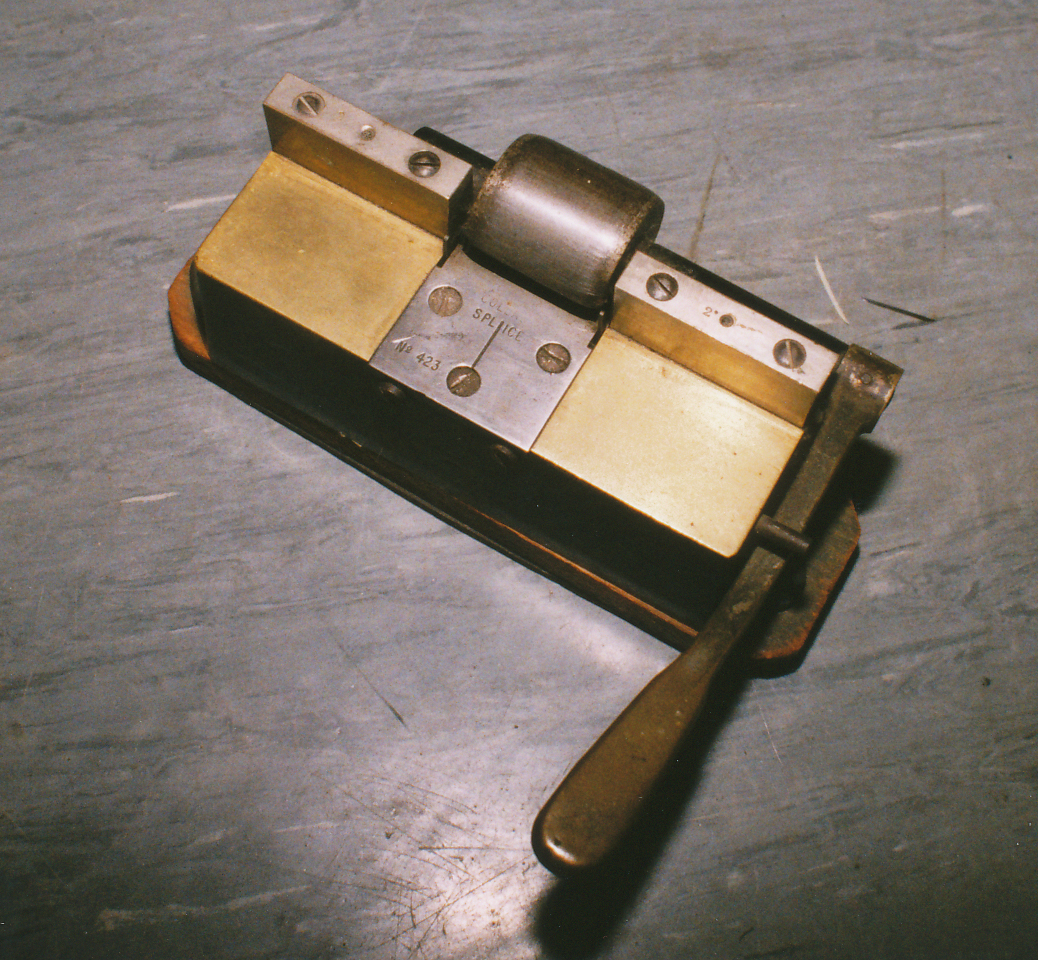
The notches were used to operate the mechanism that varied the amount of light the grader had specified. The Bell and Howell printers D and J had a manually operated lever and dial that the printing operator pre-set to the required light value on a grading card.
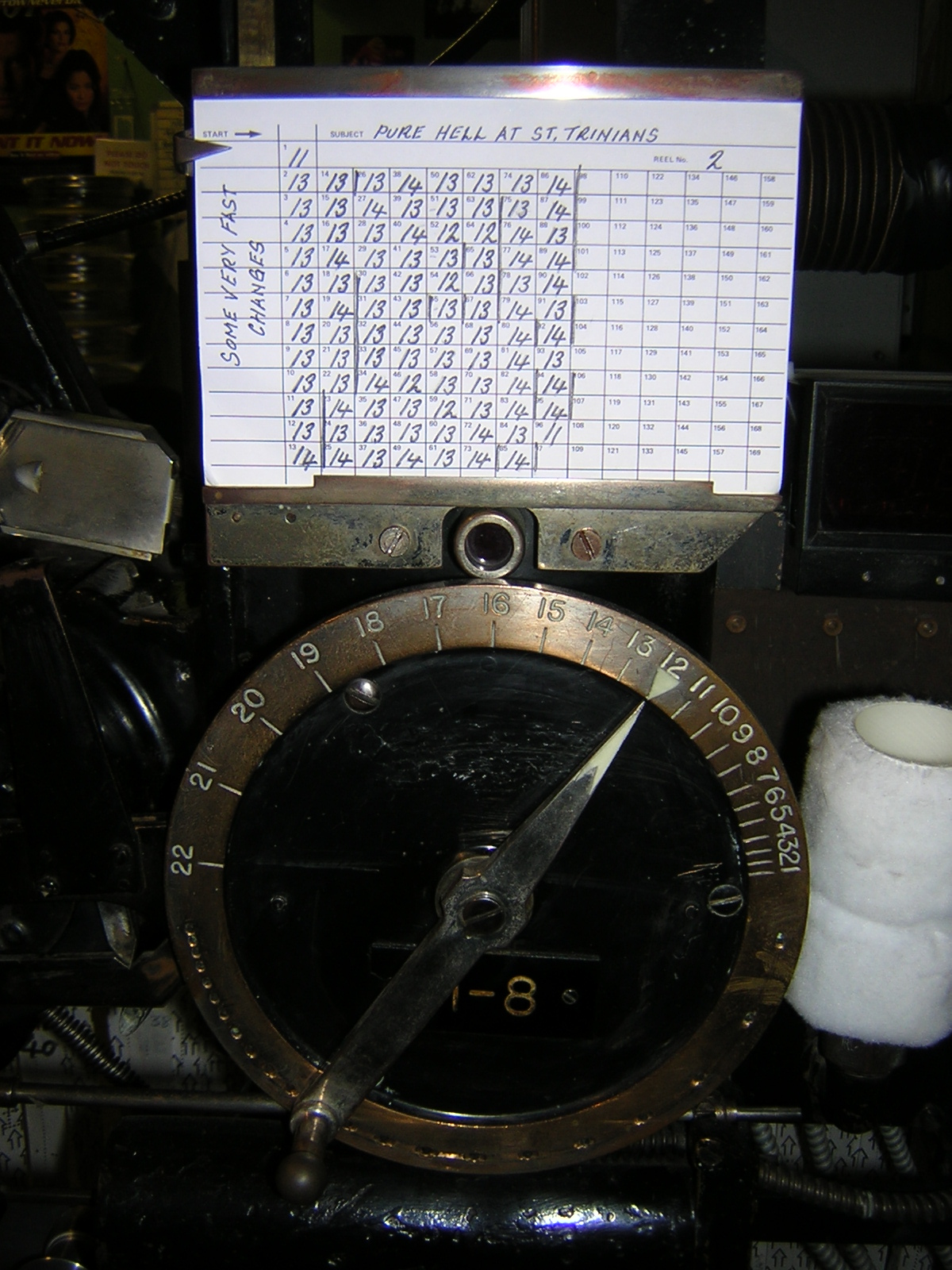
Note the black lines alongside the light value warning the printer operator that the light changes were quick. Debrie and other printing machine used the Debrie notch to move a chart. The Waterhouse chart had holes punched in a length of black film leader, the size of the hole gave the amount of exposure to the print film. For colour printing filters could be fixed over the holes. You can see a sample at the top of the page, click the image to see a larger image. Debrie also used a system of black film leader with rectangle holes that told the printing machine when a light change should take place. Again there is sample at te top of the page. It was called a long chart and the one with holes a short chart.
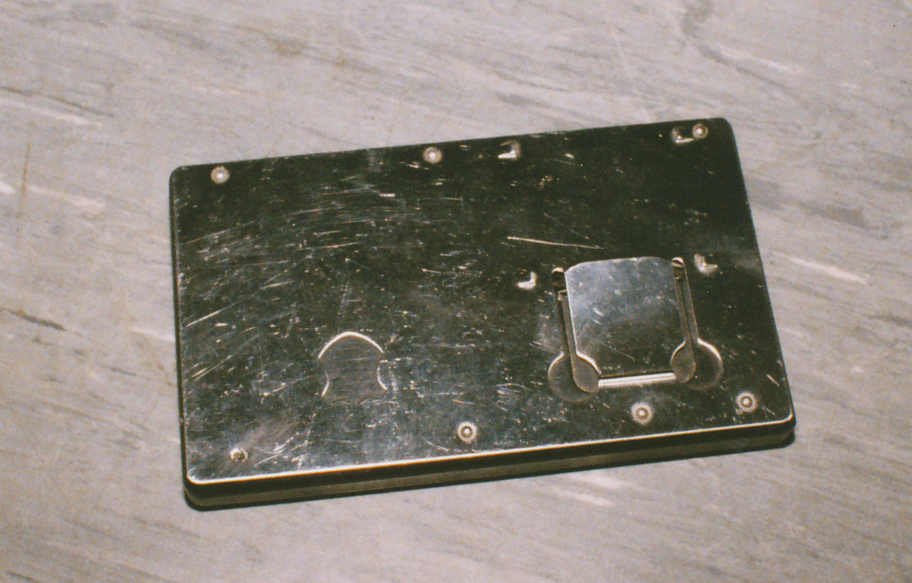
The next innervation was the Lawley clip. This was a nickel-silver staple that was attached to the edge of the film between the perforations. The clip served two purposes, there were two clips for each light change. The first clip told the reader on the printing machine when to make the change and the second clip set the value of the printer light. According to the light value the second clip appeared on either side of the film. The machine for inserting clips is at the top of the page.
The clips had the advantage that the grading information was intregral with the roll of negative, no tape or chart to get lost. The disadvantage was that if you wanted to make grading alteration you had to remove one or more clips and replace them. A clip remover is shown below.
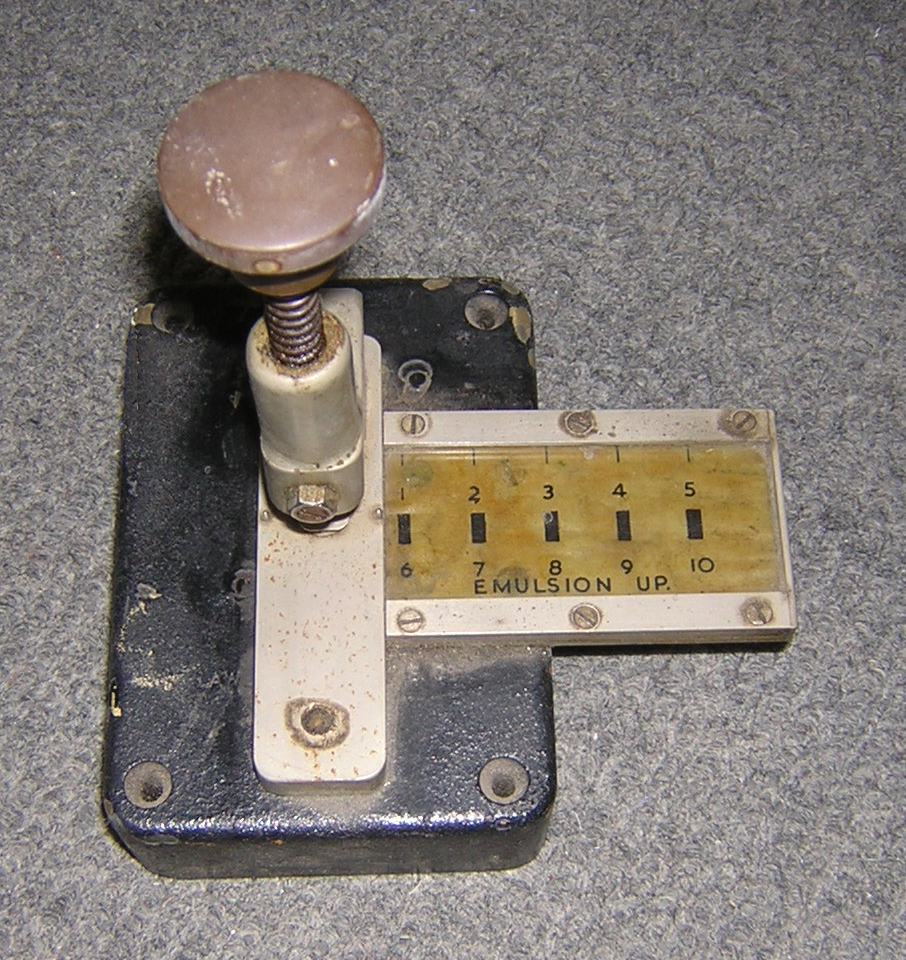
A 16mm Lawley clip remover.
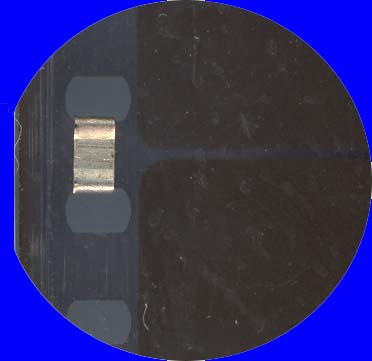
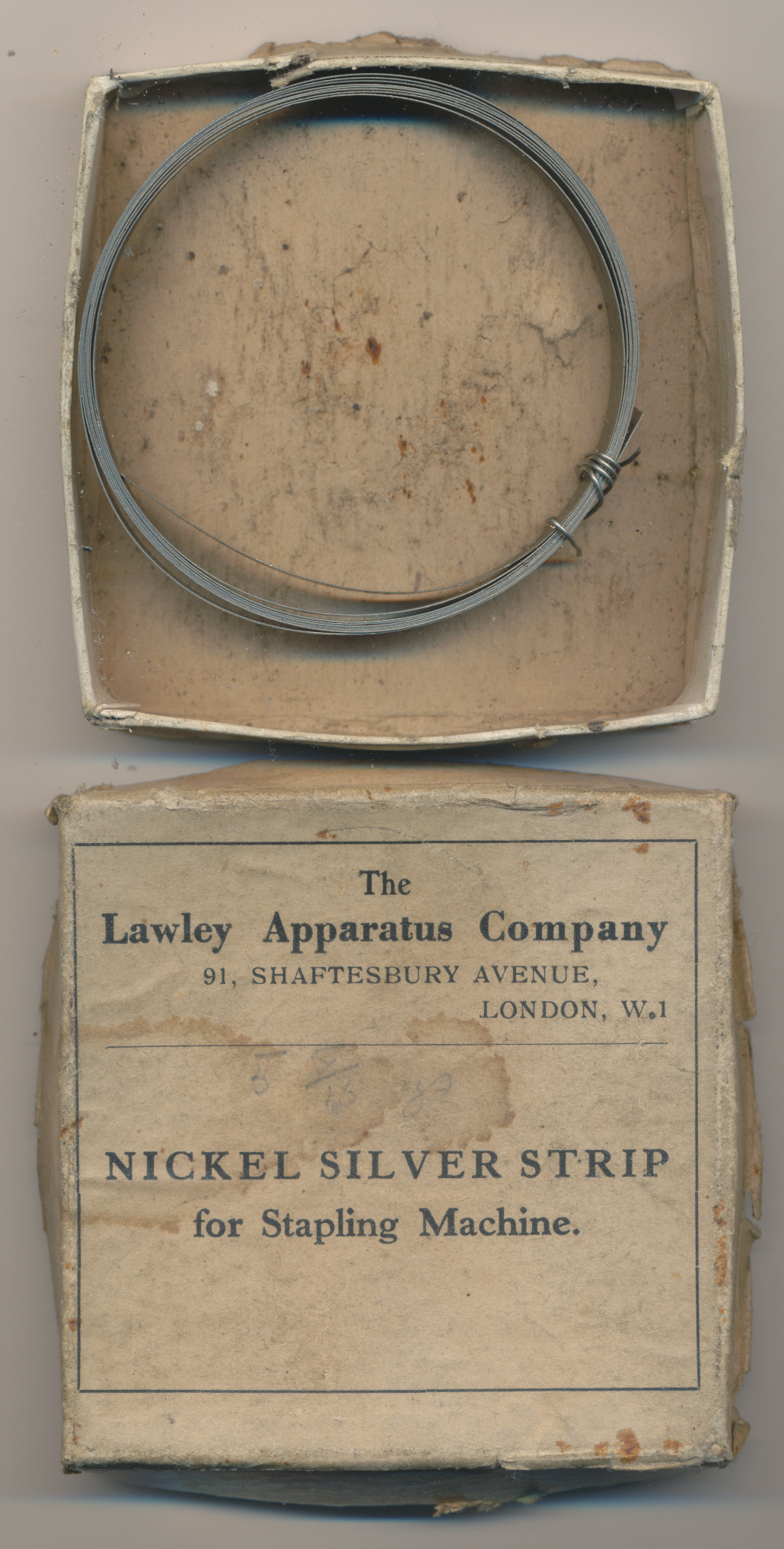
Close up of a Lawley clip and a box of Nickel Silver metal strip.
Click on images to see larger image
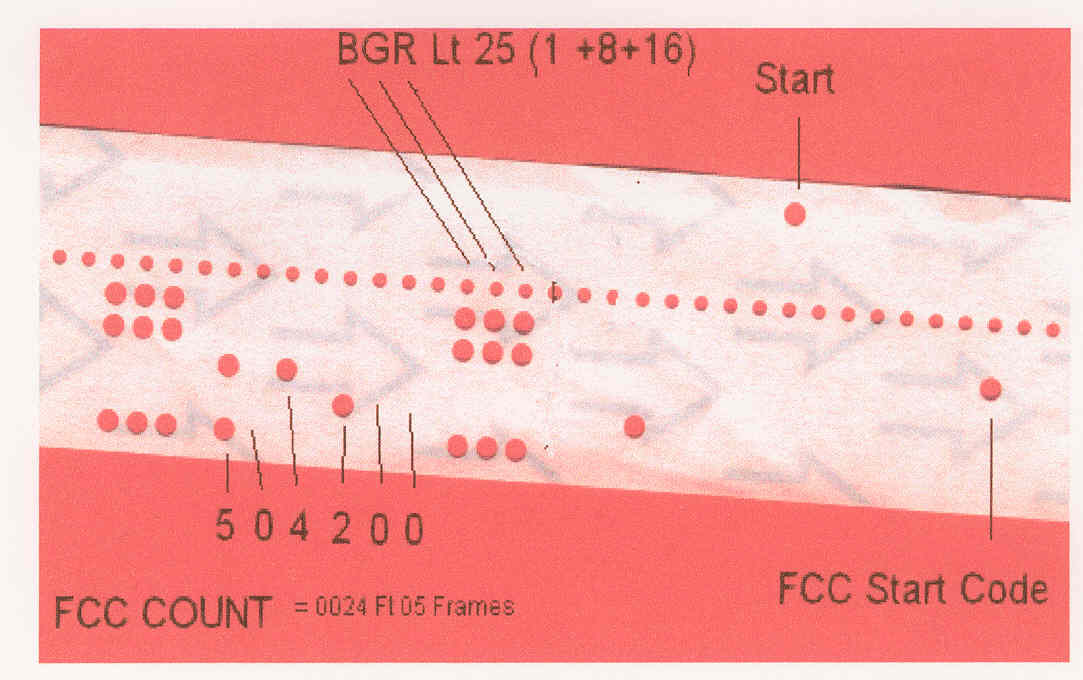
Next came the punched tape introduced by Bell and Howell for their Model C printers. The tape had 8 rows of holes that gave the start and end of the tape when it was read by the printing machine reader. It gave the value of the red, green and blue lights for each scene and finally a value if an automatic fade was required. If the printing was black and white then the R, G and B lights would be equal. The Model C had a special light source to be operated by the tape and a built in fader which gradually opened or closed the fader. For more information on the Model C please see my page on the Model C. An anotated picture of the tape is at the top of the page. Because of the possible damage that can be caused to a negative by using notches which can cause tears to the negative the RFQ (Radio Frequency Cue) came into use. This was a small adhesive aluminium patch that worked exactly as a notch but was electronically used to make a light change. It made it easier as well as safer if alterations to the grading was necessary. Removing a patch was easier rather than having ro repair an incorret notch.
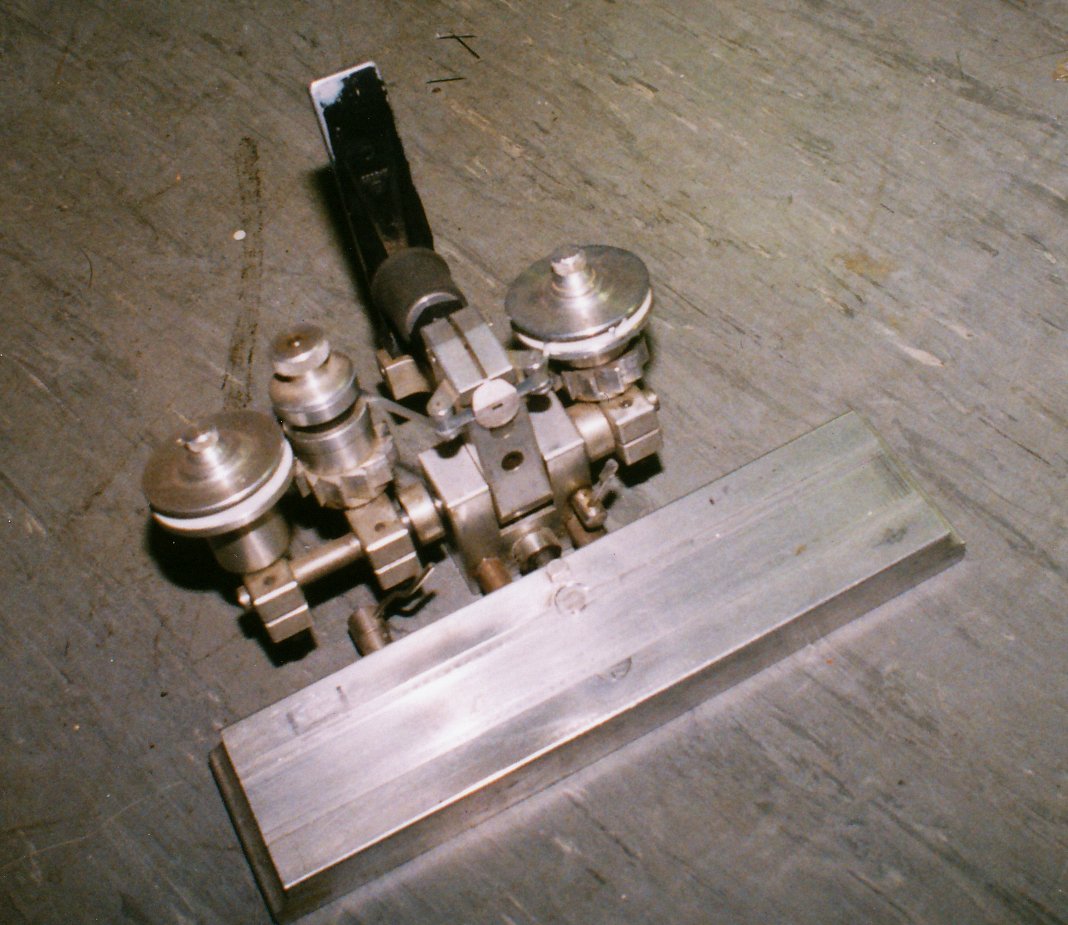
RFQ Applicator
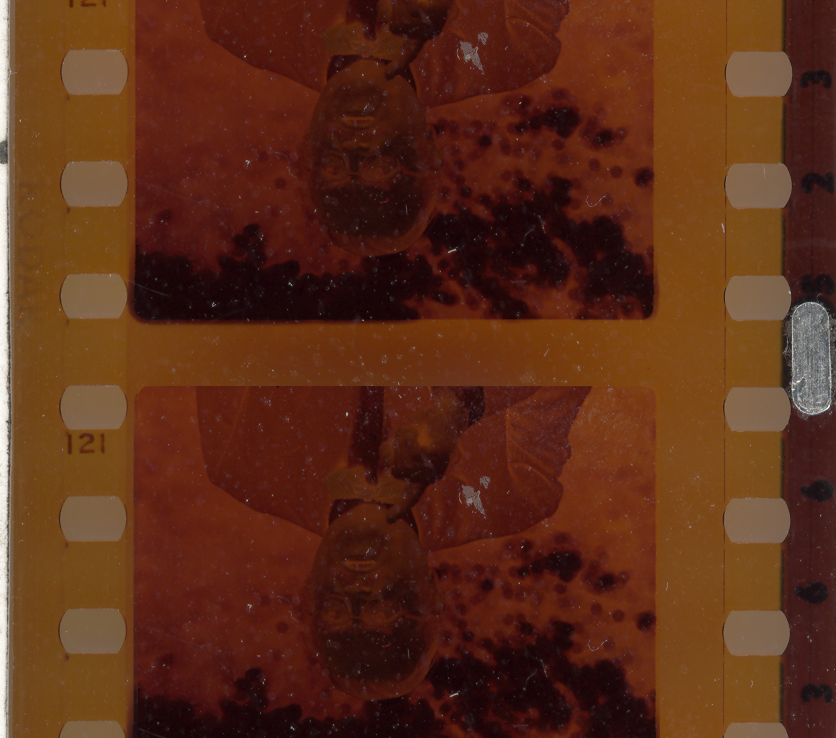
RFQ Patch
Click on images to see larger image
The introduction of computers led to the use of an entirely new system cueing Frame Count Cueing, known as FCC. The grader set the computer counting frames from a start mark and recorded the frame count to the first cue and then on for each light change. There were two different systems for counting ‘Milestone’ where the computer recorded the distance from the start mark to each cue and “Batch" where the computer measured the distance from one cue to the next.
Eventually Punch Tapes were no longer used and firstly Floppy discs were used to feed the information to the printing machine and finally WI-FI was used to send the information.