Tinting and Toning of Motion Picture Film
Tinting and Toning Motion Picture Films by Carl Louis Gregory F.R.P.S - 1927 Chapter 11 from Motion Picture Photography.
Tinting and Toning of Eastman Positive Films 2nd Edition Second Edition Published 1918 by Eastman Kodak Company This is a PDF File kindly provided by Michael Betancourt
Tinting and Toning of Eastman Positive Motion Picture Film Third Edition Published 1922 by Eastman Kodak Company
Tinting and Toning of Eastman Positive Motion Picture Films 4th Edition 4th Edition Published 1927 by Eastman Kodak Company
Double Toning of Film from the Cinematograph Weekly dated March 19 1931
Click Links to View PDF files
Tinting is carried out by dyeing the film emulsion or, in the past, by buying film stock where the film base was coloured. All the major manufacturers supplied a range of coloured base stocks.
Click images to see larger image.
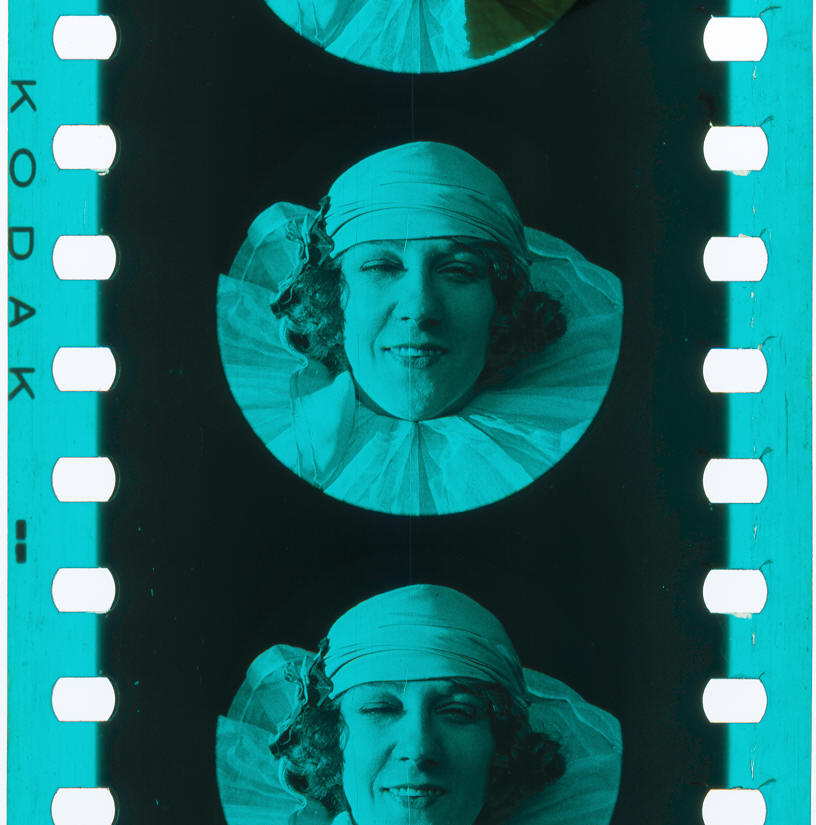
Kodak Blue Tint
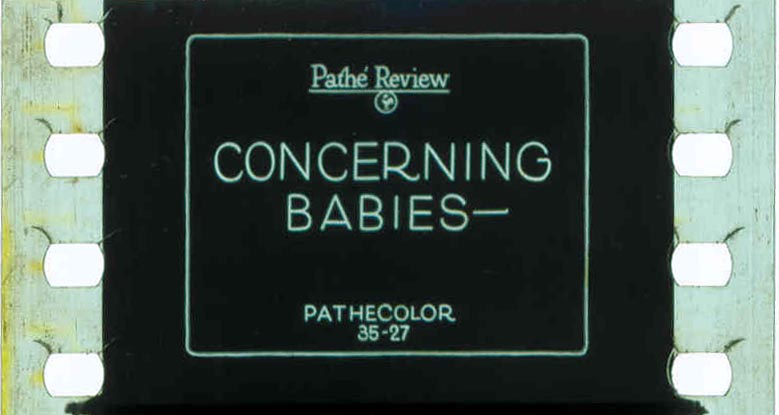
Green Tint

Red Tint
Straw Tint
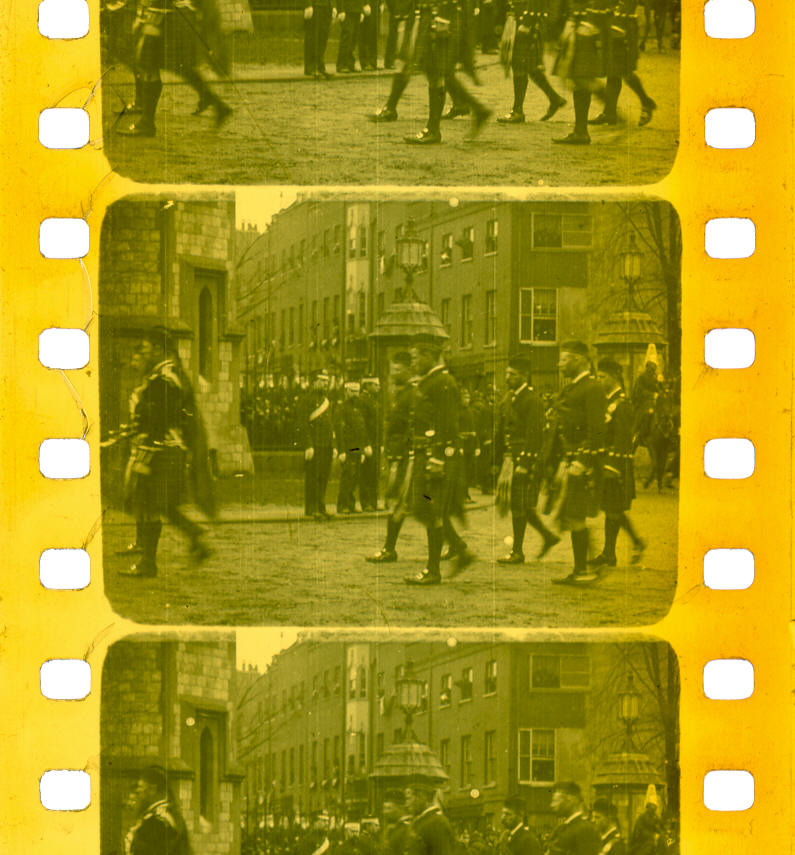
Yellow Tint
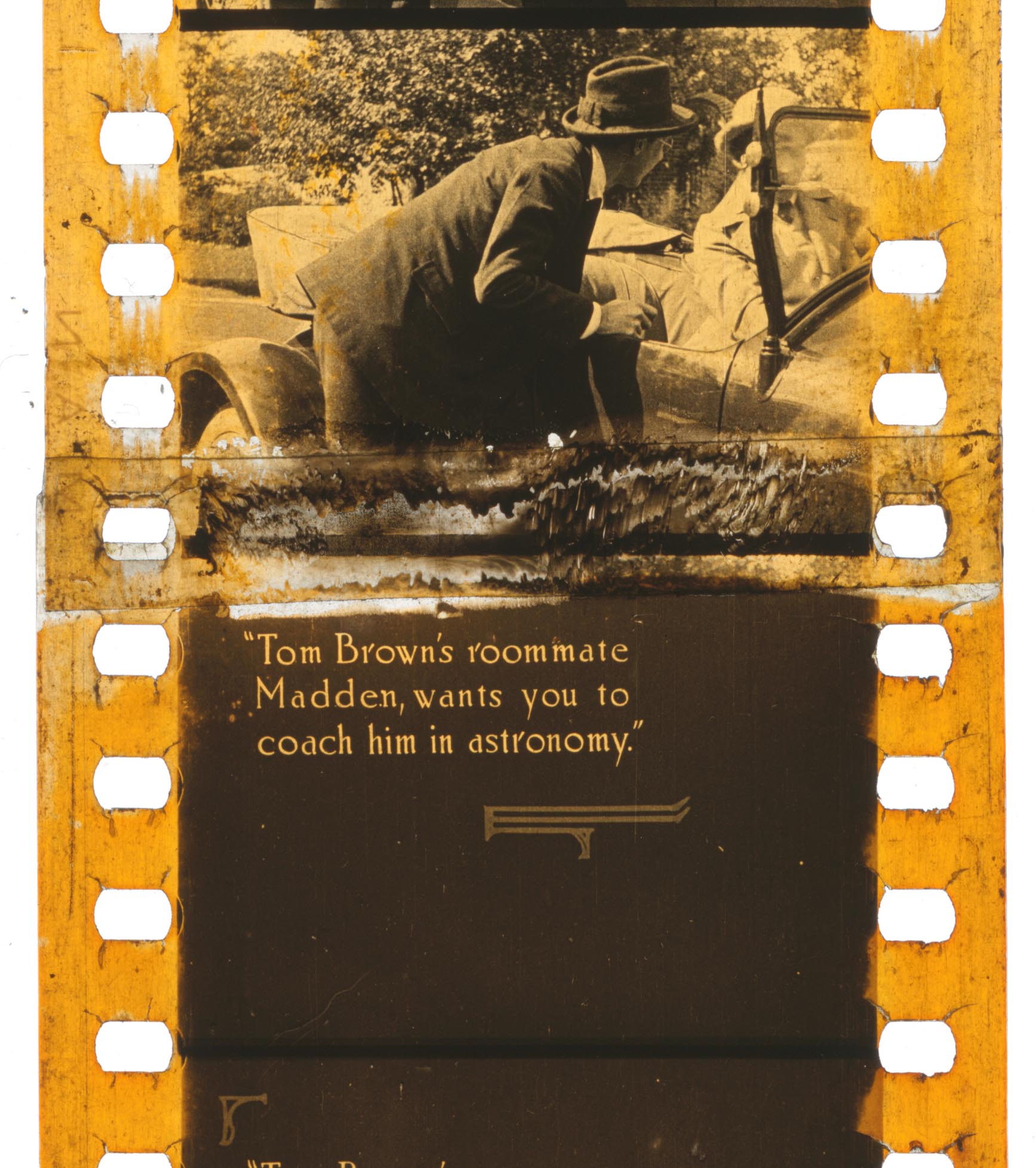
Amber Tint

Unprocessed pre-tinted orange base emulsion side

Unprocessed pre-tinted orange base base side
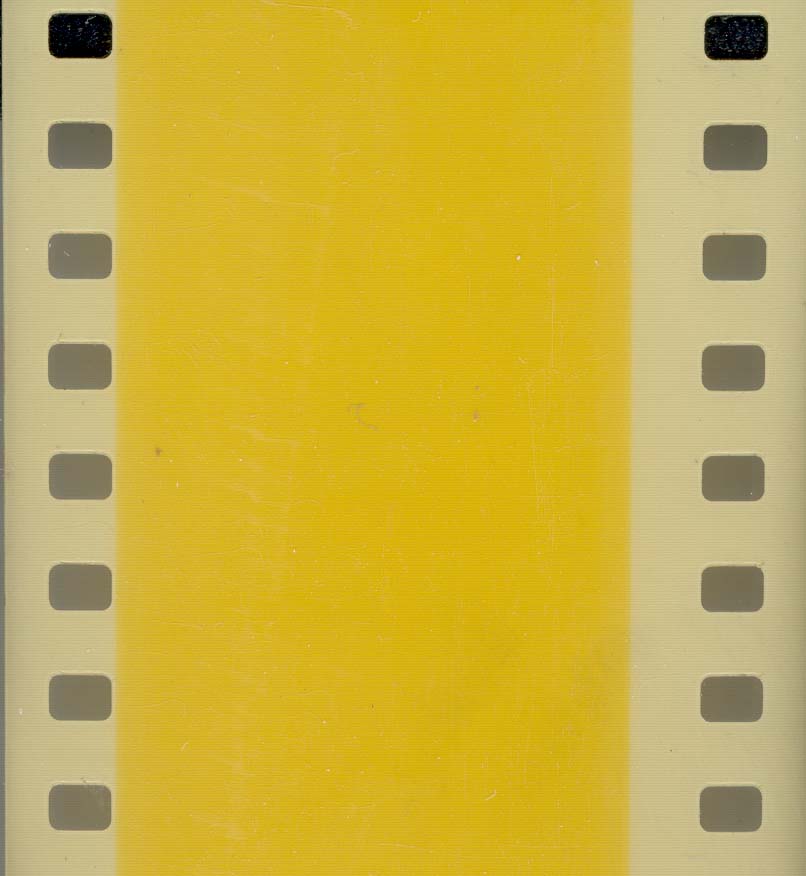
Yellow pre-tinted stock where the sound track area has not been tinted.
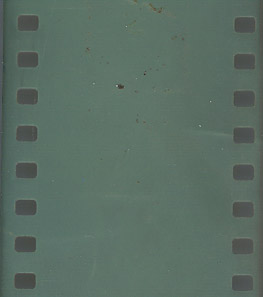
Green tinted stock
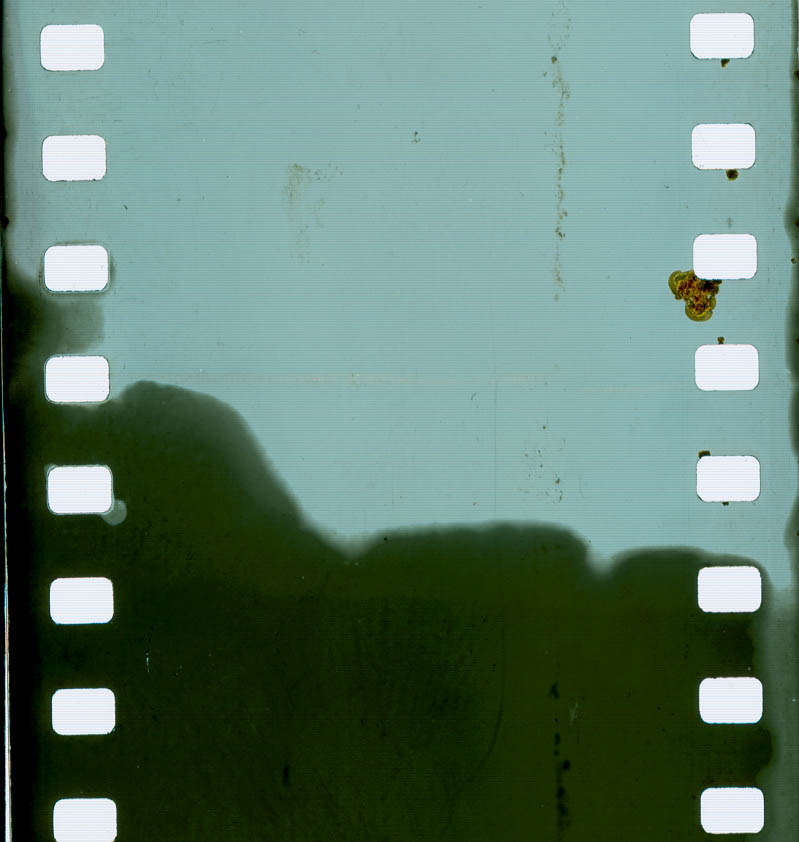
Green tinted stock that has been partly fixed to show the tint
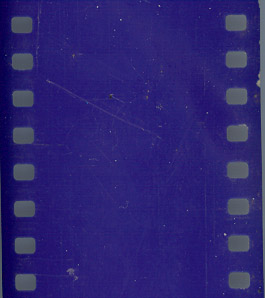
Blue Tinted stock
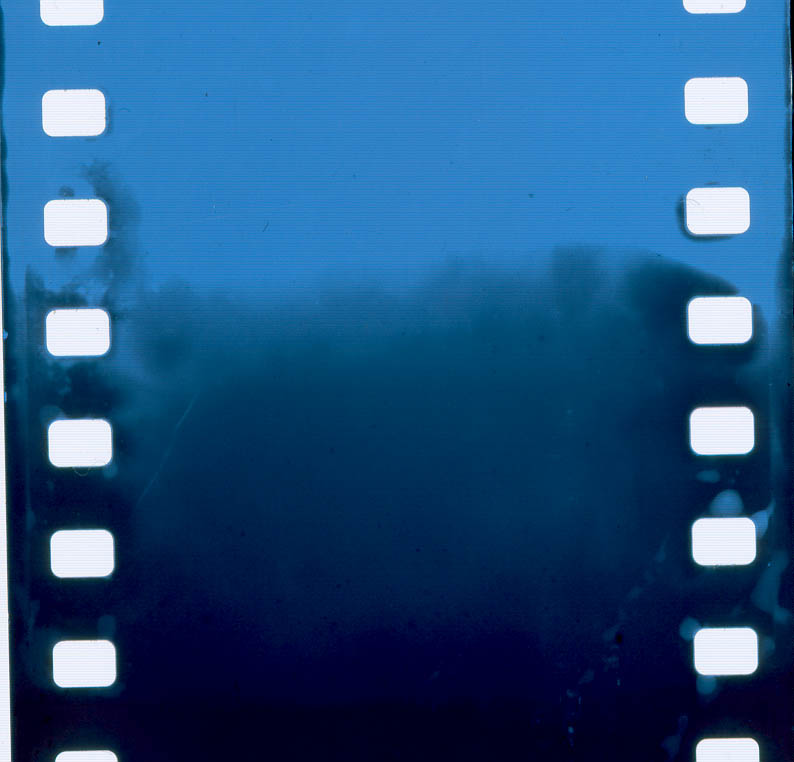
Blue tinted stock that has been partly fixed
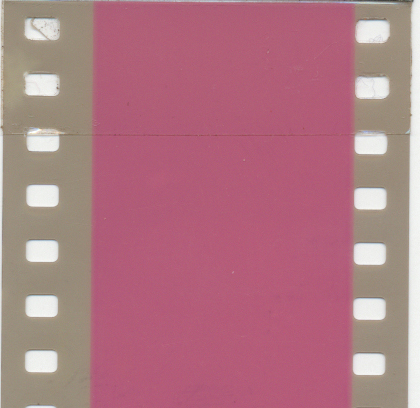
Rose printed stock without sound track area tinted

Red Tinted Stock without sound track area tinted

A selection of pre-tinted stocks
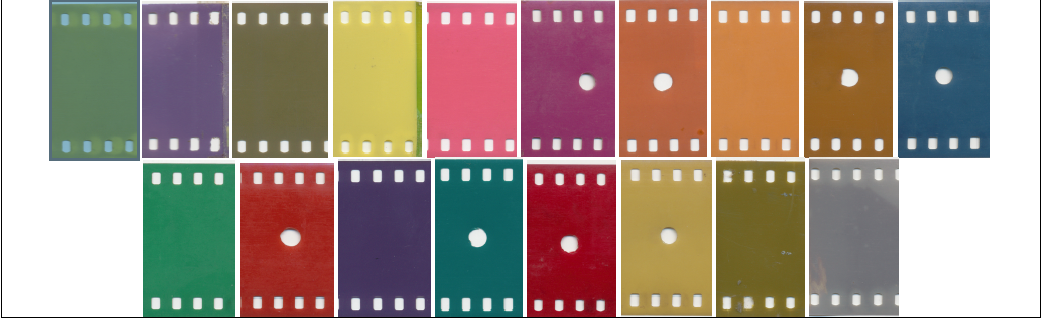
Some further pre-tinted stocks.
When sound arrived some tint colours caused a drop in sound volume because of the colour sensitivity of the track reader so stock was produced where the area for the sound track was not tinted.
Most stock manufacturers produced booklets that contained samples of tinting and toning.
'All the Colours of The World' produced by the Gamma Group and published by Edizioni Diabasis, 1998 contains illustrations from Agfa, Gevaert and Pathe.
Johnsons & Sons, Cross Street, Finsbury, London produced a sample book for their Kinocolor Film Dyes.
When sound was introduced tinting caused problems with the reproduction of the sound track; different colours caused changes to the sound level, various methods were used to solve this problem. Kodak Ltd patented the following method. Improvements in or relating to the Tinting of Combination Kinematograph and Sound record Films This is Patent GB 348372 May 13 1929 and appears by kind permission of the Director of the European Patent Office
EPA/EPO/OEB , 80298 Munchen, Deutschland
Toning is carried out by converting the black and white silver image to another, usually metallic, element to change the colour.
Iron gives blue
Copper gives red to brown
Vanadium gives green
Uranium gives black to red
Selenium gives red-brown
Sulphide gives sepia.
It can also be achieved by replacing the silver image by a dye image using a dye mordant. This gives an almost infinite range of colours and was used in many of the early colour systems.
Film known as duplex film was made which had emulsion on both sides. One side could be toned iron blue and the other side could be dye toned orange. Dascolor used such a system. Dascolor: Duplex film, One side toned Iron Blue, The other dye-toned Orange. The two colours can be seen, the orange between the perfs and the blue green on the left edge of the picture frame.
Click images to see larger image.

Copper Tone 1916
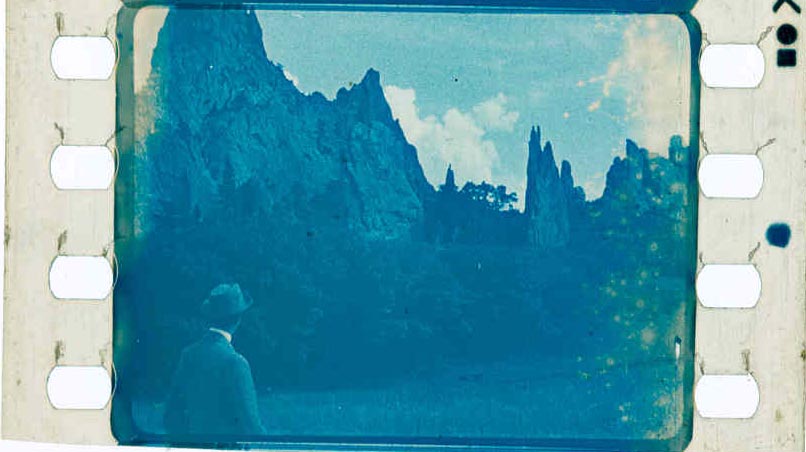
Iron Blue Tone

Dascolor
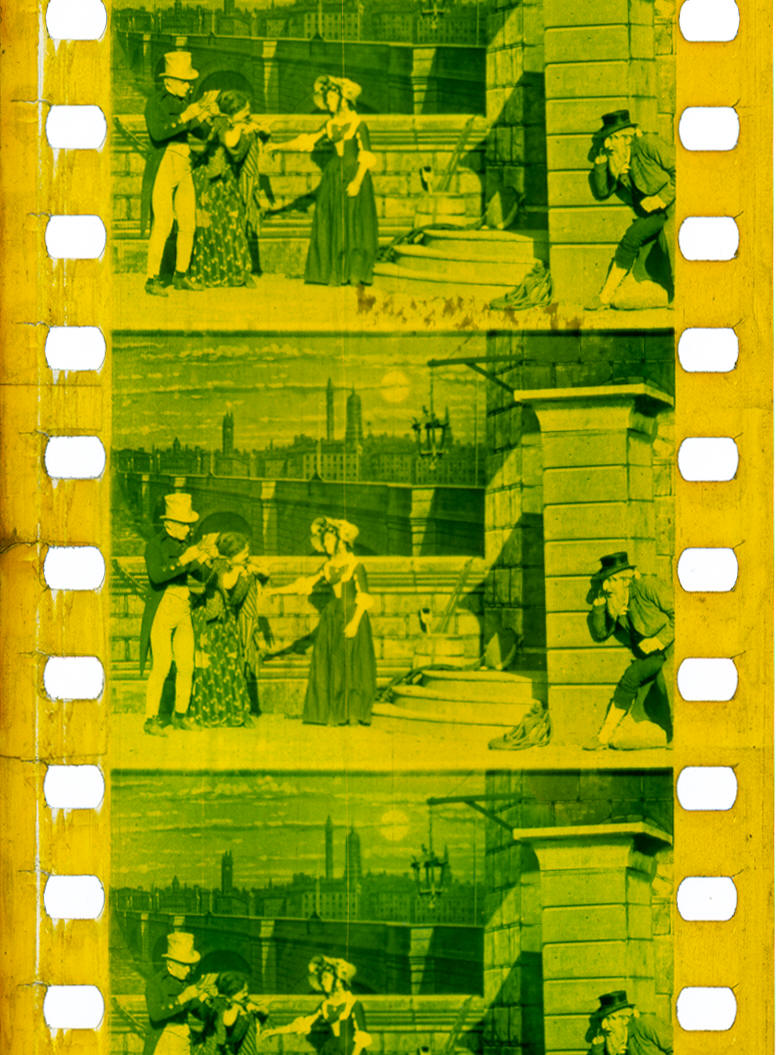
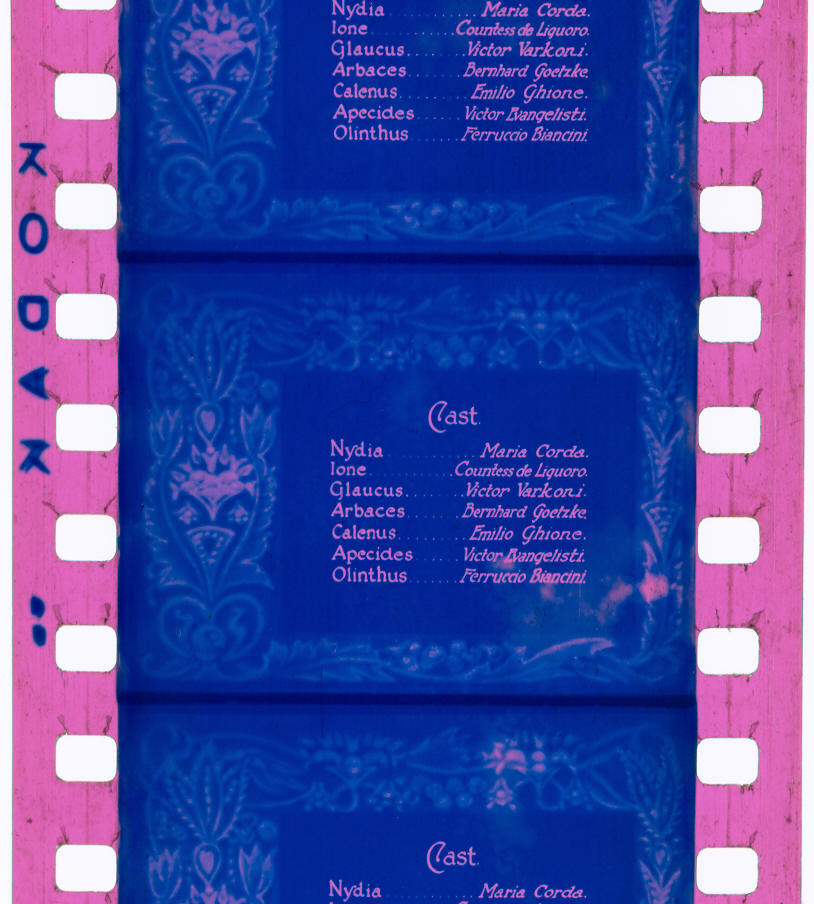
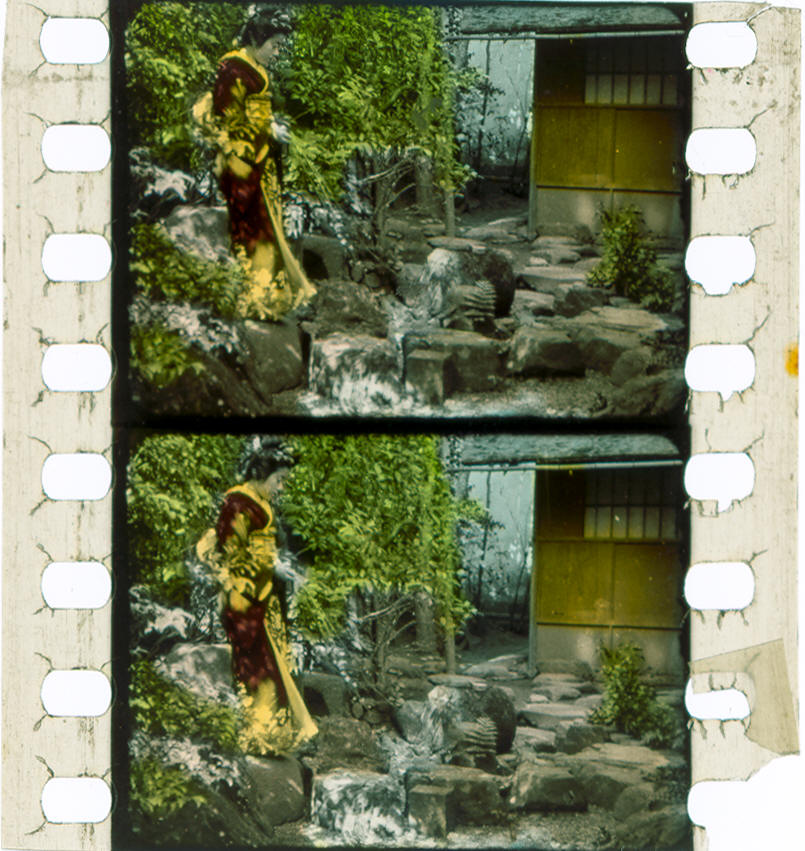
Tinted and Toned Film: Tinting and toning was used to give a combination of colours. The first image ranges from Yellow to Green. This is a yellow tint with a green tone added. The second sample is a blue tone and a rose tint. The blue is Iron toning.
Stencil colour: The colours were added by painting over stencils which masked out the areas of the frame that did not need the colour being applied. The right hand frame is the Pathecolor stencil cutter and next to it a stencil - these images were kindly supplied by the Cinémathèque française



MOTION PICTURE PHOTOGRAPHY by Carl Lewis Gregory, F.R.P.S. Second Edition published by Falk Publishing Co. Inc New York City in 1927. Chapter XI: TINTING and TONING MOTION PICTURE FILMS. This information was kindly supplied by Mr David Cleveland.