The SMPE Transactions Volume 1
MEETING OF NOVEMBER 18-20, 1918 CLEVELAND
J. G. Capstaff, English Patent No. 13,429 of 1915. (See below for the patent pdf.)
The silver image is bleached and tanned so that the dye goes into the gelatine in proportion to the amount of silver that was present. A negative gives a negative. So it is necessary to use a positive print in order to obtain a dye positive. This process is known commercially as Kodakchrome.
Note the spelling of the process!
Click on images to see larger image
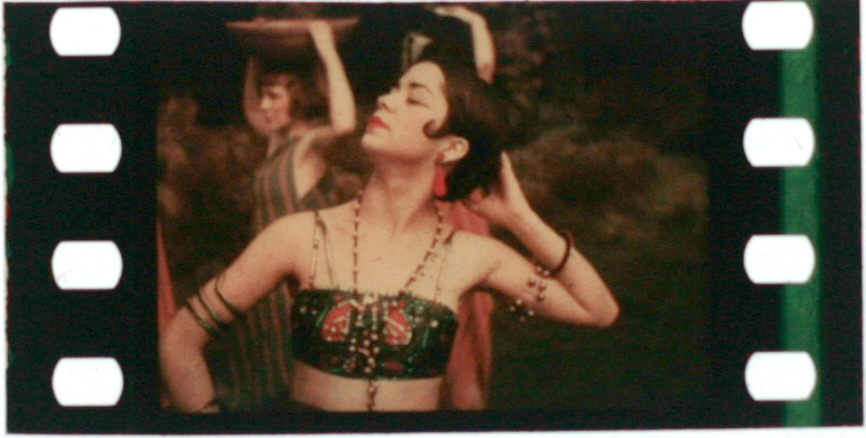
John George Capstaff was born in Gateshead, UK on 24th February 1879 and died at the age of 80 on 31st January 1960. He is buried in Mount Hope Cemetery in San Diago,
He had more than 100 patents whilst working for Eastman Kodak.
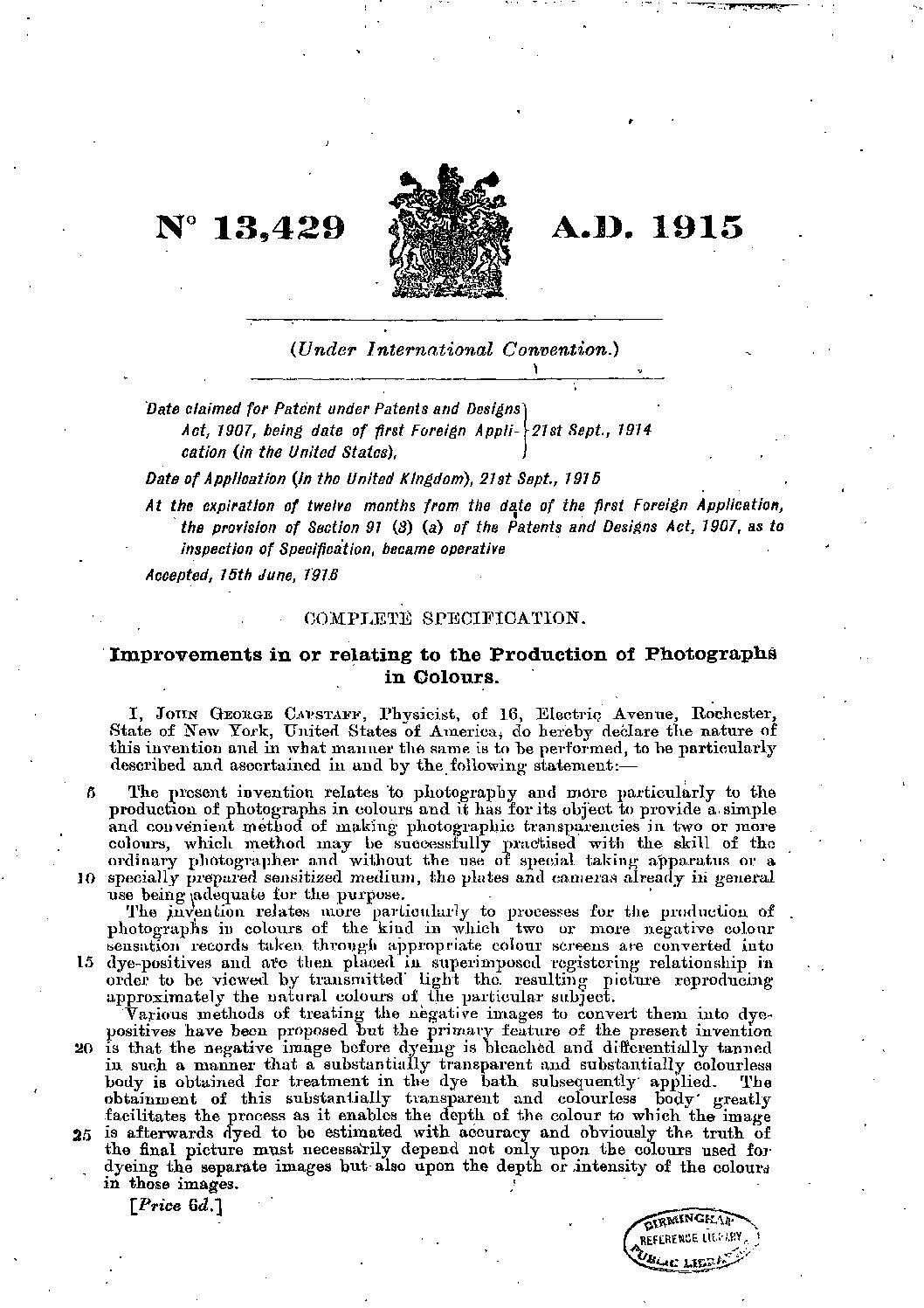
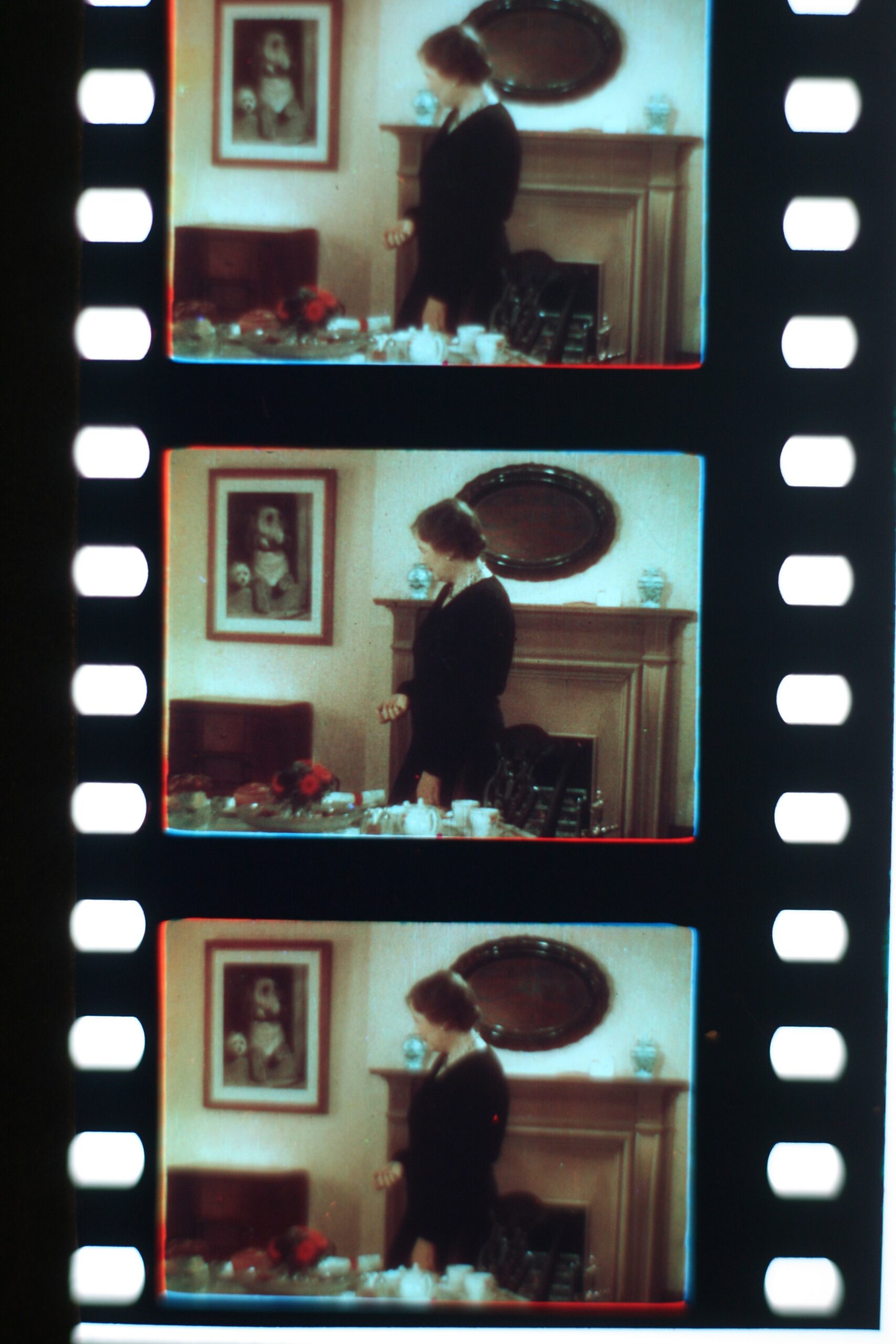
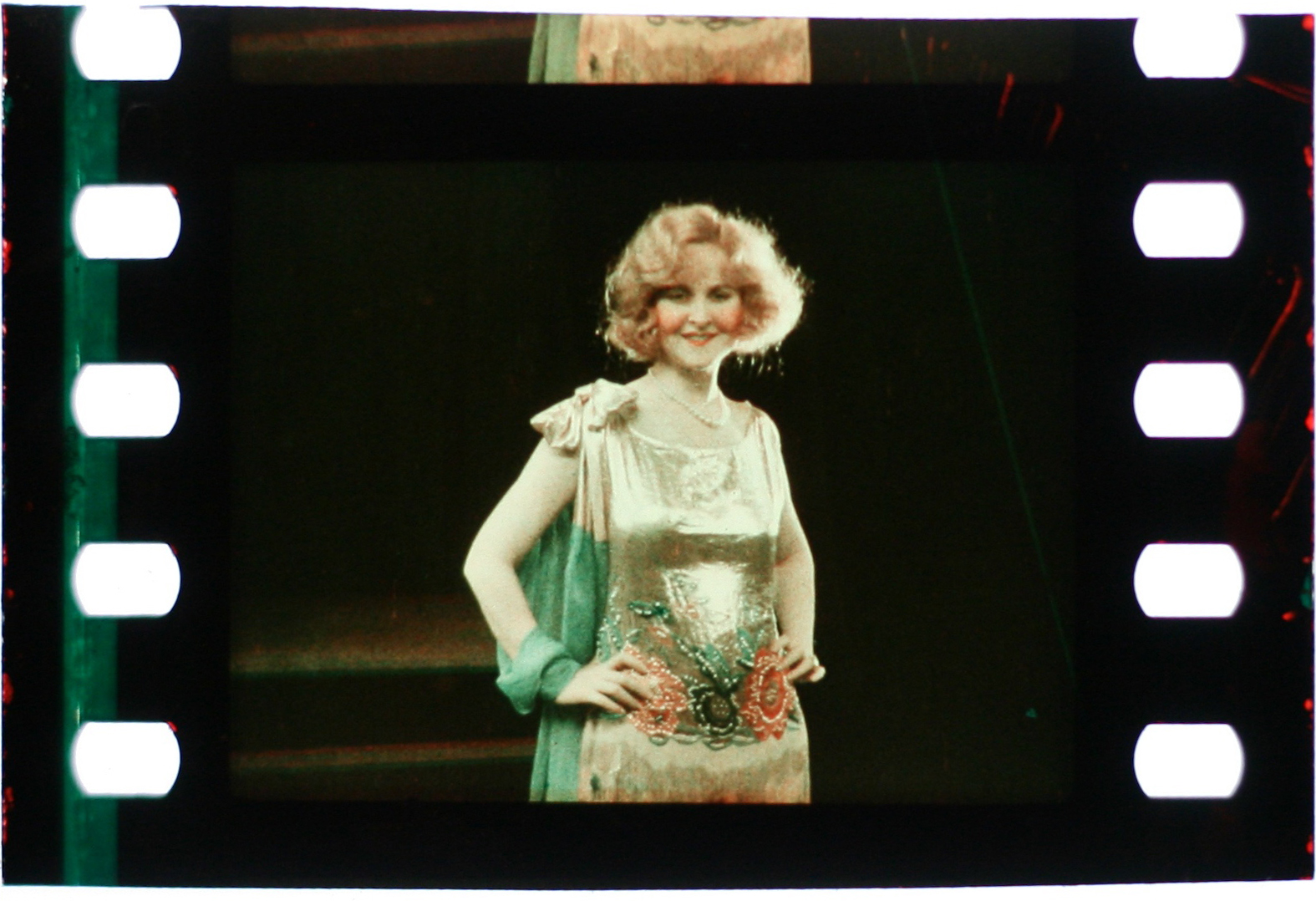
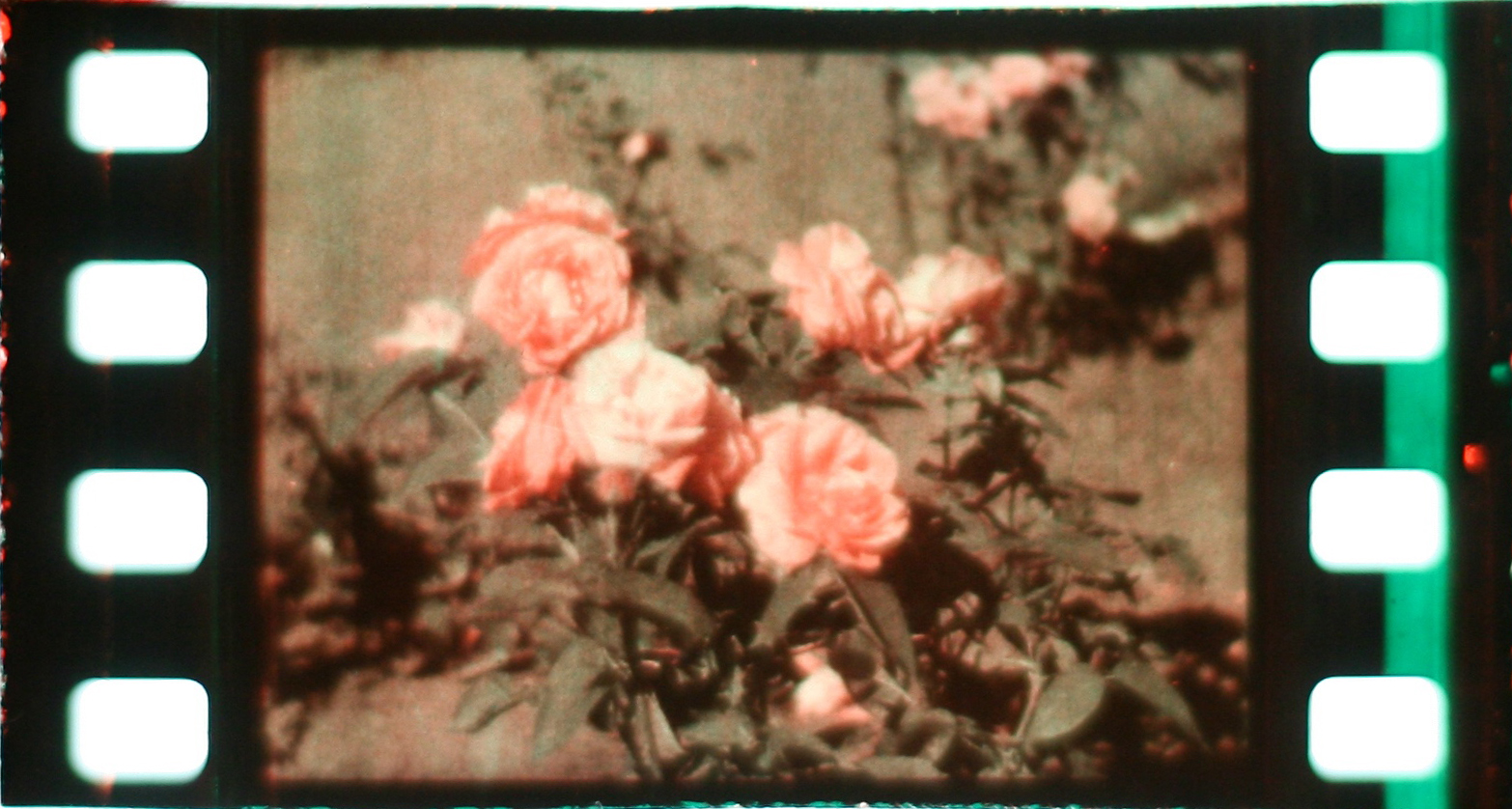
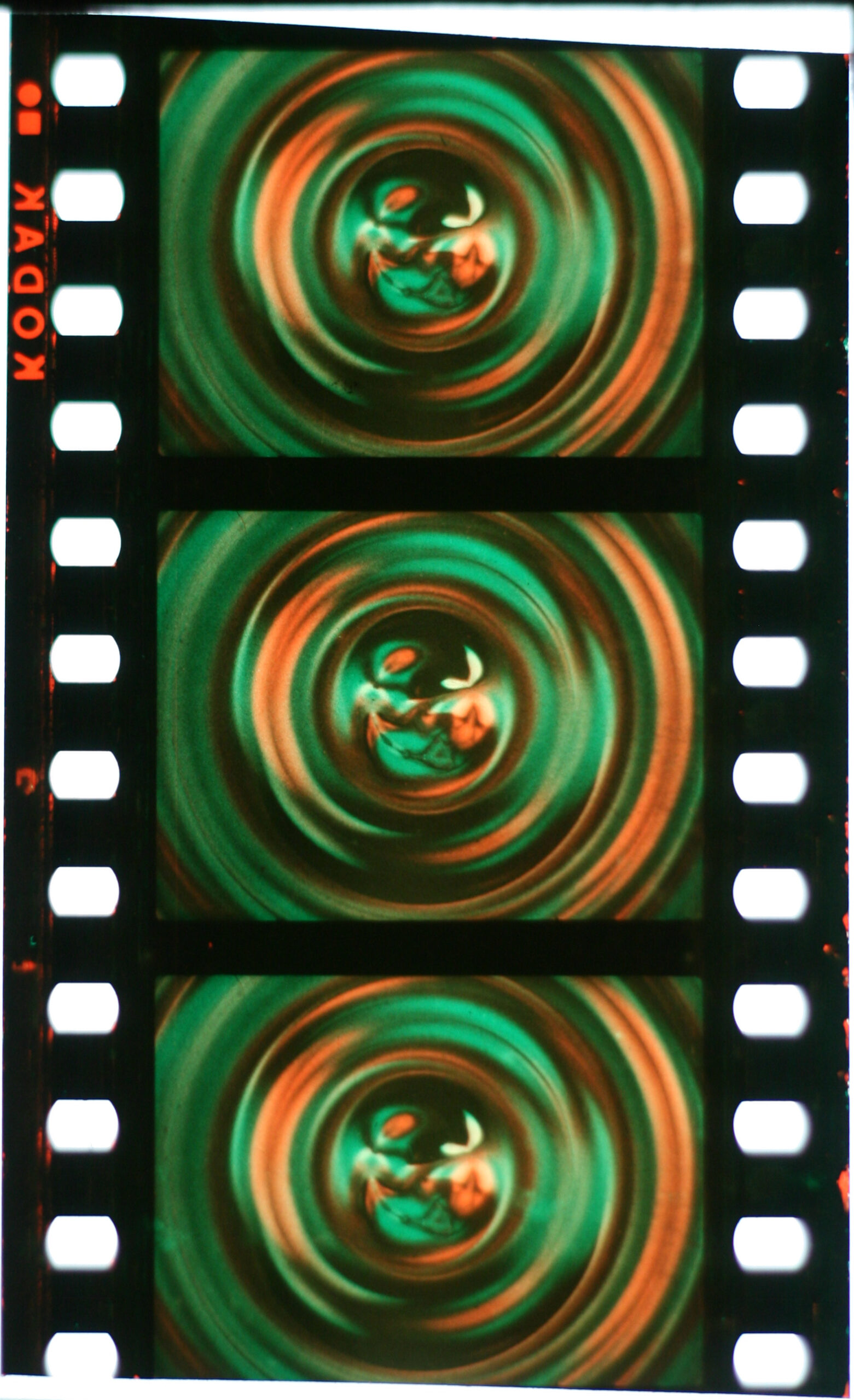
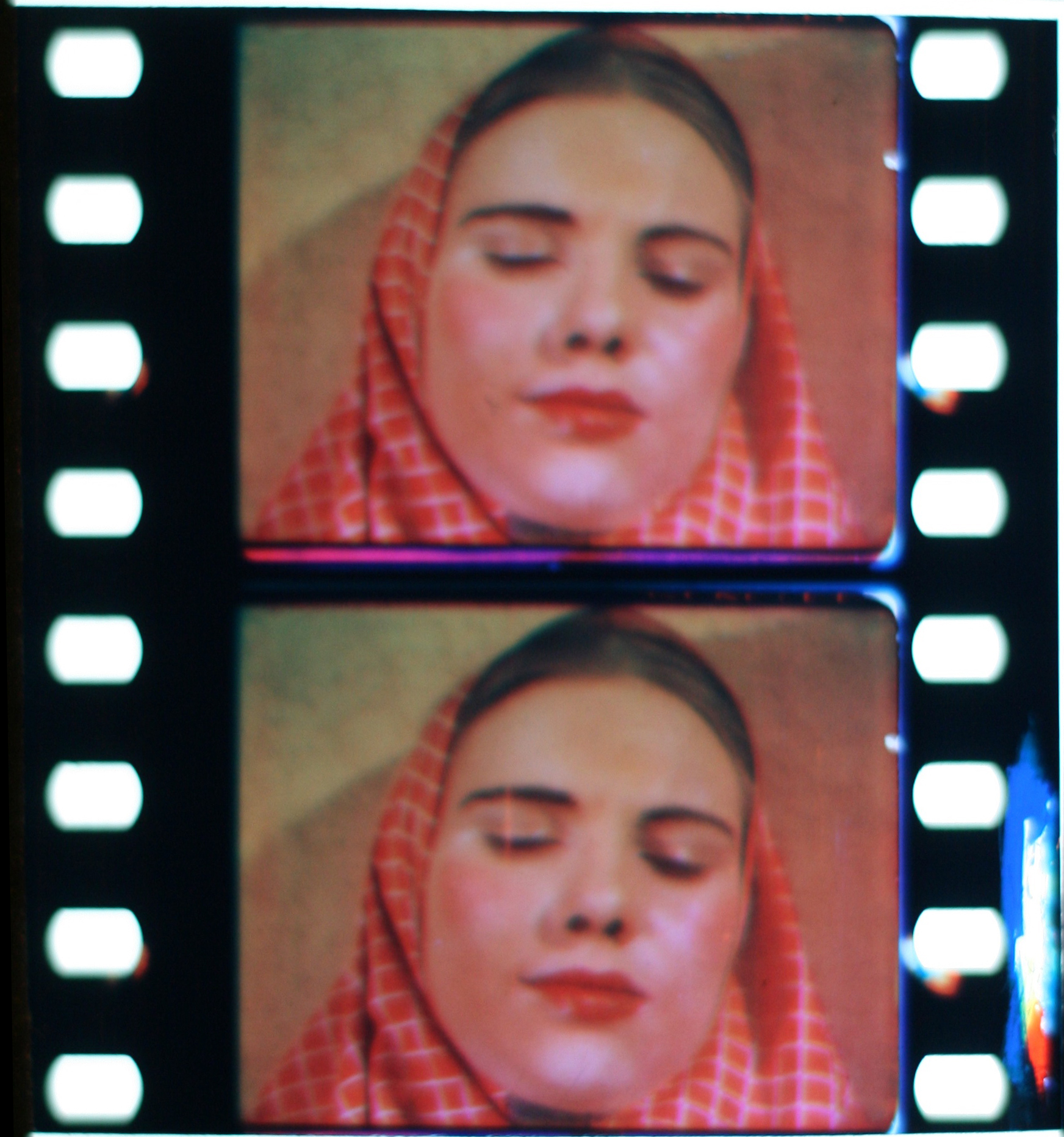
Item 1 Capstaff 1915 Patent. - 6 frames of 2 col kodachrome films from the Brian Coe Collection Media Museum, Bradford.
Note that the emulsion on each side has been scraped at some stage to reveal colours on last image. The colours are also visiable on the edges of the frames
The Patent appears by kind permission of The Director, European Patent Office.
Click images to see larger image or to view patent
Colour Cinematography Adrian Cornwell Clyne Chapman and Hall Ltd London ppp 336-337
Kodachrome. (The Earlier Process.)
(Eastman Kodak Company.)
The name "Kodachrome" was originally used for a two-colour subtractive process worked out by J. G. Capstaff of the Kodak Research Laboratories. This process should not be confused, therefore, with the contemporary Kodachrome film.
Camera.-Beam-splitter. Both images were recorded on a single film. Printing. The printing had to be carried out with positives. The first stage was, therefore, to make a set of intermediate master positives. These were made by contact printing from the original negative. A projection printer embodying an elaborate prism mirror system positive bearing the pairs of complementary images.
The double-coated film now bearing negative images was developed and bleached; the bleach bath hardened the film only in the parts where the image had been printed. The two sides of the film were then dyed in the usual subtractive complementaries, the dye being absorbed by the gelatine only in the unhardened areas, thus providing positive dye images.
The Kodachrome Bleach Was:
A. Potassium Ferricyanide 37.5gm
Potassium Bromide 56.25gm
Potassium Dichromate 37.5gm
Acetic acid 10cc
Water 1000cc
B. Potassium alum, 5 per cent. solution.
A and B were mixed in equal Proporations
The films were fixed after bleaching. The drying was important and had to be as even as possible. Humidity of the film had also considerable bearing on the results; the drier the film the cleaner the highlights and the greater the contrast.
J. G. Capstaff patented the making of positives of different gammas by varying the development time. See also Comstock (Technicolor) and Brewster (U.S.P. 1,469,811).
KODACHROME PATENTS
E.P. 13,429 (1915) U.S.P. 1,196,080