The History of Color Photography Joesph S Friedman, PhD The American Publishing Company, Boston 1945 Page 214,
THE LENTICULAR PROCESS
In this chapter we turn our attention to one of the simplest and most elegant of all the proposals for the making of color reproductions. This is the lenticularprocess, which requires no special camera or special processing technique,except that a special type of film has molded on its back a series of lenticularelements which divide the surface into a honeycomb structure. For a longtime after the idea was first proposed, nothing was done with it. But later itbecame extremely popular, and for atime it was thought that this schemesolved all problems of motion pictures in color. Some idea regarding the positionwhich lenticular film held in the industry may be obtained from the fact that fully one-third of the patents dealing with color reproduction ithe decade 1925-1935, dealt in one way another
Colour Cinematography Adrian Cornwell-Clyne Third Edition 1951 Chapman and Hall p319
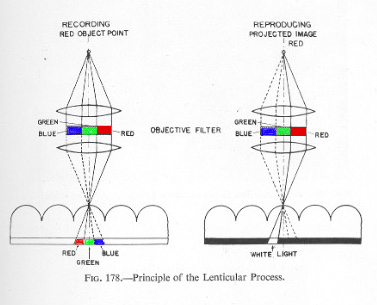
THE KODACOLOR PROCESS' Kodacolor is a three-colour additive process which realizes the principle of a line screen method without the added difficulty of ruling a screen on the film support. The process is based on a means of impressing a series of microscopic cylindrical lenses into and across the support side of panchromatic film (Figs. 179, 182). A banded three-colour filter is fitted into a holder in front of the lens of the camera and projector. The film is threaded in the camera with the emulsion side away from the lens so that the light, before it reaches the sensitive emulsion, must be transmitted by the tiny embossed lenses, each one of which thus images the bands of the colour filter on the film. If the subject is white, all three colour filters allow light to pass and three lines are exposed under each lens element. If the subject is red, that is if it reflects red light, only the red parts of the filter transmit the light, and the emulsion areas illuminated by this section of the filter will be exposed. With colours that are made up of more than one primary it follows that more than one part of the tricolour filter will transmit the light. Perhaps this may be made a little clearer if only one lens element and one colour of light, say blue, is considered as shown in Fig. 180. Here it is seen that the blue' light exposes an area about one-third that under the lens element (No. 1). On development this area becomes opaque (No. 2). The film is then bleached, and the remaining silver salts are given a controlled exposure (No. 3) and developed up. Now the area affected by the blue light becomes clear and transparent, while the area corresponding to the red and green filter segments is opaque (No. 4). When white light is directed on this single lens section, it passes through the area where the blue light exposed the film; and since the optical system is reversible, it follows that the light will strike the blue segment of the filter and form a blue spot on the screen, since no light reaches either the green or red filter segments. In other words, all the tiny line areas transmit all, part, or no light, according as the subject reflects all, part, or none of the corresponding coloured light. The various colours are recombined on the screen to reproduce the natural colours of the subject photo-graphed.
1 The name " Kodacolor " was originally applied to the 16 mm. lenticular process as commercially exploited by Eastman Kodak. The lenticular process is now extinct, and the name was adopted for the negative multilayer roll-film.
319
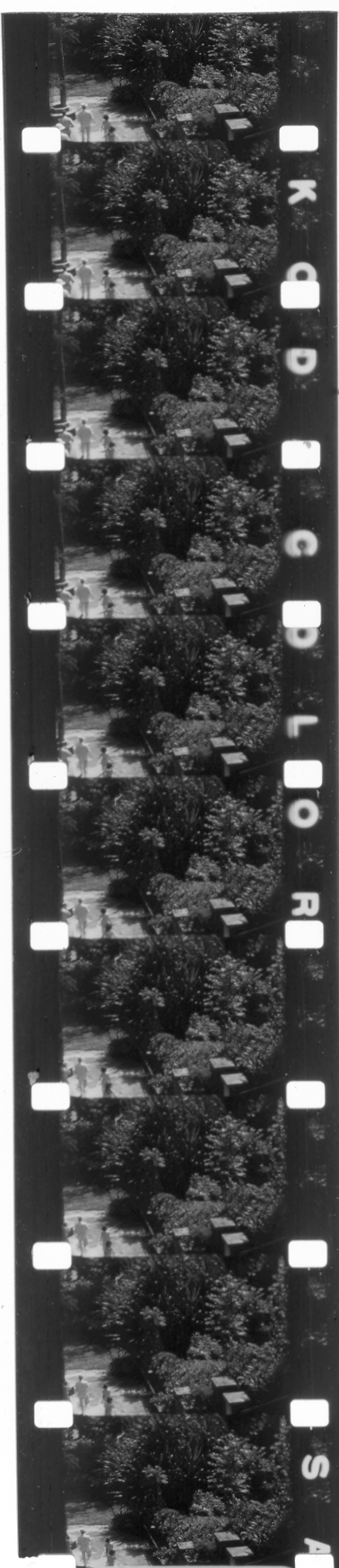
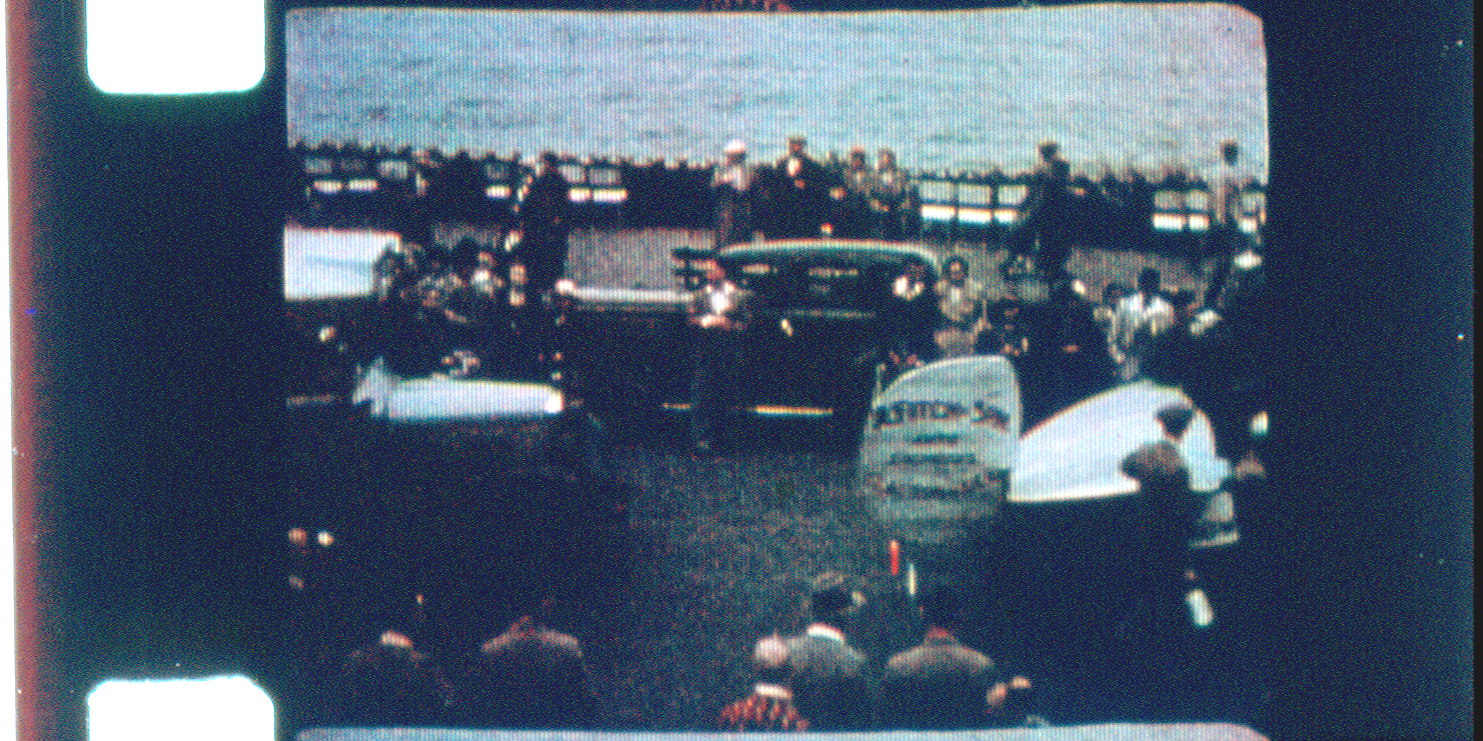
16mm Black and White Reversal Kodacolor Film and a frame showing colour
Note the KODACOLOR edge print.
For more information see SMPE Journal Vol 12 Trans 36 1928 P940 Kodacolor Process for Amateur Cinematography J G Capstaff and M W Seymour
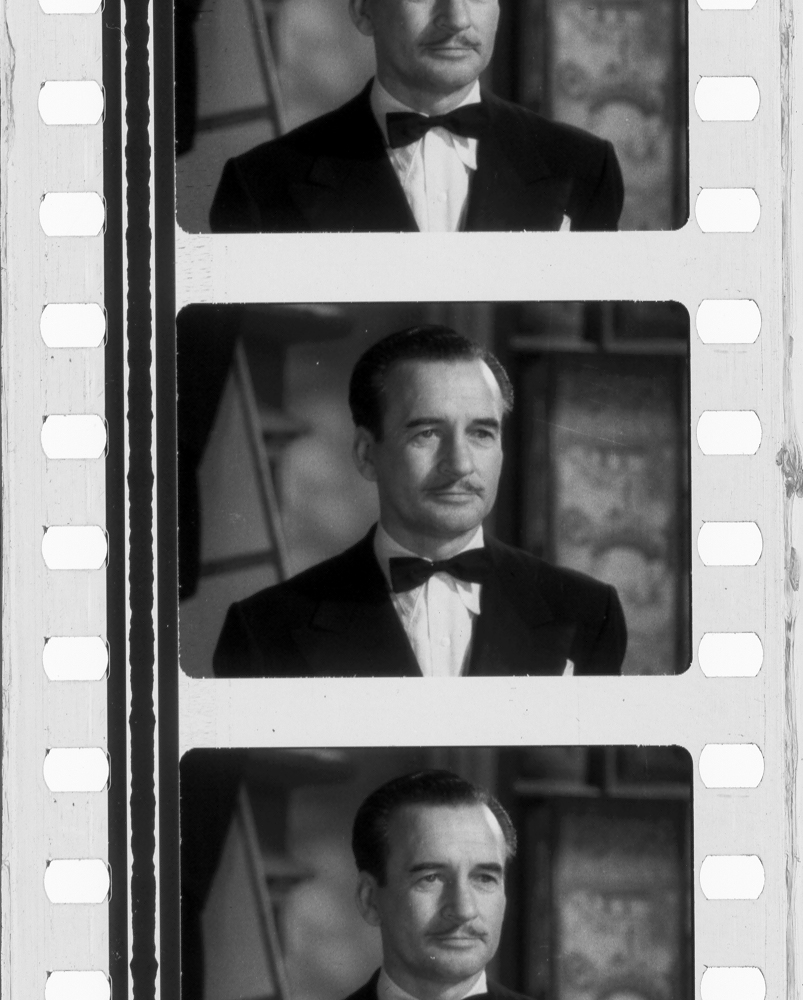
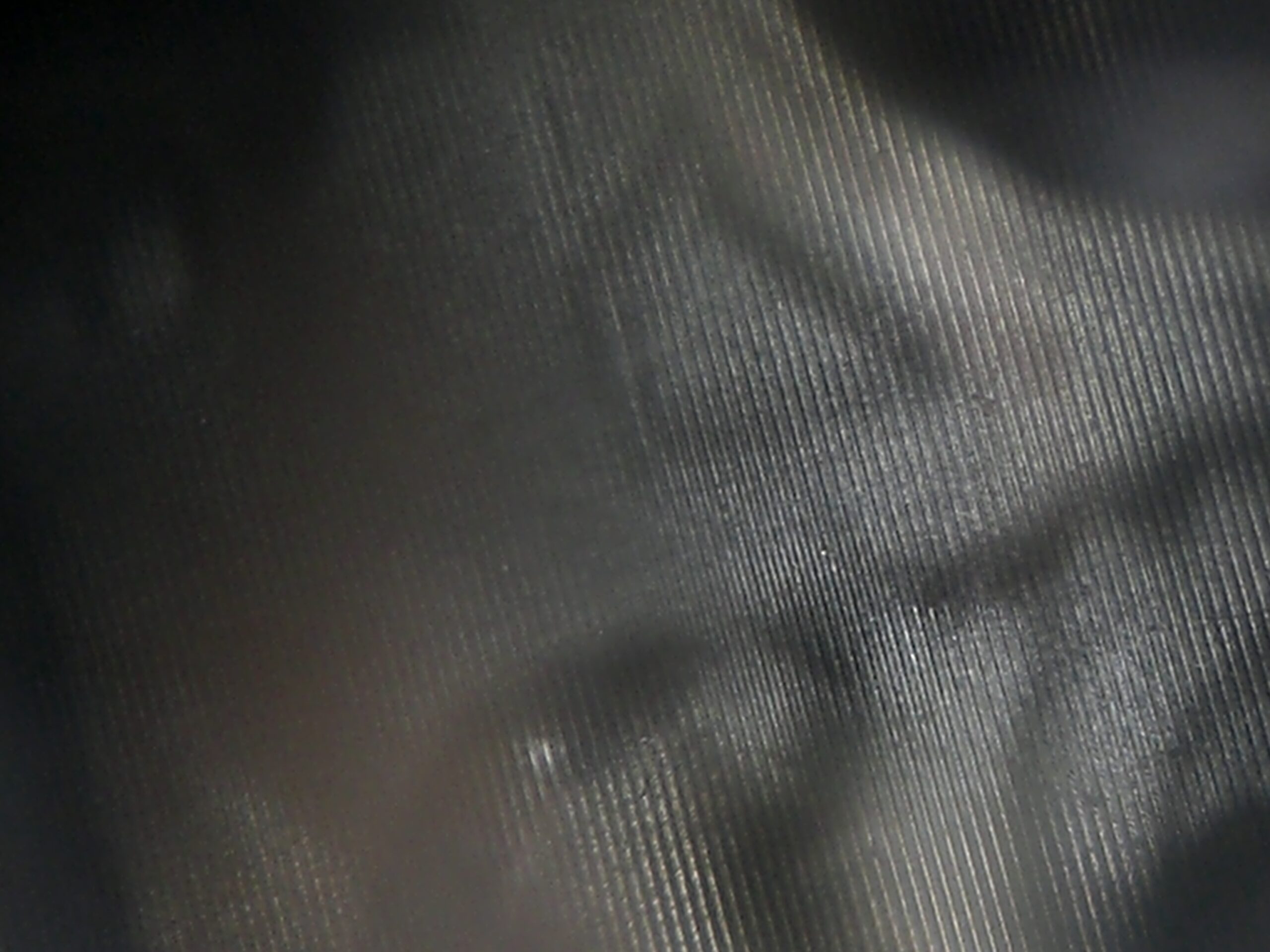
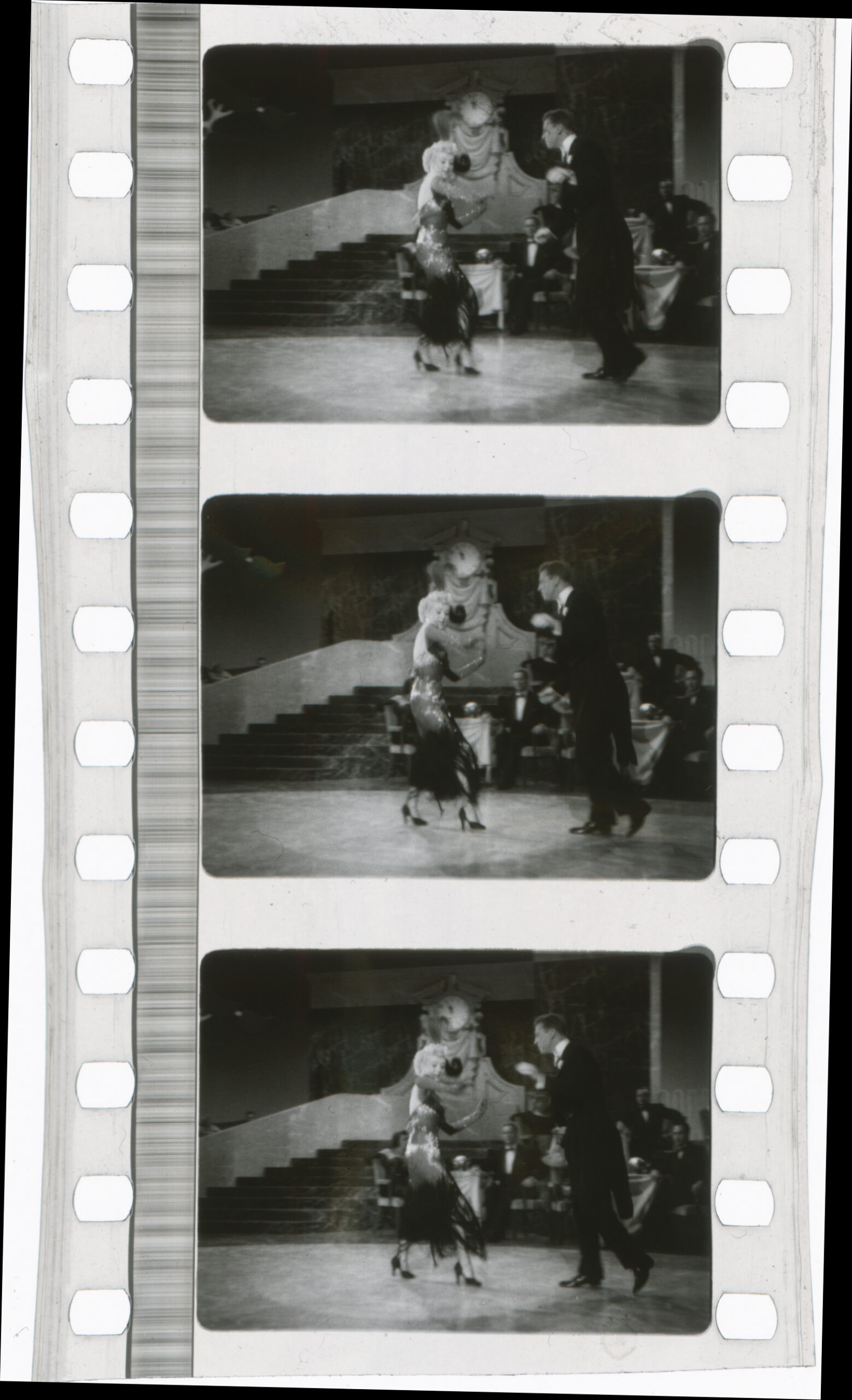
35mm Eastman Lenticular Positive film and a microscope image of the lenticular lines. Fox Lenticular Film below.
Click on images for larger image.
A History of Motion Picture Color Technology Roderick T Ryan The Focal Press London and New York 1977 P51
KELLER—DORIAN COLOR
The Keller—Dorian system of color cinematography was a three-color additive system based on the 1909 invention of Rudolph Berthon. This process used a banded three-color filter to expose black and white film through an embossed lenticular base. The first commercial use of the Keller—Dorian system was the Kodacolor process introduced in 1928. The Eastman 16 mm Kodacolor lenticular film was manufactured under the Keller—Dorian patents through a license agreement between Eastman Kodak and Keller—Dorian Companies. In December 1930, the Keller—Dorian Company entered into an agreement with Eastman Kodak Company and Paramount Pictures, Inc., and a research program was begun in an effort to utilize the lenticular process for 35 mm entertainment motion pictures. Considerable effort and money was spent, with only limited success, in an attempt to make the system practical for motion picture release prints. In 1936 Paramount withdrew from the agreement and Kodak directed its primary efforts to the future development of the new Kodachrome color process invented in 1935 (Chapter VII). Some years later, in 1951. the process was revived by Kodak and Twentieth Century- Fox in another attempt to utilize the system for making motion picture release prints (Eastman Embossed Print Film). No prints were made for theatrical release, however, and once more the system was abandoned. With the introduction of color television, the system was revived again in the form of Eastman Embossed Color Kinescope Recording Film, introduced in 1956. This process met with very limited success; however, it was used commercially by the National Broadcasting Company to record several shows. It was finally abandoned after a few years and at the present time there is no commercial use of the lenticular process for color motion pictures.
.Agfa produced a lenticular film 16mm Agfacolor based on the same process as Kodacolor. See SMPE Journal Vol 20 April 1933 No 4 P301 Optical Photographic Principles of the Agfacolor Process F. Weil
The problems regarding sound on lenticular film is discussed in SMPE Journal Vol 20 Jan 1933 No 1 P60 Sound Remarks on Lenticular Color Film. A P Richard