
The Francita Process was operated in Great Britain prior to 1939 by British Realita Syndicate Ltd. It was also known as Francita-Realita.
Colour Cinematography Adrian Cornwell-Clyne Third edition 1951 Chaopman & Hall London P 279.
On the same page he says that it was also known as Opticolor in England. Process developed by Maurice Velle.
The Patents for Francita were
BP419894 1933 and BP437141 1935. Click on Patent Number to view Patent. The patents appear by Kind permission of The Director, European Patent Office, EPA/EPO/OEB, 80298,Munchen, Deutschland.
A feature film was shot in Paris July 1935 and shown at a Parisan Cinema. The process was used by Société de films couleurs Naturelles Francitaé
In 1937 the Coronation of HM George V1 and Troopiung the Colour were exhibited at the Cameo Cinema in London and elseware in 1937.
Below is a digital reconstruction using Photoshop 7 from the negative above.
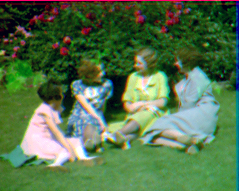
A Photoshop 7 combination of the negative above.

Photoshop 7 combination of three colour separations
Red Separation
Green Separation
Blue Separation
There seems to be some confusion with the name Opticolor. The US system as described below is a lenticular system similar to Kodacolor.
Journal of the SMPE Vol 17 1931 P117
Opticolor. The Opticolor Corporation has been formed in NewYork with the studio at Long Island operating a three-color additiveprocess. No details are given as to the system used. (Motion Picture Herald, April 11, 1931.)
Journal of the SMPE Vol 18 1937 P447
In the past few years in Europe the lens-screen method for color films has been further developed. The most active group worked with the inventor, Rodolphe Berthon. Their interests are embodied in Opticolor A.G., Glarus, Switzerland. At the request of this company, Siemens & Halske A. G. (Berlin), in connection with other firms, developed the method into an industrial process. It has received the name Berthon-Siemens Color-Film Process. During the 1936 Olympic games a short film, made by this process, was shown publicly in Berlin. It is believed that this represents the first time in the world that a lens-screen color-film (35-mm.) has been shown successfully on a motion picture theater program. Additional films are being made.
The Journal of the SMPE Vol29 1937 P3
Regarding the brightness of the pictures in the theaters, certain progress was made during the past year that is especially interesting in connection with the efforts made by Opticolor and Siemens & Halske in introducing the lenticular film in the theaters. During the Olympic Games the Siemens-Berthon color-film was shown for the first time, and it was reported that the satisfactory brightness of the projected pictures was due to the design of a new lamp.
For further information on Lenticular Film see https://brianpritchard.com/wp/motion-picture-technology/lenticular-colour/
The JSMPE 1931 Vol 17 p117 quote the 'Motion Picture Herald' April 11 1931
'Opticolor
The Opticolor Corporation has been formed in New York with studios at Long Island operating a three color additive Process No details are given as to the system used.'
Journal of the BKS May 1938 P137-40 No Author.
A Brief Description of the British Reality Process
Please click on link to read article.
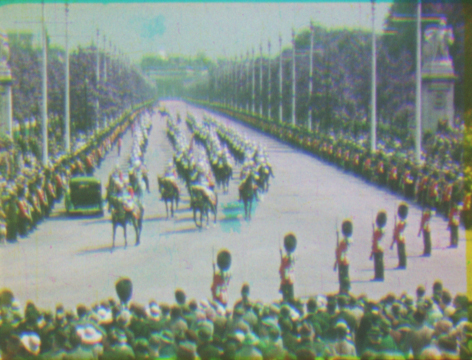
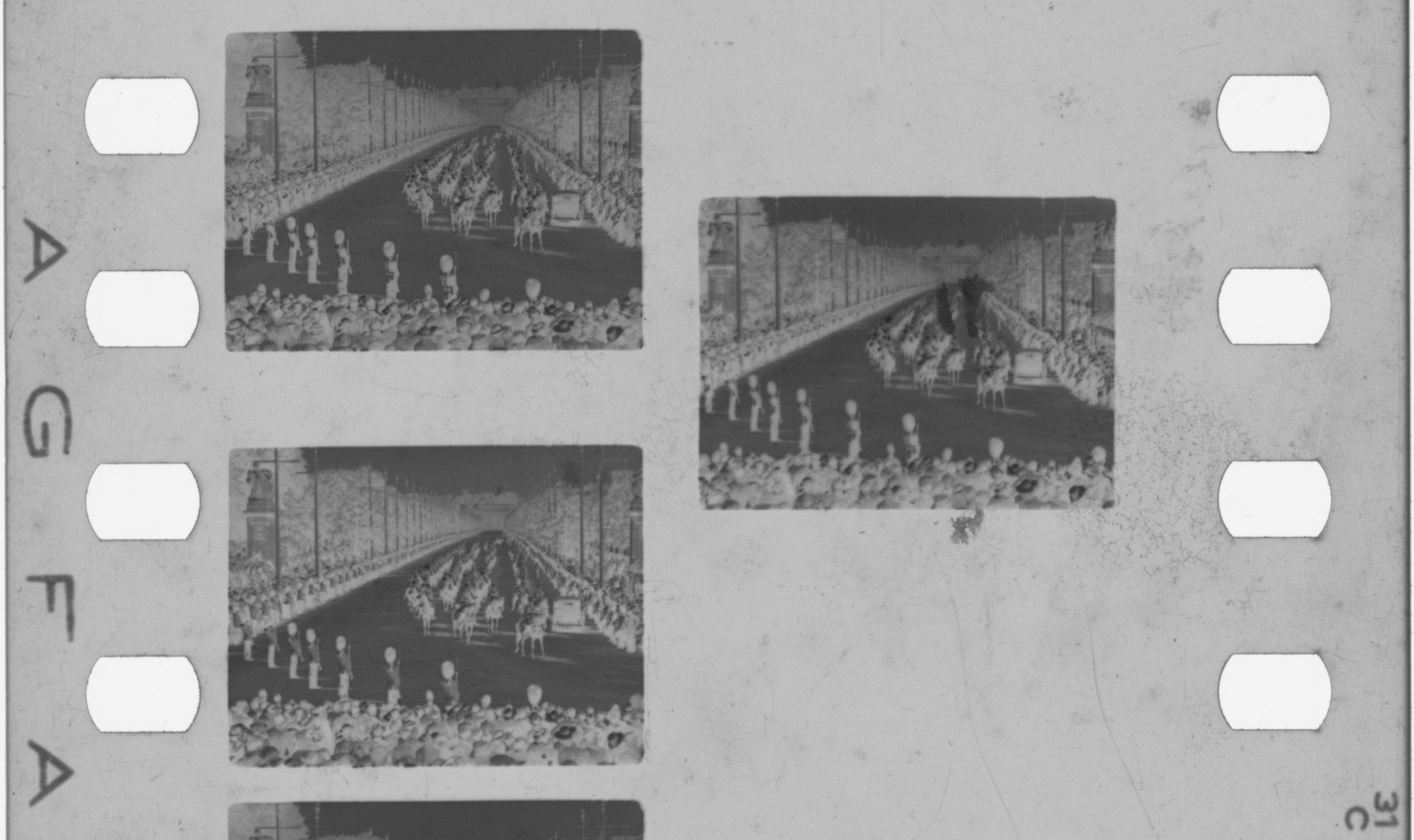
Coronation of George VI in 1937. The colour picture is a digital reconstruction from the negative below it. Click on the pictures to see an enlargement
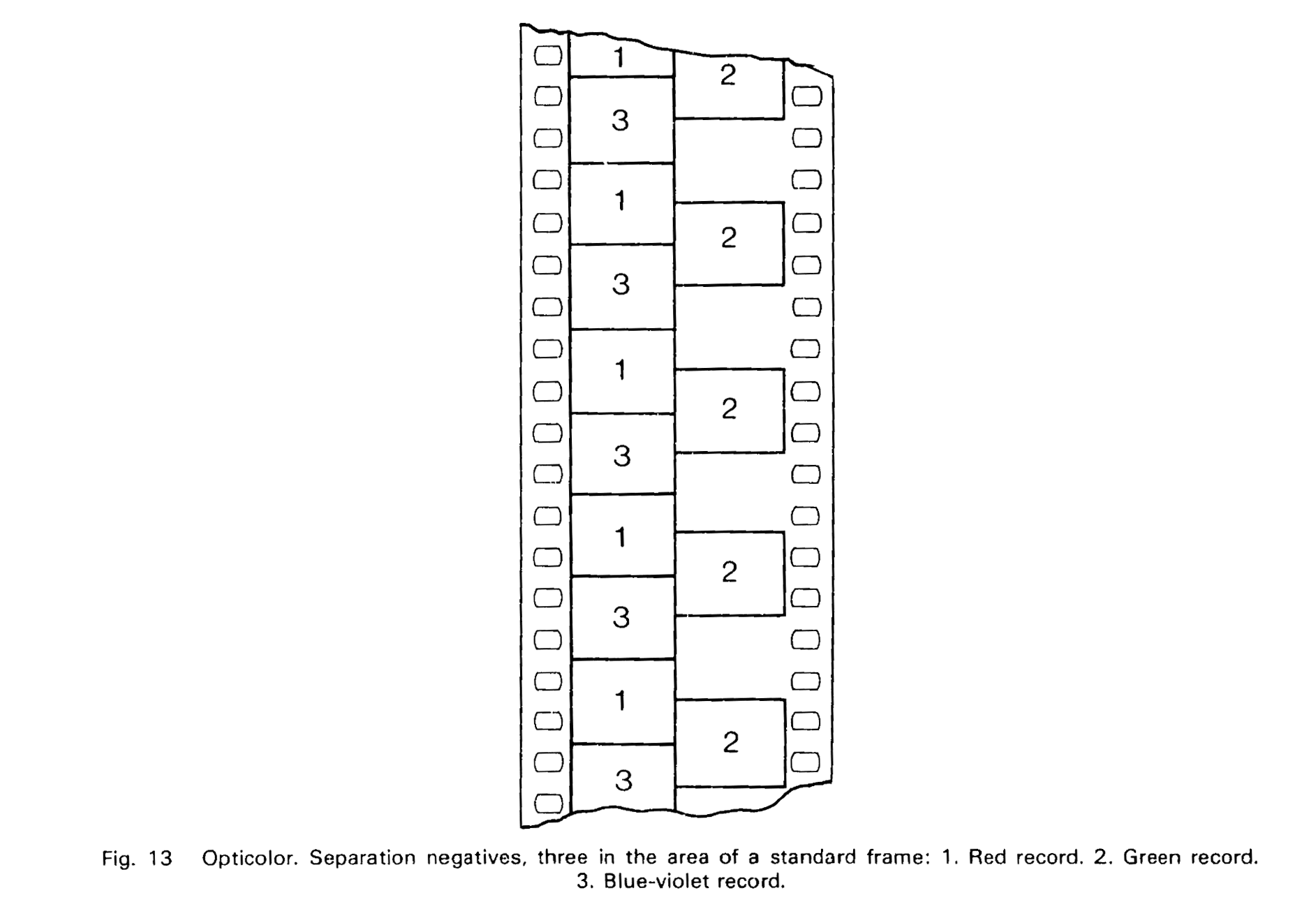
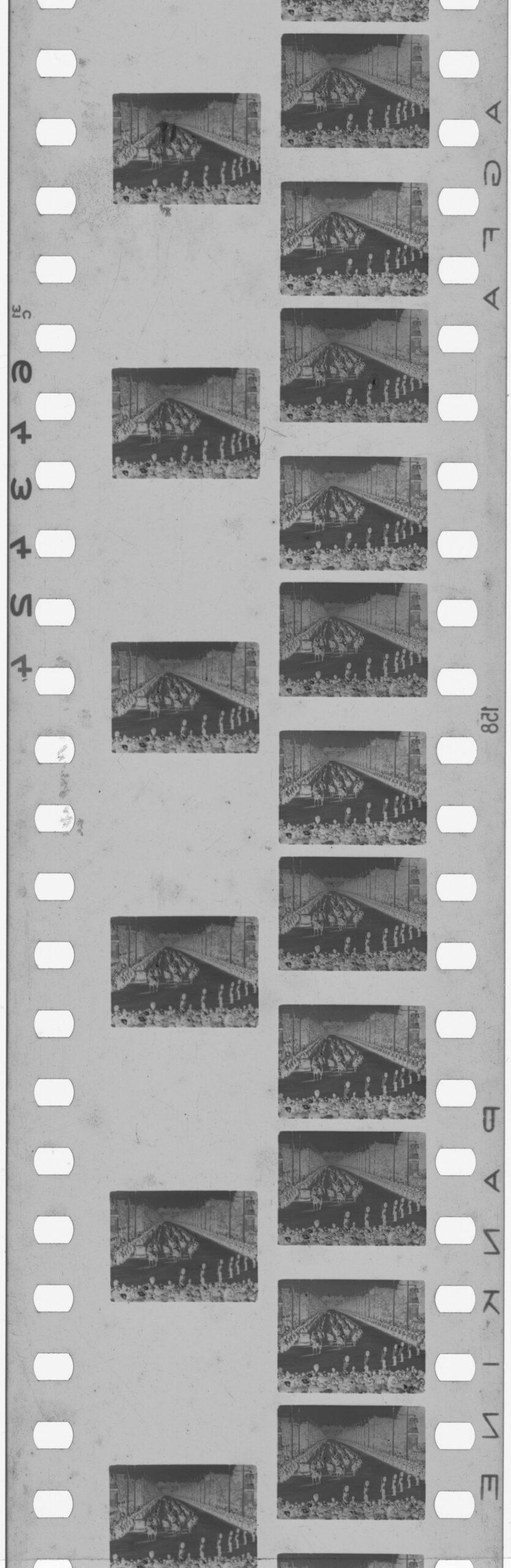
The above diagram shows the colour of the three images recorded by the Francita camera in the second type of negative.